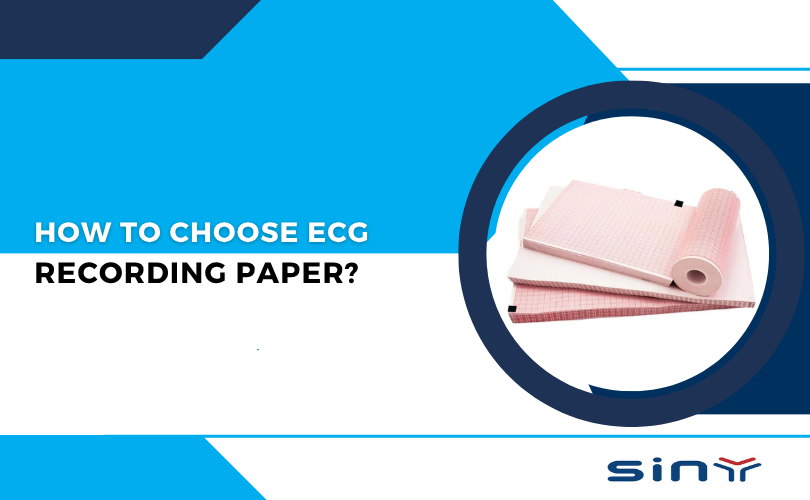
Electrocardiograms (ECGs, also known as EKGs) are among the most commonly performed diagnostic tests in healthcare. From emergency departments and outpatient clinics to ambulances and specialty cardiology centers, clinicians rely on clear, accurate ECG recordings to evaluate cardiac rhythm and detect potential heart conditions. While significant attention is often given to the ECG machine itself, the recording paper is an equally important component of the entire diagnostic process.
If you’re wondering how to choose ECG recording paper, selecting the correct product involves much more than matching the paper width. Factors such as thermal sensitivity, roll dimensions, paper weight, coating quality, chemical safety, machine compatibility, storage stability, and supplier reliability all influence printing performance and long-term usability. Whether you’re sourcing consumables for a hospital, purchasing for a medical distributor, or supplying healthcare equipment, understanding these details helps prevent costly purchasing mistakes while ensuring consistent diagnostic quality.
This guide explains the technical specifications, quality indicators, and practical buying considerations that matter most when selecting ECG recording paper. By the end, you’ll know exactly what to look for and how to choose a product that delivers reliable performance throughout its service life.
Why Choosing the Right ECG Recording Paper Matters
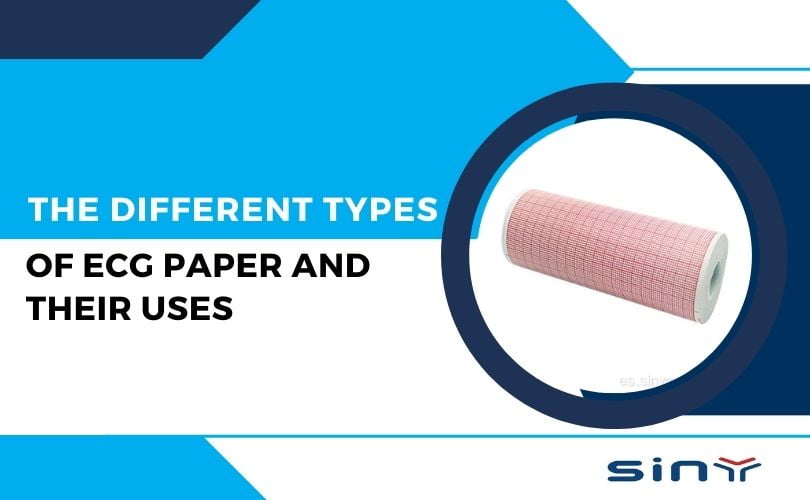
ECG recording paper is a specialized thermal paper designed specifically for electrocardiograph printers. Unlike ordinary office paper or retail receipt paper, it features precision grid printing and a medical-grade thermal coating that allows the ECG printer to produce high-resolution waveforms without using ink.
At first glance, many ECG paper rolls appear nearly identical. However, small differences in dimensions, coating quality, or manufacturing precision can significantly affect everyday performance.
Using unsuitable ECG recording paper may result in:
- Faded or incomplete ECG waveforms
- Misaligned or inaccurate grid lines
- Frequent paper feeding problems or paper jams
- Premature thermal print head wear
- Reduced diagnostic confidence
- Increased operating costs due to wasted consumables
For cardiologists, emergency physicians, nurses, and technicians, every waveform must remain sharp and clearly visible. Even subtle waveform changes may influence clinical interpretation, making print consistency an essential part of accurate diagnosis.
For procurement teams, incorrect specifications often create unnecessary inventory losses, shipment returns, and workflow interruptions. Ordering hundreds or even thousands of incompatible rolls can become an expensive mistake. Experienced buyers therefore verify not only paper dimensions but also quality standards and machine compatibility before placing bulk orders.
If you’re unsure which ECG recording paper matches your equipment, Siny Medical can help identify the correct specification based on your ECG machine model, reducing purchasing risks before production begins.

How to Understand ECG Recording Paper Specifications Before Buying
One of the biggest challenges for first-time buyers is interpreting the technical specifications listed on product packaging or equipment manuals. Once you understand what each parameter means, choosing the correct ECG chart paper becomes much more straightforward.
1. Paper Width
Paper width is usually the first specification buyers notice. Common widths include:
- 50 mm
- 60 mm
- 80 mm
- 90 mm
- 110 mm
- 210 mm
The required width depends entirely on your ECG machine. Even a difference of only a few millimeters can prevent proper installation or affect printing accuracy.
Never assume that papers with similar widths are interchangeable.
2. Roll Length
Roll length determines how much ECG recording paper is available before replacement becomes necessary.
Common roll lengths include:
- 20 m
- 25 m
- 30 m
- 50 m
- 90 m
Busy hospitals and diagnostic centers often prefer longer rolls because they reduce replacement frequency and improve workflow efficiency. Smaller clinics with lower examination volumes may choose shorter rolls to optimize inventory management.
3. Core Diameter
Core diameter is another specification that buyers frequently overlook.
The paper core must fit securely onto the printer spindle. If the core diameter is incorrect, the paper may not rotate smoothly during printing, resulting in:
- Uneven paper feeding
- Printing interruptions
- Paper slipping
- Excessive mechanical wear
Before ordering, always verify the required core diameter in the equipment manual or confirm it with your supplier.
4. Paper Weight and Thickness (GSM)
The quality of ECG thermal paper is also influenced by its weight, commonly measured in grams per square meter (GSM).
Medical-grade ECG recording paper is typically manufactured between 55 GSM and 60 GSM, providing an ideal balance between flexibility and durability.
If the paper is too thin (below approximately 55 GSM), it may:
- Tear more easily
- Develop creases during printing
- Jam at higher printing speeds
- Allow excessive show-through from the reverse side
If the paper is excessively thick (above approximately 60 GSM), it may:
- Increase the roll’s outer diameter
- Prevent proper installation inside the paper compartment
- Increase mechanical resistance
- Accelerate thermal print head wear
Choosing the appropriate paper weight helps maintain stable printer performance while extending equipment lifespan.
5. Thermal Rolls vs. Z-Fold Paper
ECG recording paper is generally supplied in two formats.
Thermal Rolls
Thermal rolls are the most common choice for modern ECG machines because they provide:
- Continuous recording
- Easy replacement
- Compact storage
- High efficiency during routine examinations
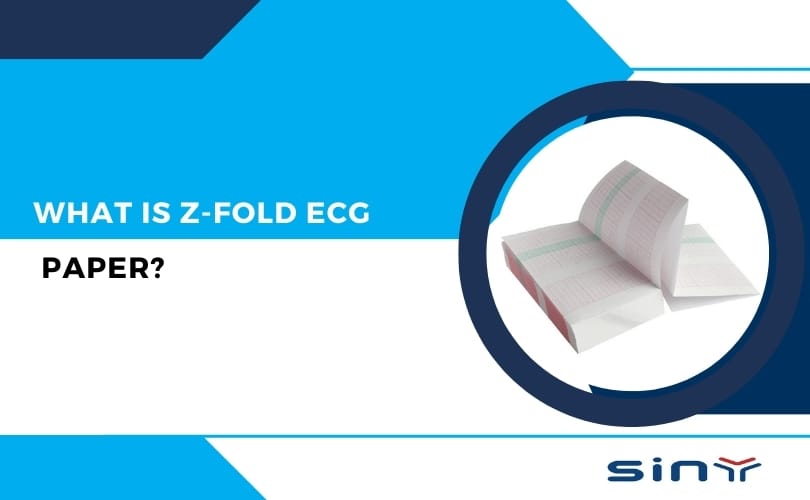
Z-Fold Paper
Some ECG systems require folded paper instead of rolls.
Z-fold paper unfolds continuously while remaining neatly stacked, making it suitable for equipment specifically designed around folded-feed mechanisms.
Ordering the wrong format remains one of the most common purchasing mistakes—even when every other specification is correct.
6. Grid Printing Accuracy
The familiar red or orange background grid is much more than a visual reference.
Each horizontal and vertical line represents standardized measurement intervals used to calculate:
- Heart rate
- PR interval
- QRS duration
- QT interval
- Rhythm regularity
If grid spacing is inconsistent, measurement accuracy may be affected, reducing clinicians’ confidence in the recorded ECG.
Reliable manufacturers use precision printing equipment to ensure grid spacing aligns perfectly with established clinical recommendations for ECG standardization.

How Thermal Coating and Chemical Safety Affect ECG Recording Quality
The thermal coating is one of the most important yet least visible components of ECG recording paper. Unlike ordinary thermal receipt paper, medical thermal recording paper requires a precisely engineered coating that produces sharp, high-contrast waveforms while minimizing wear on the printer’s thermal head.
Advantages of High-Quality Thermal Coatings
Premium ECG thermal paper typically offers:
- Fast image development
- Sharp waveform definition
- Uniform print density
- Excellent contrast
- Smooth, dust-free feeding
- Reduced background discoloration
- Stable performance across different printing speeds
These characteristics help clinicians obtain consistently readable ECG reports throughout daily operation.
Chemical Safety: Why BPA-Free and Phenol-Free Paper Matters
Modern hospitals are placing greater emphasis on occupational safety and environmental responsibility.
Traditional thermal papers commonly use chemical developers such as Bisphenol A (BPA) or Bisphenol S (BPS). Since healthcare professionals may handle ECG paper repeatedly throughout the day, many healthcare organizations now prefer BPA-free or completely phenol-free (BPA/BPS-free) alternatives to minimize unnecessary chemical exposure.
Choosing phenol-free ECG paper not only supports workplace safety but also aligns with increasingly strict purchasing standards adopted by hospitals and healthcare systems worldwide. Such as the European Chemicals Agency (ECHA) restrictions on bisphenols adopted by hospitals worldwide.
Image Stability and Long-Term Record Preservation
ECG reports are frequently retained for future clinical comparison, insurance documentation, legal recordkeeping, and long-term patient follow-up.
Paper manufactured with poor thermal stability may gradually fade after prolonged exposure to heat, humidity, or sunlight, making historical ECG traces difficult to interpret.
High-quality ECG recording paper is designed to maintain image clarity for extended periods when stored under recommended conditions.
At Siny Medical, our ECG recording paper combines consistent thermal coating technology with strict manufacturing control to deliver sharp printing, smooth feeding, stable image preservation, and dependable performance across a wide range of ECG systems.
How to Match ECG Recording Paper with Your ECG Machine
Even if two products appear identical, compatibility ultimately depends on the specific ECG machine.
Instead of purchasing solely by brand name, verify the following information before ordering.
Check the Equipment Manual
The quickest and most reliable method is reviewing your ECG machine’s user manual.
Most manufacturers clearly specify:
- Paper width
- Roll or Z-fold format
- Roll diameter
- Core diameter
- Recommended paper weight
- Compatible recording paper specifications
Following these recommendations eliminates unnecessary guesswork.
Identify the Exact Machine Model
Many manufacturers produce multiple ECG models that require different paper specifications.
For example, two ECG machines from the same manufacturer may use completely different paper sizes or formats.
Always verify the exact model number rather than relying only on the brand name.
Common ECG equipment manufacturers include:
- GE Healthcare
- Philips
- Nihon Kohden
- Mindray
- EDAN
- Schiller
- Fukuda Denshi
- Bionet
An experienced ECG consumables supplier can usually recommend the correct product once the equipment model is confirmed.
What If the Original Paper Packaging Is Missing?
In many hospitals, the original packaging may no longer be available after the paper has been loaded into the machine.
If that’s the case, you can usually identify the correct specification by:
- Checking the label inside the paper compartment
- Reviewing the equipment manual
- Recording the existing roll dimensions
- Contacting the equipment manufacturer or your consumables supplier with the machine model
Taking a few minutes to verify these details can prevent ordering incompatible products.
Avoid Assuming Universal Compatibility
One of the most common misconceptions is that all ECG recording paper is interchangeable.
In reality, compatibility depends on multiple factors working together, including paper dimensions, roll configuration, paper weight, thermal sensitivity, and printer design.
Even if a roll physically fits inside the machine, it may still produce poor print quality or feeding problems if other specifications don’t match.
Whenever possible, request samples before placing a large order. Testing paper on your own equipment is one of the simplest ways to confirm compatibility, reduce purchasing risk, and ensure consistent performance.
How to Evaluate ECG Recording Paper Quality and Choose a Reliable Supplier
Once you’ve confirmed the correct specifications, the next step is evaluating the quality of the ECG recording paper itself. Two products may have identical dimensions yet perform very differently in everyday clinical use. Consistent print quality, smooth paper feeding, and long-term reliability depend largely on manufacturing standards rather than appearance.
For hospitals, distributors, and medical equipment suppliers, selecting a dependable manufacturer is just as important as selecting the correct paper specification.
Look Beyond Price
Price is naturally an important consideration, especially when purchasing in bulk. However, choosing the lowest-priced ECG paper isn’t always the most economical decision in the long run.
Lower-quality ECG recording paper may lead to:
- Frequent paper jams or tearing
- Faded or uneven ECG waveforms
- Inconsistent thermal printing
- Increased printer maintenance
- More consumable waste
- Unexpected workflow interruptions
While premium-quality ECG paper may have a slightly higher purchase price, it often reduces equipment downtime, minimizes waste, and lowers the total cost of ownership over time.
Evaluate Manufacturing Standards
A reputable ECG recording paper manufacturer should maintain strict quality control throughout the production process.
When comparing suppliers, consider whether they provide:
- Consistent roll dimensions with tight manufacturing tolerances
- Uniform thermal coating performance
- Smooth, low-dust paper surfaces
- Moisture-resistant packaging
- Stable batch-to-batch consistency
- International quality certifications, such as ISO 13485 or ISO 9001, where applicable
Batch consistency is particularly important for hospitals and distributors. Every reorder should deliver the same printing quality and machine compatibility, eliminating the need for repeated testing or adjustments.
Consider Image Stability
Many ECG reports are archived for future comparison, insurance claims, legal documentation, or long-term patient management. If the thermal coating is unstable, printed waveforms may gradually fade over time.
High-quality ECG recording paper offers:
- Sharp waveform definition
- Uniform print density
- Excellent contrast
- Good resistance to background discoloration
- Stable image preservation under recommended storage conditions
Although no thermal paper should be exposed to excessive heat or direct sunlight, superior manufacturing significantly improves the lifespan of printed records.
Evaluate Supply Capability
For distributors and purchasing departments, product quality is only part of the equation. A reliable supply chain is equally important.
Before establishing a long-term partnership, consider asking suppliers:
- Can they support continuous high-volume production?
- Do they offer OEM or private-label manufacturing?
- Can packaging be customized for your market?
- Are lead times stable throughout the year?
- Do they have experience exporting to your region?
- Can they provide responsive technical and after-sales support?
Choosing a supplier with strong manufacturing capabilities helps reduce procurement risks while supporting future business growth.
Whether you need standard ECG thermal paper or customized OEM solutions, Siny Medical offers comprehensive manufacturing support, flexible branding options, and dependable global delivery for distributors and healthcare organizations worldwide.
How to Identify High-Quality ECG Recording Paper at a Glance
When receiving a new shipment, buyers often have only a few minutes to assess product quality before placing it into inventory. Fortunately, several visual and physical characteristics can quickly indicate whether the paper has been manufactured to a high standard.
A quality ECG recording paper roll should have:
- Smooth, cleanly cut edges without visible paper dust
- Uniform roll winding with no wrinkles or loose layers
- Clearly printed, evenly spaced red or orange grids
- A smooth thermal surface without scratches or coating defects
- Consistent color and thickness throughout the roll
- Secure, moisture-resistant packaging without signs of compression or damage
If possible, print a short ECG sample before accepting a large shipment. A high-quality paper should produce crisp, dark waveforms with uniform density, smooth paper feeding, and no background streaking.
Performing this simple inspection helps buyers identify potential quality issues before they affect clinical operations.
Common Mistakes to Avoid When Buying ECG Recording Paper
Even experienced purchasing professionals occasionally make avoidable mistakes. Fortunately, most problems can be prevented by verifying a few key details before placing an order.
Buying Based Only on Paper Width
Matching the paper width alone is not enough.
Roll diameter, core diameter, paper weight, thermal sensitivity, and paper format must also match your ECG machine.
Assuming All ECG Paper Is Universal
Many buyers mistakenly believe ECG paper is interchangeable across different machines.
In reality, compatibility depends on multiple specifications working together. Even products from the same equipment manufacturer may require different paper sizes or formats.
Choosing the Lowest Price Without Considering Quality
A lower purchase price can quickly be offset by printer downtime, maintenance costs, poor print quality, and unnecessary product waste.
Looking at the total operating cost—not just the unit price—usually results in better purchasing decisions.
Ignoring Storage Conditions
Thermal ECG paper should always be stored in a cool, dry environment away from direct sunlight, excessive heat, and high humidity.
Improper storage before use may reduce print quality and shorten the paper’s service life.
Storing Printed ECGs in PVC Plastic Sleeves
This is one of the most overlooked causes of fading ECG records.
Plasticizers contained in soft PVC folders can chemically react with the thermal coating, causing printed waveforms to fade much faster than expected.
For long-term archiving, use paper folders or polypropylene document sleeves instead.
Skipping Sample Testing
Before committing to a large purchase, always test sample rolls on your own equipment.
A short compatibility test can verify print quality, feeding performance, and overall suitability, helping prevent expensive purchasing mistakes.
A Quick ECG Recording Paper Buying Checklist
Before placing your next order, confirm the following:
- ECG machine brand and exact model
- Paper width
- Roll length
- Roll diameter
- Core diameter
- Roll or Z-fold format
- Paper weight (GSM)
- BPA-free or Phenol-free requirements
- Grid printing accuracy
- Packaging requirements
- OEM branding requirements (if applicable)
- Supplier quality assurance and production consistency
Taking just a few minutes to review this checklist can prevent ordering errors, reduce procurement costs, and improve operational efficiency.
FAQs
1. Is ECG recording paper universal?
No. ECG recording paper is not universal. Different ECG machines require specific paper widths, roll diameters, core sizes, paper formats, and thermal characteristics. Always verify compatibility before purchasing.
2. What is the difference between ECG recording paper and ordinary thermal paper?
Although both use thermal printing technology, ECG recording paper is manufactured specifically for medical applications. It features precision measurement grids, controlled thermal sensitivity, stable image quality, and strict manufacturing standards that ordinary receipt paper cannot provide.
3. Why do some hospitals require BPA-free or phenol-free ECG paper?
Traditional thermal papers often contain chemical developers such as BPA or BPS. Many healthcare facilities now prefer BPA-free or phenol-free alternatives to reduce chemical exposure for healthcare workers and comply with increasingly stringent purchasing policies.
4. How long can ECG recording paper be stored?
When stored in a cool, dry environment away from sunlight and excessive heat, unused ECG recording paper typically maintains its performance for several years. After printing, proper storage is equally important to preserve the ECG image.
5. Why are my ECG printouts fading over time?
Fading is usually caused by poor-quality thermal coatings, excessive heat, prolonged sunlight exposure, improper storage, or contact with PVC plastic sleeves. Using high-quality ECG paper and storing printed records correctly can significantly improve image longevity.
6. Can I order customized ECG recording paper with my own brand?
Yes. Many manufacturers, including Siny Medical, offer OEM and private-label services, including customized packaging, carton printing, branding, and product labeling for distributors and medical equipment companies.
Choose ECG Recording Paper with Confidence
Understanding how to choose ECG recording paper involves much more than selecting the correct dimensions. The best purchasing decisions consider machine compatibility, paper weight, thermal coating performance, chemical safety, image stability, manufacturing consistency, and the reliability of the supplier behind the product.
Whether you’re supplying hospitals, expanding a medical distribution business, or supporting healthcare providers with reliable diagnostic consumables, investing in high-quality ECG recording paper helps ensure accurate cardiac recordings, efficient workflows, and dependable long-term performance.
At Siny Medical, we manufacture a comprehensive range of ECG recording paper, ECG thermal paper, and medical thermal recording paper compatible with many of the world’s leading ECG machine brands. From standard specifications to fully customized OEM solutions, we combine strict quality control with responsive customer service and reliable global delivery.
1If you’re unsure which ECG recording paper is compatible with your equipment, contact the Siny Medical team today. We’ll help you identify the correct specification, recommend the most suitable solution, and support your business with consistent manufacturing quality and dependable worldwide supply.