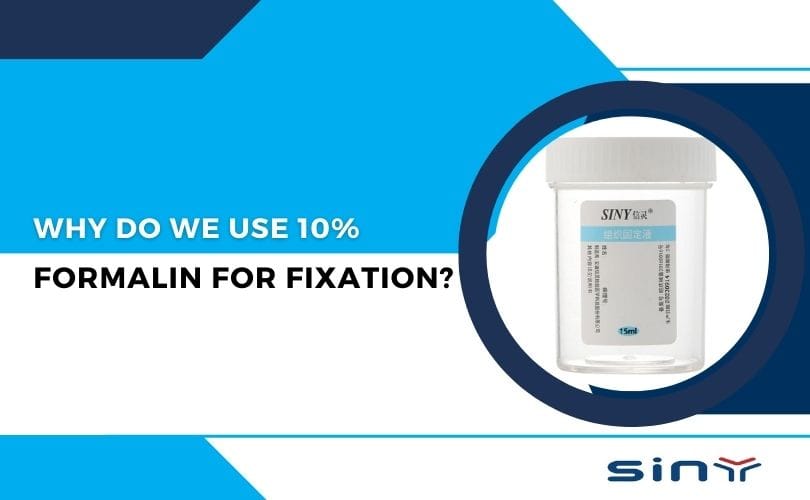
Formalin, a solution of formaldehyde gas in water, has been a cornerstone in histology and pathology for decades. Among its various concentrations, 10% formalin is the most widely used for tissue fixation. This blog explores the reasons behind its popularity, its mechanism of action, and its applications in scientific and medical fields. Whether you’re a researcher, a medical professional, or simply curious, this comprehensive guide will provide you with a detailed understanding of why 10% formalin for fixation is indispensable.
For more information on formalin and its applications, visit Siny Medical.
Table of Contents
- 1 Why 10% Formalin is Still the Gold Standard
- 2 What Exactly Is 10% Formalin?
- 3 Formaldehyde Forms Cross-Links With Tissue Proteins
- 4 10% Concentration Prevents Over-Fixation
- 5 Neutral Buffering Protects Tissue Morphology
- 6 10% Formalin Penetrates Tissue at the Ideal Rate
- 7 It Stops Enzymatic Breakdown
- 8 10% Formalin vs Other Fixatives
- 9 Why 10% Concentration?
- 10 How Much 10% Formalin Should Be Used?
- 11 How Long Should Tissue Stay in 10% Formalin?
- 12 Step-by-Step Fixation Process Using 10% Formalin
- 13 Final Thoughts
- 14 FAQs
Why 10% Formalin is Still the Gold Standard
If you’ve ever visited a pathology lab or studied histology, you’ve seen tissue samples stored in 10% Formalin. But why exactly 10%? Why not 5% or 15%?

Pathologists worldwide rely on 10% Formalin for fixation because it provides the right balance between:
- Protein cross-linking
- Cellular preservation
- Reduced shrinkage
- Stable pH
- Long-term morphology retention
When tissue leaves the body, it immediately begins to decay. Enzymes break cells apart, bacteria multiply, and structural proteins lose their shape. 10% Formalin stops all of that—and it does so predictably, consistently, and safely for microscopic evaluation.
For background reading, SINY Medical provides helpful scientific resources here:
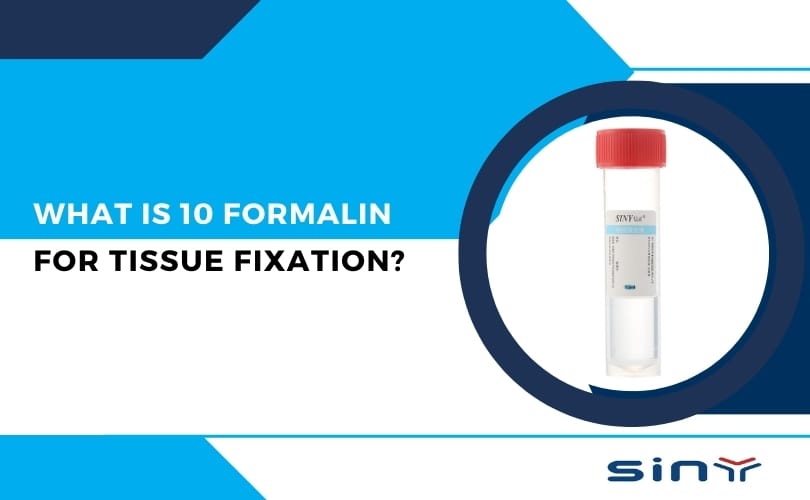
- What is 10% Formalin for Tissue Fixation?
- Scientific Overview of Tissue Fixatives
What Exactly Is 10% Formalin?
Despite the name, 10% formalin does not contain 10% formaldehyde.
Here’s the true composition:
| Solution Component | Percentage |
|---|---|
| Formaldehyde gas | 4% |
| Water | 96% |
| Buffer system (phosphate buffer) | 0.1M |
| Salts to maintain pH 7.0 | small amount |
Key Point:
Commercial stock formalin is 37–40% formaldehyde.
When diluted to 10% formalin, the final concentration becomes 4% formaldehyde, which is the active fixative strength used in histology.
SINY Medical provides high-quality medical-grade solutions that adhere to these exact concentrations: SINY Medical Formalin for Tissue Fixation
Why 10% Formalin Is Used for Fixation: Scientific Explanation
Tissue fixation depends on several chemical actions. Let’s break down why 10% formalin works better than other concentrations.
Formaldehyde Forms Cross-Links With Tissue Proteins
Formaldehyde reacts with amino groups in protein side chains, especially lysine.
This reaction forms methylene bridges (–CH₂–).
These bridges:
- Strengthen tissue
- Stop degradation
- Maintain the three-dimensional structure
- Preserve cellular outlines for microscopy
The result?
The tissue becomes stable without losing morphology.
Better understanding of this process is explained here:
How Does Formaldehyde Work as a Tissue Fixative?
https://www.sinymedical.com/how-does-formaldehyde-work-as-a-tissue-fixative/
10% Concentration Prevents Over-Fixation
Too high a concentration (like 20% or stronger) can cause:
- Excessive hardening
- Protein denaturation
- Poor penetration
- Distorted cellular morphology
Studies confirm that 4% formaldehyde (10% formalin) gives the best balance between penetration and preservation.
Neutral Buffering Protects Tissue Morphology
Unbuffered formalin becomes acidic over time. Acidity leads to:
- Formalin pigment deposits
- Distorted nuclei
- Loss of diagnostic clarity
Neutral buffered formalin maintains a pH of 7.0, preventing artifacts.
10% Formalin Penetrates Tissue at the Ideal Rate
Penetration is approximately 1 mm per hour.
This rate is important because:
- Slower penetration encourages autolysis
- Faster penetration causes uneven fixation
10% formalin provides controlled, predictable penetration, ensuring:
- Nuclear clarity
- Cytoplasmic detail
- Sharp staining characteristics
It Stops Enzymatic Breakdown
Immediately after death, tissues begin a process called autolysis (self-digestion).
Formalin:
- Inactivates enzymes
- Halts hydrolysis
- Stops bacterial activity
This makes long-term storage possible without decomposition.
10% Formalin vs Other Fixatives
| Fixative | Strengths | Weaknesses |
|---|---|---|
| 10% Neutral Buffered Formalin | Best for routine histology; stable morphology; predictable penetration | Slow action; may cause pigment without buffer |
| Glutaraldehyde | Great for electron microscopy | Too strong for routine tissues |
| Alcohol fixatives | Fast; good for cytology | Shrinking and hardening |
| Bouin’s solution | Excellent nuclear detail | Contains picric acid (hazardous) |
| Zinc fixatives | Good for immunostains | Not universal |
For more fixative comparisons, see:
Why 10% Concentration?
The 10% concentration of formalin is considered optimal for several reasons:
- Balance Between Penetration and Preservation: Lower concentrations may not fix tissues effectively, while higher concentrations can over-harden tissues, making them difficult to process.
- Safety and Handling: Higher concentrations of formaldehyde are more hazardous, while 10% formalin is relatively safer to handle with proper precautions.
- Cost-Effectiveness: It provides the best balance between performance and cost, making it accessible for most laboratories.
To explore the specific properties of 10% formalin, visit Siny Medical Formalin for Tissue Fixation.
How Much 10% Formalin Should Be Used?
A general rule in histopathology is:
Tissue volume : Fixative volume = 1 : 10
For example:
- 1 cm³ tissue → 10 mL formalin
This ensures full penetration and prevents autolysis
How Long Should Tissue Stay in 10% Formalin?
Different tissues require different times:
- Small biopsies → 4–6 hours
- Surgical specimens → 12–24 hours
- Large organs → 24–48 hours
Formalin fixes slowly but evenly, preventing stress on tissues.
Step-by-Step Fixation Process Using 10% Formalin
1. Tissue Collection
Fresh tissue must be placed in formalin immediately to avoid autolysis.
2. Trimming
Tissue thickness should not exceed 4–5 mm.
3. Immersion in Formalin
Place the tissue into 10x its volume of formalin.
4. Agitation
Gentle agitation improves penetration.
5. Fixation Time
Leave the tissue undisturbed until fixation is complete.
6. Transfer to Processor
After fixation, tissue moves into alcohol for dehydration.
Final Thoughts
10% Formalin for fixation continues to be the world’s most trusted tissue preservative because it delivers predictable, stable, and long-lasting tissue morphology. Its chemical balance is ideal for routine pathology, cancer diagnostics, immunostaining, and long-term specimen storage. With the right concentration, proper buffering, and high manufacturing standards—such as those provided by SINY Medical—pathology labs can ensure accurate, high-quality diagnostic results.
If you need high-grade laboratory formalin or want professional support, you can reach out here:
Contact SINY Medical – https://www.sinymedical.com/contact-siny-medical/
FAQs
1. Is 10% formalin the same as 10% formaldehyde?
No. 10% formalin contains 4% formaldehyde.
2. Why is formalin buffered?
To maintain pH 7.0 and avoid pigment artifacts.
3. How long should tissues stay in formalin?
Small samples: 4–6 hours
Large samples: 12–48 hours
4. Can formalin be reused?
Fresh formalin should always be used. Reuse leads to poor fixation.
5. Why is SINY Medical formalin preferred by many labs?
Because it maintains high purity, stable buffering, and dependable quality.