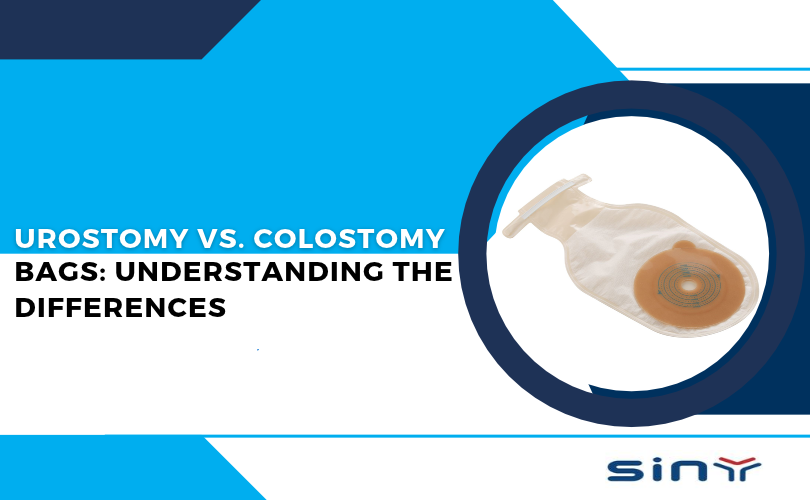
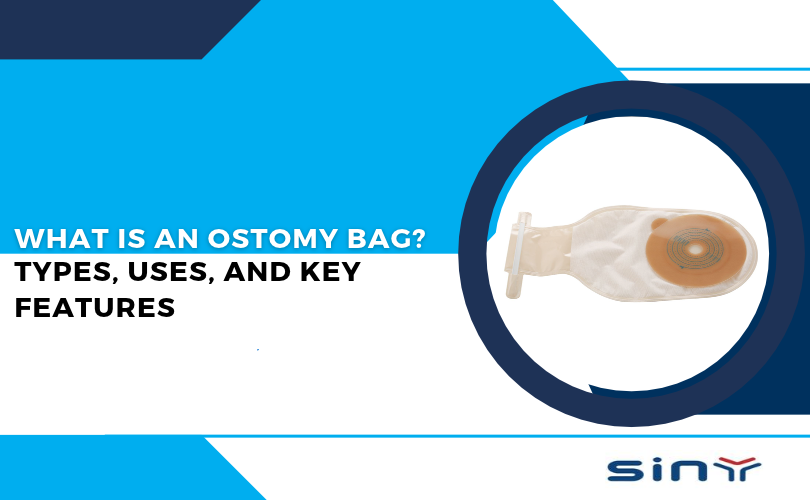
An ostomy bag is a medical collection pouch that collects stool or urine through a surgically created opening in the abdomen, called a stoma. It helps people manage waste elimination after certain intestinal or urinary surgeries while supporting hygiene, comfort, and everyday activities.
What Is an Ostomy Bag, and why are different types needed? Although ostomy pouches serve a similar purpose, their designs vary according to the type of stoma, the consistency of the output, and individual care requirements. A pouch suitable for a colostomy may not have the same drainage features as one designed for a urostomy.
For hospitals, healthcare professionals, and medical supply distributors, understanding these differences is essential when evaluating ostomy care products. This guide explains how stoma bags work, their main types and applications, the features that influence performance, and the factors to consider when choosing a suitable pouching system.
What Is an Ostomy Bag and How Does It Work?
An ostomy bag, also known as an ostomy pouch or stoma bag, is an external collection device used after ostomy surgery. During the procedure, a surgeon creates an opening that allows stool or urine to leave the body through the abdominal wall.
This opening is called a stoma. Depending on the surgery, it may connect to the colon, small intestine, or a surgically constructed urinary diversion.
Unlike normal bowel or bladder function, waste passing through a stoma generally cannot be controlled voluntarily. A pouching system therefore collects the output until it can be emptied or the pouch is replaced.
Main Components of an Ostomy Pouching System
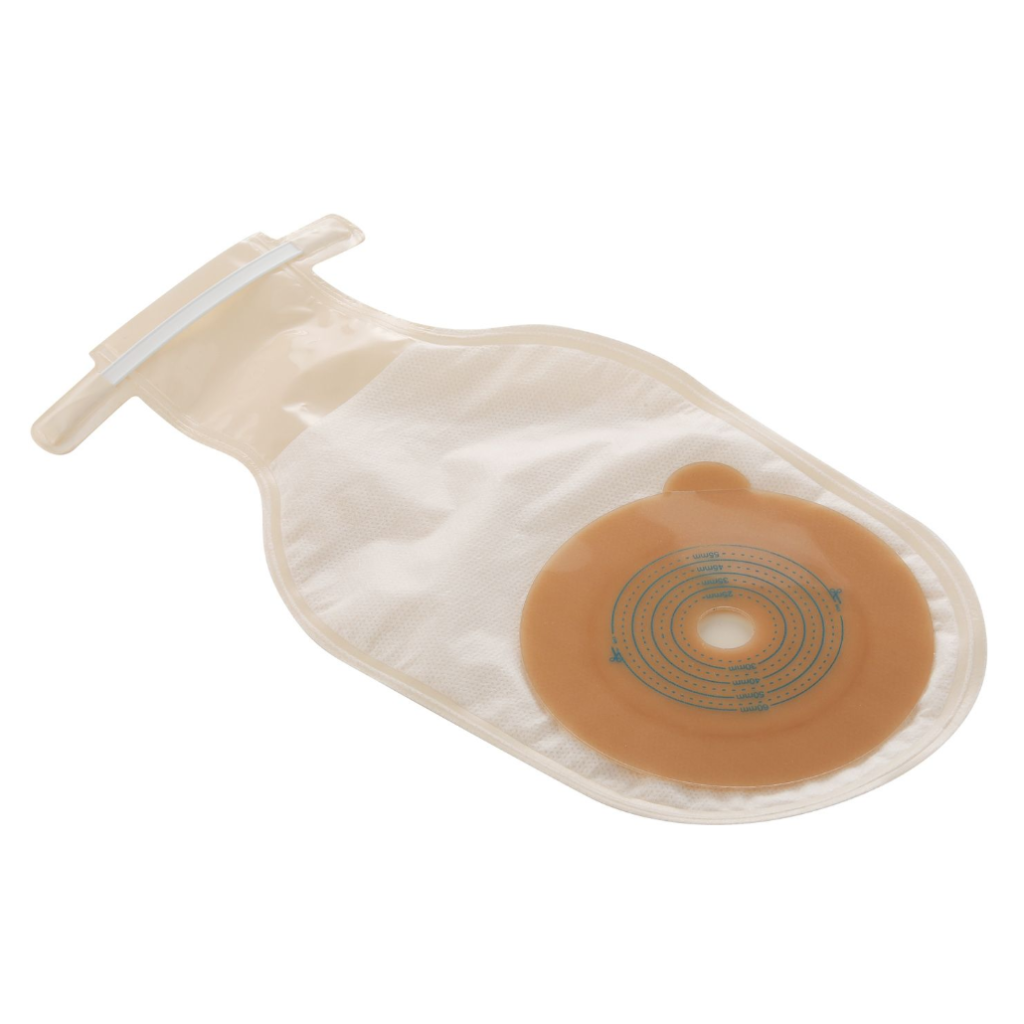
Most ostomy collection systems include several functional components:
- Collection pouch: A flexible bag that holds stool or urine. Depending on the design, it may be transparent or opaque.
- Skin barrier or wafer: A component positioned around the stoma to help protect the surrounding skin and create a seal.
- Adhesive layer: Secures the barrier to the skin. Adhesive formulations and wear characteristics vary between products.
- Stoma opening: An opening in the barrier that fits around the stoma. Some barriers are pre-cut, while others can be cut to fit.
- Outlet or closure: Allows waste to be emptied or retained until the pouch is replaced, depending on the pouch design.
Certain products also incorporate gas filters, soft coverings, viewing windows, or detachable coupling systems.
How Does an Ostomy Pouch Collect Waste?
Once the skin barrier is correctly positioned, the pouch collects waste as it passes through the stoma.
In a one-piece system, the pouch and barrier form an integrated unit. In a two-piece system, the pouch connects to a separate skin barrier through a compatible coupling mechanism.
The pouch temporarily contains the output until it is emptied or replaced according to the product instructions and individual care routine.
A well-fitting system helps reduce leakage and limits contact between bodily waste and the surrounding skin. However, its effectiveness depends on proper application, stoma dimensions, abdominal contours, and the condition of the skin.
For this reason, pouch selection should consider the complete system rather than the collection bag alone.
What Are the Different Types of Ostomy Bags?
Ostomy bags are commonly classified in three ways: by the type of ostomy they serve, by their pouching system structure, and by their emptying method.
These categories overlap. For example, a colostomy pouch may be a one-piece or two-piece system, and it may have a drainable or closed-end design.
Understanding these distinctions makes product comparisons more accurate.
Types of Ostomy Bags by Medical Application
Colostomy Bags
A colostomy bag collects stool from a stoma created using part of the colon.
Colostomy output varies depending on the location of the stoma. Some patients produce relatively formed stool, while others experience softer or more frequent output.
As a result, both drainable and closed-end pouches may be suitable, depending on individual needs.
Ileostomy Bags
An ileostomy bag collects intestinal output from a stoma formed using the ileum, the final section of the small intestine.
Ileostomy output is commonly soft, loose, or liquid and may occur frequently throughout the day. Drainable pouches are therefore widely used.
Because ileostomy output contains digestive substances that can irritate the surrounding skin, an appropriately fitted skin barrier is particularly important.
Urostomy Bags
A urostomy bag collects urine after surgery redirects urinary drainage through an abdominal stoma.
These pouches generally include a drainage outlet for controlled emptying. Many designs also feature an anti-reflux mechanism intended to reduce the backward flow of urine within the pouch.
Some urostomy systems can connect to compatible nighttime drainage equipment.
Unlike ordinary stool collection pouches, urostomy bags are specifically designed for continuous urinary output.
One-Piece vs. Two-Piece Ostomy Bags
The second classification concerns how the collection pouch connects to the skin barrier.
A one-piece ostomy bag combines the pouch and adhesive barrier into a single unit. Both components are removed together when the system is changed.
This design offers relatively straightforward handling and may provide a flexible, low-profile fit.
A two-piece ostomy bag uses a separate pouch and skin barrier connected by a compatible mechanical or adhesive coupling system.
The pouch can be detached and replaced while the barrier remains in place, when appropriate. This may reduce the need to remove the adhesive barrier during every pouch change.
However, two-piece systems require compatible components, and some coupling designs may add bulk.
Neither configuration is universally better. The most suitable choice depends on individual comfort, skin condition, and care requirements.
Drainable vs. Closed-End Ostomy Bags
The third classification is based on how collected waste is managed.
Drainable pouches have an outlet that allows users to empty the contents during the intended wear period. They are commonly used when stool output is frequent or relatively liquid.
Closed-end pouches do not have an emptying outlet. Instead, the pouch is removed and discarded when replacement is necessary. These designs may suit selected patients with more predictable, formed stool output.
Urostomy pouches use drainage outlets specifically intended for urine collection and should be evaluated separately from stool collection systems.
Ostomy Bag Types Comparison
| Type | Main Features | Common Application |
|---|---|---|
| Colostomy pouch | Collects stool; available in different pouching configurations | Colostomy care |
| Ileostomy pouch | Commonly drainable; accommodates frequent intestinal output | Ileostomy care |
| Urostomy pouch | Urine drainage outlet; many designs include anti-reflux features | Urinary diversion care |
| One-piece system | Integrated pouch and skin barrier | Users preferring fewer separate components |
| Two-piece system | Detachable pouch with separate compatible barrier | Users who benefit from independent pouch changes |
| Drainable pouch | Outlet allows emptying during the wear period | Frequent or loose stool output |
| Closed-end pouch | Removed and discarded after use | More predictable, formed stool output |
For healthcare buyers, these distinctions help identify the appropriate product category before comparing materials, sizes, and other functional features.
What Are Ostomy Bags Used For?
Ostomy bags are used when certain medical conditions or surgical procedures require stool or urine to leave the body through an abdominal stoma.
An ostomy may be temporary or permanent, depending on the underlying condition and surgical treatment.
Colorectal Surgery and Bowel Diversion
Colostomy and ileostomy procedures may be performed for conditions such as colorectal cancer, inflammatory bowel disease, intestinal injury, or other serious bowel disorders.
In some cases, a temporary ostomy diverts intestinal contents away from a healing section of the bowel.
Other patients require permanent diversion when the original route of stool elimination cannot be restored.
The pouching system selected depends on the type of stoma, output consistency, and individual care needs.
For example, a patient with frequent liquid intestinal output may benefit from a drainable system, while someone with more predictable, formed stool may use a closed-end pouch.
Urinary Diversion After Bladder Surgery
Urostomy bags are used after procedures that redirect urine away from its normal route.
One example is an ileal conduit, in which a short section of intestine forms a passage between the ureters and an abdominal stoma.
Urine flows through the stoma into an external collection pouch.
Because urinary output continues throughout the day and night, suitable drainage features and secure connections are important.
Some patients also use compatible nighttime drainage systems to accommodate urine collection during sleep.
Temporary and Permanent Ostomy Care
Temporary ostomies may be reversed after healing, provided that reversal is medically appropriate.
Permanent ostomies require ongoing pouching management.
In either situation, patients need a collection system that fits properly, protects the surrounding skin, and accommodates their output.
Long-term users may place particular importance on comfort, discretion, ease of emptying, and reliable access to replacement supplies.
Supporting Everyday Activities
Modern ostomy pouching systems are designed to support routine activities, including walking, working, sleeping, and suitable exercise.
A properly fitted pouch can be worn discreetly beneath clothing. However, the user experience depends on several factors, including pouch flexibility, barrier fit, output volume, and abdominal contours.
Healthcare professionals, particularly stoma care nurses, can help patients select suitable products and establish appropriate care routines.
For hospitals and distributors, understanding these everyday requirements helps connect product specifications with actual patient needs.
Key Features of a Good Ostomy Bag
The performance of an ostomy pouching system depends on more than its size or appearance.
Several design features influence skin protection, waste containment, comfort, and ease of use.
Skin Barrier and Adhesive Design
The skin barrier helps create a seal around the stoma while protecting the surrounding skin from bodily waste.
Many products use hydrocolloid-based adhesive barriers, although material formulations vary.
A suitable barrier should provide secure attachment while allowing removal with minimal unnecessary skin trauma.
Barriers may be flat or convex. Convex designs can be helpful for certain stoma shapes or abdominal contours, but their suitability should be assessed by a qualified healthcare professional.
The barrier opening must also fit appropriately around the stoma. An opening that is too large may expose surrounding skin, while one that is too small may place pressure on the stoma.
Leakage Protection and Closure Reliability
Leak resistance is a major consideration because leakage can cause discomfort, skin irritation, and additional pouch changes.
Effective containment depends on the complete system, including the barrier seal, pouch construction, and outlet closure.
Drainable stool pouches may use fold-over closures, integrated fasteners, or other secure sealing mechanisms.
Urostomy pouches generally feature liquid drainage outlets designed for controlled emptying.
No system can eliminate every possibility of leakage. Proper fitting, application, and maintenance remain essential.
Odor Control and Gas Filters
Some stool collection pouches incorporate filters that allow accumulated gas to escape while helping reduce odor.
These features are commonly associated with certain colostomy and ileostomy pouches.
Filter effectiveness depends on the design and conditions of use. Moisture and contact with pouch contents may affect performance.
A properly secured pouch also helps contain odors, even when no filter is present.
Healthcare buyers should distinguish between a product’s actual filtration design and general marketing claims about odor control.
Flexible Materials and Wearing Comfort
Ostomy pouches are typically manufactured using flexible polymer films, sometimes combined with soft outer coverings.
The materials should provide suitable containment while allowing the pouch to conform to body movements.
Depending on the design, additional features may include soft backing layers, transparent viewing areas, or films intended to reduce noise during movement.
Pouch dimensions and shape can also influence comfort under clothing.
However, material type alone does not determine performance. Construction quality, barrier compatibility, and intended use must also be considered.
Drainage and Handling Convenience
A practical emptying mechanism can simplify daily pouch management.
For drainable stool pouches, the outlet should be accessible and capable of being securely closed after emptying.
For urostomy pouches, a drainage tap should allow controlled urine release. Compatibility with nighttime drainage accessories may also be relevant.
Ease of handling is especially important for patients with limited mobility or reduced hand dexterity.
Hospitals and distributors should therefore consider closure operation and handling convenience alongside basic pouch specifications.
How to Choose the Right Ostomy Bag
Choosing an appropriate pouching system requires matching product characteristics to the intended clinical application and user needs.
For individual patients, the decision should be guided by a qualified healthcare professional. For hospitals and medical distributors, the same principles provide a useful foundation for product evaluation.
Start With the Ostomy Type
The first consideration is whether the pouch is intended for colostomy, ileostomy, or urostomy care.
The type and consistency of output determine which drainage and containment features are appropriate.
A urostomy pouch, for example, requires a urine drainage design, while a stool collection pouch may use a different closure system.
Products should not be considered interchangeable simply because their external appearance is similar.
Check Skin Barrier Fit and Available Sizes
Stoma dimensions vary between patients and may change during postoperative recovery.
Skin barriers are available in different configurations, including pre-cut and cut-to-fit openings.
Hospitals and distributors should examine the available opening sizes, barrier shapes, and compatibility with related pouching components.
For two-piece systems, the pouch and barrier must use compatible coupling specifications.
An appropriate product range can help healthcare providers accommodate different patient requirements without relying on unsuitable substitutions.
Compare Pouch Capacity and Emptying Options
Collection capacity should correspond to the expected output and intended use.
A smaller pouch may offer a more discreet profile but require more frequent emptying. A larger pouch may accommodate greater output while being less convenient for some users.
Rather than selecting products by capacity alone, buyers should consider pouch shape, drainage design, and ease of handling.
Closed-end and drainable systems also have different replacement and emptying requirements.
The appropriate choice depends on output characteristics, patient preferences, and the recommended care routine.
Evaluate Product Construction and Compatibility
When comparing ostomy supplies, healthcare buyers should review the available technical information.
Important considerations include pouch film construction, skin barrier materials, closure mechanisms, and coupling compatibility.
Product packaging should clearly identify the intended application and relevant specifications.
For two-piece systems, compatible components are particularly important. Pouches and barriers from different product systems should not be assumed to fit together.
Buyers should also review the manufacturer’s instructions for use, storage requirements, and any relevant handling limitations.
Consider Hospital and Distributor Purchasing Needs
Healthcare procurement involves more than selecting a single pouch design.
Hospitals may require different configurations to support patients with varying stoma types, skin conditions, and care routines.
Distributors may need to evaluate product consistency, packaging formats, supply continuity, and the availability of compatible accessories.
A practical purchasing review should address:
- The intended ostomy application and available pouching configurations.
- Skin barrier opening sizes and fit options.
- Drainable, closed-end, and urinary drainage mechanisms.
- Compatibility between pouches, barriers, and accessories.
- Packaging information and product identification.
- Consistency of product specifications and supply arrangements.
These factors help buyers compare products according to their intended use rather than focusing only on unit price.
Before placing an order, purchasing teams should confirm current specifications and available configurations directly with the supplier.
Frequently Asked Questions About Ostomy Bags
1. What is the difference between an ostomy bag and a colostomy bag?
An ostomy bag is a general term for a pouch used to collect waste through a surgically created stoma. A colostomy bag specifically collects stool from a colostomy. Other ostomy pouches are designed for ileostomy or urostomy care.
2. How often should an ostomy bag be changed?
Replacement frequency varies according to the pouching system, output, skin condition, and manufacturer instructions. Many skin barriers are worn for several days when suitable, while closed-end pouches may be replaced more frequently. A leaking or poorly fitting system should be addressed promptly rather than waiting for a scheduled change.
3. Can an ostomy bag be emptied and reused?
Drainable pouches are designed to be emptied repeatedly during their intended wear period. However, this does not mean they are intended to be washed and reused after removal. Closed-end pouches are generally discarded after use. Always follow the manufacturer’s instructions.
4. Are ostomy bags waterproof?
Many ostomy pouching systems are designed to tolerate routine showering. However, water resistance varies by product, particularly around adhesives, filters, and accessories. Users should follow the manufacturer’s recommendations for bathing and water exposure.
5. Do ostomy bags prevent odors?
A properly sealed pouch helps contain odors. Some stool collection pouches also include gas filters intended to reduce odor. However, filter performance varies, and no system should be assumed to provide complete odor elimination.
6. What is the difference between drainable and closed-end ostomy bags?
A drainable pouch has an outlet that allows contents to be emptied during its wear period. A closed-end pouch has no emptying outlet and is removed and discarded when replacement is needed. The choice depends mainly on output characteristics and individual care requirements.
7. Can patients sleep while wearing an ostomy bag?
Yes. Ostomy pouching systems are designed for continuous wear, including during sleep. Proper attachment and appropriate collection capacity are important. Some urostomy systems can also connect to compatible nighttime drainage equipment.
8. What should medical distributors consider when purchasing ostomy bags?
Distributors should review the intended application, pouching configuration, skin barrier design, drainage mechanism, available sizes, and component compatibility. Packaging information, product consistency, and supply availability are also important purchasing considerations.
Choosing Suitable Ostomy Care Supplies
Ostomy bags play an essential role in collecting stool or urine after ostomy surgery. Although their basic purpose is similar, pouching systems differ significantly in their intended applications, structural designs, and functional features.
Understanding the differences between colostomy, ileostomy, and urostomy pouches helps healthcare buyers identify suitable product categories. Features such as skin barrier fit, closure reliability, flexible construction, and convenient drainage should also be evaluated carefully.
For hospitals, clinics, and medical distributors, selecting appropriate ostomy care supplies requires balancing patient needs, product compatibility, and practical purchasing considerations.
Looking for ostomy care supplies or exploring medical consumable sourcing options? Contact Siny Medical to discuss your purchasing requirements and confirm current product availability, specifications, and supply options.