| Specification | Details |
|---|---|
| Product Name | Tissue Culture Cell Culture Flasks Cell Culture Flask |
| Product Type | Cell Culture Flask |
| Application Category | Tissue / Cell Culture |
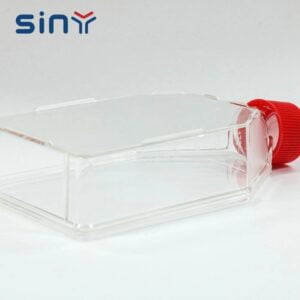
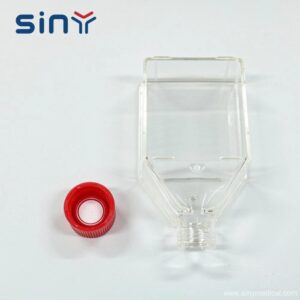
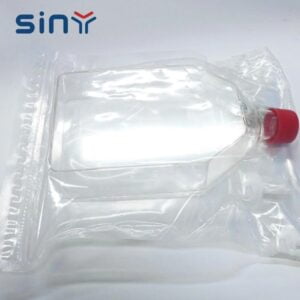
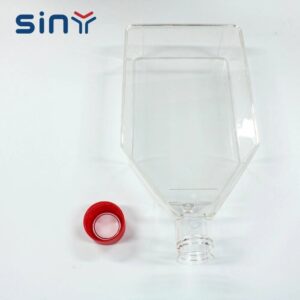
Siny Medical supplies Tissue Culture Cell Culture Flasks Cell Culture Flask products for biotechnology laboratories, research institutions, academic facilities, and international laboratory consumables distributors. Cell culture flasks are widely used to maintain, grow, and expand suitable cell populations under controlled laboratory conditions.
A cell culture flask provides an enclosed vessel format with a defined growth area for cell cultivation. Unlike multiwell plates, which are often selected for parallel experiments, culture flasks are commonly used when researchers need to maintain a cell population, prepare cultures for subsequent experiments, or increase cell numbers.
Tissue culture research involves different cell types, growth conditions, and laboratory techniques. Therefore, selecting the correct flask requires more than choosing a vessel size. Researchers must also consider the culture surface, closure system, material compatibility, and handling requirements.
For example, adherent cells need an appropriate surface for attachment, while suspension cells have different cultivation requirements. In addition, the selected closure should support the intended gas exchange and contamination-control strategy.
At Siny Medical, we understand the importance of reliable laboratory consumable sourcing. We supply cell culture products for research organizations, biotechnology companies, and distributors seeking suitable laboratory supplies for their procurement requirements.
Cell culture flasks are designed to provide a contained environment for suitable laboratory cell culture procedures.
Unlike an open culture dish, a typical flask has a defined opening and a closure system. This arrangement can support routine handling, incubation, and culture maintenance when used according to the appropriate laboratory protocol.
The vessel geometry also allows researchers to distribute culture medium over a defined growth surface.
However, the exact flask shape, opening configuration, and closure characteristics depend on the selected product design.
Culture surface area is an important factor in cell cultivation.
Adherent cells grow on a suitable attachment surface. Therefore, researchers must select a flask that provides enough growth area for the required cell population.
Common laboratory flask formats are identified by nominal culture areas, such as T25, T75, and T175. These designations refer to approximately 25 cm², 75 cm², and 175 cm² of growth area in their respective conventional formats.
These are general industry examples rather than confirmed sizes for this product.
The appropriate growth area depends on the cell type, expected cell yield, and culture procedure.
Many laboratories maintain cell cultures over multiple passages.
During routine maintenance, researchers monitor cell condition, replace culture medium, and transfer cells into fresh vessels when necessary.
Culture flasks provide a familiar format for these procedures.
Furthermore, selecting an appropriate vessel helps researchers organize culture schedules and maintain consistent laboratory records.
However, successful culture maintenance depends on suitable media, aseptic handling, and validated procedures.
Surface characteristics influence how cells interact with a culture vessel.
For adherent cell models, laboratories commonly use tissue-culture-treated surfaces. These surfaces undergo modification to promote attachment of suitable cells.
In contrast, untreated surfaces may be appropriate for other experimental requirements.
Some specialized cells also require additional surface coatings.
Therefore, buyers should confirm whether the selected flask provides the surface properties required by their cell model.
The term “Tissue Culture” in a product title does not independently establish a particular surface-treatment process.
Cell culture flasks commonly use different closure systems.
Two familiar categories are vented caps and plug-seal caps.
Vented caps typically incorporate a gas-permeable filter that can support gas exchange while providing a barrier to particles and microorganisms under specified conditions.
Plug-seal caps use a different closure arrangement. Their gas-exchange behavior depends on the cap design and how the laboratory operates it.
Neither closure type is automatically suitable for every culture system.
Researchers should select the closure according to their incubation conditions, gas requirements, and handling protocol.
Cell culture flasks are commonly used in incubators, biological safety cabinets, and other designated laboratory work areas.
Their vessel format supports routine culture preparation, observation, and maintenance.
However, compatibility with racks, incubators, automated systems, and imaging equipment depends on the actual flask dimensions and design.
Laboratories should verify these characteristics when equipment compatibility is important.
Cell culture flasks are widely used for maintaining suitable mammalian cell lines.
Researchers prepare cultures using appropriate media and incubation conditions. They then monitor cell morphology, growth, and overall culture status.
For adherent cells, the culture surface must support attachment. Meanwhile, suspension cells require a suitable vessel and handling method for their growth characteristics.
The correct flask depends on the cell model and laboratory protocol.
Cell expansion is one of the most common reasons laboratories use culture flasks.
Researchers may begin with a relatively small cell population and expand it for subsequent experiments.
As the culture grows, personnel assess whether additional culture area is required.
They may then transfer cells into a larger vessel or distribute them across multiple flasks.
However, the timing of subculturing depends on cell behavior, growth conditions, and experimental requirements.
Cell biology laboratories study cellular growth, morphology, metabolism, and responses to experimental conditions.
Culture flasks provide a suitable vessel category for maintaining cells before analytical procedures.
For example, researchers may expand cells in flasks before transferring them into multiwell plates for treatment comparisons.
This approach separates routine cell maintenance from the experimental assay stage.
Biotechnology laboratories use cell cultures in many research activities.
These may include biological assay development, experimental process evaluation, and studies involving suitable cell lines.
Culture flasks can support preliminary cultivation and cell preparation.
However, the selected vessel must match the biological system and research protocol.
Many cell-based assays require a sufficient number of viable cells.
Researchers may maintain or expand cell populations in flasks before preparing samples for an assay.
After cultivation, cells can be collected and distributed into suitable experimental vessels according to the protocol.
This workflow is common in laboratories performing viability testing, proliferation studies, and treatment evaluations.
Universities and research training facilities frequently use cell culture flasks for practical laboratory instruction.
Students may learn basic concepts such as aseptic handling, culture observation, medium replacement, and cell passage.
A suitable culture vessel helps organize these procedures.
However, training activities must follow institutional biosafety requirements and appropriate supervision.
Laboratories use flasks, plates, and dishes for different cultivation needs.
Although these vessels can support related research activities, their geometry and handling characteristics differ.
Culture flasks are commonly associated with maintaining and expanding suitable cell populations.
Multiwell plates are often selected for experiments involving several conditions or replicates.
Culture dishes, meanwhile, provide a continuous culture area that may be useful for observation or selected cultivation procedures.
| Feature | Cell Culture Flask | Cell Culture Plate | Cell Culture Dish |
|---|---|---|---|
| General Format | Vessel with neck and closure | Plate with defined culture positions | Shallow culture vessel |
| Common Application | Cell maintenance and expansion | Parallel assays and treatment comparisons | Cell cultivation and observation |
| Sample Organization | Usually one main culture area | Often multiple wells | Usually one main culture area |
| Handling Considerations | Closure, neck, growth area | Well count and geometry | Diameter and lid arrangement |
| Main Selection Factor | Culture maintenance requirements | Experimental layout | Culture surface and observation needs |
These differences describe general laboratory cultureware categories. They do not establish additional specifications for this product.
Laboratories commonly identify conventional culture flasks by their nominal growth area.
A T25 flask provides approximately 25 cm² of growth area, while T75 and T175 formats provide approximately 75 cm² and 175 cm², respectively.
In general, smaller flasks are useful for maintaining limited cell populations. Larger flasks provide more growth area for suitable cell expansion procedures.
However, a larger flask does not automatically produce better results.
Researchers must consider seeding density, culture medium, cell characteristics, and incubation conditions.
The sizes described here are common industry formats, not confirmed variants of the Siny Medical product on this page.
Closure selection is another important consideration.
Vented caps commonly incorporate a filter that allows gas exchange under appropriate conditions.
Plug-seal caps use a different closure mechanism and may require a specific operating procedure to provide the gas exchange needed by the culture.
The correct choice depends on the cell type, incubator environment, and laboratory protocol.
| Consideration | Vented Cap | Plug-Seal Cap |
|---|---|---|
| General Design | Filtered ventilation system | Mechanical sealing arrangement |
| Gas Exchange | Through a suitable vent filter | Depends on cap design and operating position |
| Main Consideration | Filter properties and culture requirements | Closure operation and culture requirements |
| Selection Basis | Validated incubation procedure | Validated incubation procedure |
Buyers should confirm the closure supplied with the selected flask rather than assuming that every culture flask uses the same cap type.
Tissue-culture-treated flasks are commonly used for suitable adherent cells.
Their surfaces are modified to improve attachment under appropriate culture conditions.
Non-treated flasks have different surface properties and may be selected for other cell culture applications.
However, cell attachment depends on more than the vessel surface alone.
Cell type, culture medium, extracellular matrix coatings, and incubation conditions can all influence the outcome.
Therefore, laboratories should verify the required surface characteristics before purchasing.
Culture flask geometry can affect medium distribution, access to the growth surface, and routine handling.
For example, neck design may influence pipette access, while vessel shape can affect placement in incubators.
Some flask designs also support particular observation or automation workflows.
However, these capabilities depend on the actual product construction.
Researchers should evaluate geometry according to their laboratory procedures and equipment.
Start by defining how the flask will be used.
Common applications include routine cell maintenance, expansion, subculturing, and preparation for biological assays.
Different procedures may require different growth areas, surface properties, or closure systems.
Therefore, buyers should select a vessel that matches the intended workflow.
Growth area influences the number of adherent cells that can be cultivated under suitable conditions.
Common flask sizes include T25, T75, and T175, although other formats also exist.
The correct size depends on the cell model and expected culture requirements.
Buyers should confirm the actual growth area of the selected product before purchase.
Some cells require a treated surface to attach and grow effectively.
Others may need specialized coatings or different culture conditions.
Therefore, laboratories should determine whether tissue-culture treatment is required.
The product’s intended application alone does not confirm its surface-treatment characteristics.
Many conventional cell culture flasks are manufactured from polystyrene.
This material is widely used because it can provide suitable optical and manufacturing properties for laboratory cultureware.
However, other materials may be used for particular applications.
The exact polymer influences chemical compatibility, optical characteristics, and temperature tolerance.
Buyers should confirm the material when these properties are important.
Flask closures influence handling and gas exchange.
Vented and plug-seal caps are common options in the industry.
However, they serve different operating requirements.
Buyers should review the selected closure design and its suitability for the intended incubation procedure.
Cell culture procedures commonly require sterile vessels.
However, sterility cannot be established from the product category alone.
Buyers should verify sterile status and relevant documentation when required.
In addition, laboratories must maintain appropriate aseptic techniques throughout cultivation.
Culture medium volume affects nutrient availability, gas exchange, and cell growth conditions.
However, the appropriate volume depends on the flask geometry, culture area, and biological model.
Researchers should follow a validated protocol and the selected vessel’s instructions.
A nominal growth area does not establish a universal working volume.
Researchers often observe cultures to assess morphology and growth.
However, imaging suitability depends on vessel geometry, optical properties, and instrument requirements.
Some culture flasks may support observation with compatible microscopes, while others may be less suitable for particular imaging methods.
Therefore, buyers should confirm the requirements of their laboratory equipment.
Laboratories often manage multiple culture vessels simultaneously.
Flask dimensions, shape, and closure design can influence incubator arrangement and storage.
For this reason, buyers should review the actual external dimensions when space or equipment compatibility matters.
Cell culture laboratories may follow recognized guidance for quality, safety, and research practices.
For example, ISO 20391-1 addresses general requirements and considerations for cell counting methods.
Such standards can be relevant to laboratory workflows involving cultured cells.
However, they do not automatically establish the conformity or performance of a particular culture flask.
Buyers should distinguish between laboratory procedure standards and verified product-specific documentation.
Research institutions and biotechnology companies often purchase cell culture consumables in regular quantities.
Purchasing teams should consider expected consumption, storage arrangements, packaging requirements, and supply schedules.
For international distributors, clear product identification and consistent procurement specifications are also important.
Siny Medical supplies laboratory consumables for institutional purchasing and international distribution.
A cell culture flask is a laboratory vessel used to maintain or cultivate suitable cell populations under controlled conditions. It commonly has a defined growth surface, a neck, and a closure system.
They are widely used for routine cell maintenance, cell expansion, subculturing, biological research, and preparing cells for subsequent experiments.
These common designations refer to nominal growth areas of approximately 25 cm², 75 cm², and 175 cm². They represent different conventional flask formats rather than confirmed specifications for every product.
No. Surface characteristics vary between products. Buyers should confirm whether the selected flask has the treatment required for their cell model.
A vented cap generally provides filtered gas exchange. A plug-seal cap uses a different closure arrangement, and its gas-exchange behavior depends on its design and operating position.
Sterility depends on the specific product configuration. Laboratories should verify sterile status when required for their culture procedures.
Some flask designs are suitable for suspension cell culture. However, suitability depends on the cell model, vessel characteristics, and laboratory protocol.
Siny Medical supplies laboratory consumables for research institutions, biotechnology companies, purchasing organizations, and international distributors. Bulk purchasing requirements can be discussed according to the intended application.
Siny Medical supplies Tissue Culture Cell Culture Flasks Cell Culture Flask products for laboratories involved in cell maintenance, cell expansion, and biological research. Our laboratory consumables range supports research institutions, biotechnology companies, and international distributors. Contact Siny Medical to discuss your cell culture requirements, flask configuration, bulk purchasing needs, and quotation details.
Copyright © 2026 | Ningbo Siny Medical Technology Co., Ltd