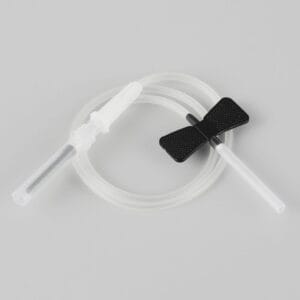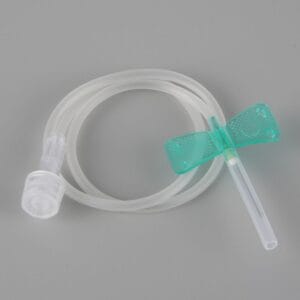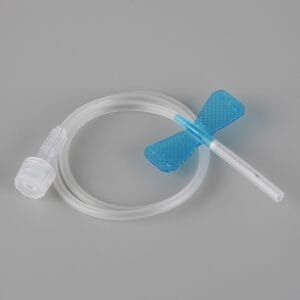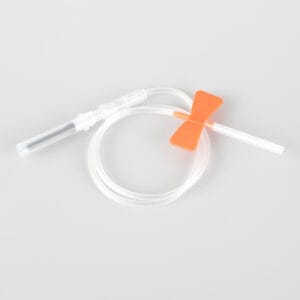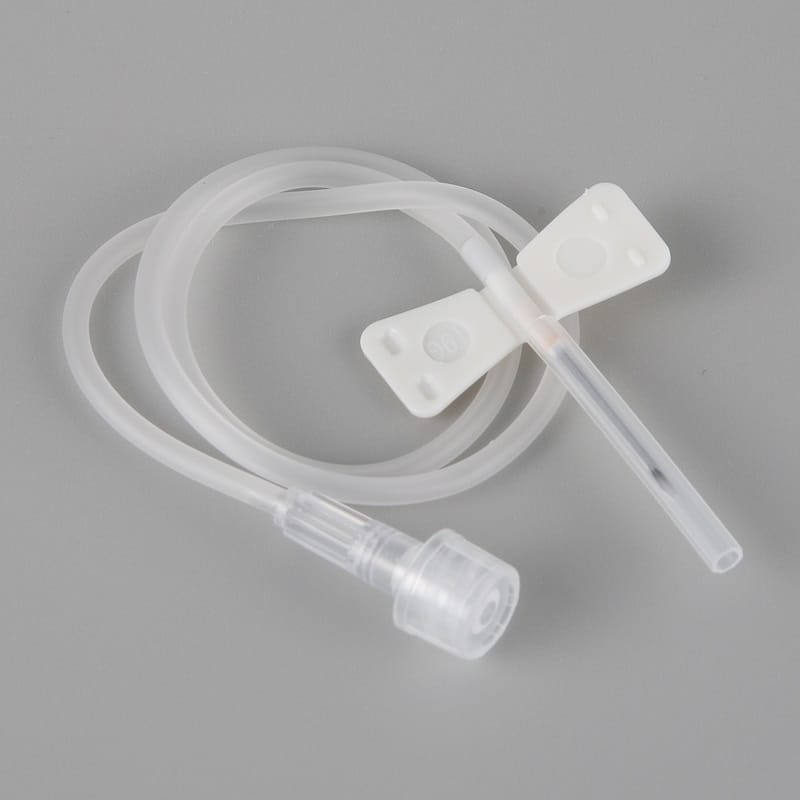

| Product Name | Butterfly Blood Collection Needle |
| Material | Stainless steel |
| OEM/ODM | Yes |
| Certificate | CE, ISO13485, ISO9001 |
| Usage | Blood Collection |
| Needle Length | 20mm |
| Sample | Free |
| Service | In the groups we serve: distributors, import traders, government procurement, buying agents, and medical chain stores, we provide one-stop procurement for you to simplify your procurement process |
The Siny Medical Double Winged Safety Butterfly Blood Collection Needle with Holder combines a winged venipuncture needle, flexible tubing, and a holder-compatible connection for tube-based blood collection.
Its key distinction is the integrated blood collection workflow.
The double-winged design provides a stable handling surface during venipuncture. Flexible tubing separates the needle from the blood collection tube, while the holder provides the connection point for compatible evacuated blood collection tubes.
This configuration makes the product different from a basic butterfly needle supplied without a holder and from a straight pen-type blood collection needle.
For laboratories, hospitals, clinics, and other professional blood collection settings, the complete device configuration should match the intended venipuncture procedure, blood collection tube, and specimen requirements.
A butterfly blood collection needle is a winged venous access device designed to support blood sampling.
The needle is connected to flexible tubing, which separates the venipuncture site from the blood collection tube or other compatible collection component.
This product adds a holder to that configuration.
The holder provides an interface for compatible evacuated blood collection tubes. Once venous access has been established, the appropriate tube can be connected through the collection system according to the validated procedure.
This creates a practical workflow:
Venipuncture → Flexible Tubing → Holder → Compatible Blood Collection Tube
The holder is therefore not simply an accessory. It defines how this butterfly needle fits into a tube-based blood collection system.
A butterfly needle and holder combination brings the main blood collection components into one compatible workflow.
Instead of treating the needle and blood collection tube as separate devices, the holder creates the connection between them.
This can be useful when the blood collection procedure requires:
The product should still be selected according to the vein, required specimen volume, needle gauge, tube type, and institutional blood collection procedure.
The holder does not determine which blood collection tube should be used. Tube selection depends on the required specimen and laboratory test.
The two flexible wings sit near the needle hub and provide a handling surface during venipuncture.
They allow the user to hold and position the needle while establishing venous access.
Once the needle is positioned, the wings can also help maintain control around the puncture site during the collection procedure.
This design differs from a straight pen-type blood collection needle, which does not use the same winged structure.
However, the presence of wings does not mean the needle is automatically appropriate for every patient or every vein.
Needle gauge, vein condition, required specimen volume, user technique, and collection protocol should all be considered.
Flexible tubing is another defining feature of a butterfly needle.
The tubing creates distance between the needle at the venipuncture site and the blood collection tube or holder assembly.
This arrangement allows the collection tube to be handled without directly moving the needle hub each time the tube is changed.
That distinction becomes particularly relevant in tube-based blood collection workflows.
The tubing should remain properly positioned during collection, and the complete system should be used according to the applicable blood collection procedure.
Because tubing introduces an internal volume between the needle and collection tube, laboratories should also follow their validated procedures when collecting specimens that depend on precise fill requirements.
The holder is one of the most important features of this product.
It provides the connection point for compatible blood collection tubes used within an evacuated collection system.
Before use, compatibility should be confirmed between:
Different blood tests require different tubes.
For example, hematology, coagulation, serum, plasma, and glucose-related procedures may require different additives or tube configurations.
The butterfly needle does not determine which additive should be used.
The laboratory test determines the required specimen, while the holder and needle provide part of the collection pathway.
A holder-based butterfly blood collection system can support compatible multi-tube blood collection workflows.
After successful venipuncture, appropriate evacuated tubes can be connected to the holder according to the required order and validated collection procedure.
This allows different specimens to be collected during the same venous access when the procedure permits it.
For example, a laboratory request may require more than one specimen type. Each required tube can then serve its own analytical purpose.
However, multi-tube collection should not be treated simply as inserting tubes in any sequence.
Healthcare professionals should follow the applicable order-of-draw requirements, tube fill instructions, and institutional collection procedures.
The holder supports the workflow, but correct specimen collection still depends on proper tube selection and handling.
The main difference is how the blood collection tube connects to the device.
A butterfly needle with holder provides a ready connection point for compatible evacuated blood collection tubes.
A butterfly needle without holder may require another compatible component or connection method before it can be integrated into a tube-based collection system.
The venipuncture principle remains similar, but the downstream collection configuration changes.
For facilities using evacuated blood collection tubes, a holder-equipped configuration can simplify component matching within the intended collection setup.
Selection should therefore consider the entire system rather than the needle alone.
Both devices can be used for venous blood collection, but their structures differ.
A butterfly blood collection needle combines a needle with wings and flexible tubing.
A pen-type blood collection needle uses a straight configuration without the same flexible winged tubing arrangement.
This structural difference affects how the device is handled and connected during blood collection.
A butterfly configuration may be selected when the intended procedure benefits from winged handling and flexible tubing.
A pen-type needle may be appropriate when a straight-needle collection configuration is preferred.
Neither design is universally better.
Vein characteristics, needle gauge, specimen requirements, collection system, and institutional protocol should guide selection.
A safety butterfly needle includes a safety-related design intended to help manage needle exposure after or around the blood collection procedure.
A conventional butterfly needle may not include the same feature.
This distinction is important because the term safety needle should refer to an actual safety configuration rather than simply describing a disposable sterile needle.
Users should operate the safety feature according to the product instructions for the confirmed configuration.
A safety mechanism also does not replace established sharps-handling practices.
After blood collection, used needles should be handled and discarded according to institutional infection-control and sharps-disposal procedures.
The current Siny Medical butterfly blood collection needle range includes multiple gauge specifications:
A higher gauge number indicates a smaller needle diameter.
Gauge selection should not be based on color or gauge number alone.
The appropriate specification depends on factors such as:
A larger-diameter needle may support greater blood flow, while a finer gauge may be considered when the venipuncture procedure calls for a smaller needle diameter.
The correct gauge should always match the intended clinical workflow.
The current product specification lists a 20 mm needle length.
Needle length is another factor to confirm when selecting a butterfly blood collection needle.
Gauge describes needle diameter, while length describes the physical length of the needle. These specifications should not be treated as interchangeable.
The required needle configuration depends on the intended venipuncture procedure and product setup.
When requesting this product, both gauge and needle length should therefore be confirmed.
The butterfly blood collection needle comes into contact with blood during venipuncture and should be treated as a single-use medical device.
It should not be reused between patients.
Healthcare professionals should follow established procedures for:
After use, the device should be discarded in an appropriate sharps container according to institutional procedures and applicable requirements.
The safety configuration supports safer needle handling, but it does not replace correct technique or sharps-disposal practices.
Start with the intended blood collection workflow.
If the procedure requires a winged venipuncture needle connected to compatible evacuated blood collection tubes, a holder-equipped butterfly configuration may provide the appropriate setup.
Then confirm the technical specifications.
Key factors include:
The complete configuration matters.
A correct needle gauge alone does not guarantee that the device will match the intended holder, tube, or collection workflow.
Siny Medical can discuss butterfly blood collection needle requirements according to the confirmed product configuration and order quantity.
Requirements may include:
Final specifications should be confirmed before quotation and production.
Contact Siny Medical with your required butterfly needle gauge, holder configuration, quantity, packaging, and labeling requirements for more product information or a quotation.
It is a winged venipuncture needle with flexible tubing and a holder used to connect compatible blood collection tubes within a tube-based blood collection system.
The holder provides the interface for compatible evacuated blood collection tubes. It allows the tube to connect with the blood collection pathway after venous access has been established.
A compatible holder-based system can support multi-tube collection when the validated blood collection procedure permits it. Users should follow the required order of draw, tube fill instructions, and institutional procedures.
A holder-equipped butterfly needle provides a connection point for compatible evacuated blood collection tubes. A configuration without a holder may require another compatible component or connection method.
A butterfly needle uses wings and flexible tubing. A pen-type blood collection needle uses a straight configuration without the same winged tubing arrangement.
The current Siny Medical product information lists 18G, 19G, 20G, 21G, 22G, and 23G options. The appropriate gauge depends on the intended venipuncture and specimen collection requirements.
The current product specification lists a 20 mm needle length.
No safety feature eliminates all risk. The safety configuration should be used according to its instructions together with proper blood collection technique, infection-control procedures, and sharps disposal.
The holder may be used with compatible blood collection tubes. The required tube type depends on the laboratory test and specimen requirements, and compatibility should be confirmed before use.
Needle gauge, product configuration, packaging, labeling, and related requirements can be discussed according to the confirmed specification and order quantity.
The Siny Medical Double Winged Safety Butterfly Blood Collection Needle with Holder is defined by more than its needle gauge.
Its combination of double wings, flexible tubing, safety configuration, and holder connection gives it a specific role in tube-based venous blood collection.
The holder connects the butterfly needle system with compatible blood collection tubes, while the winged needle and flexible tubing support the venipuncture side of the workflow.
This makes the product clearly different from a basic butterfly needle without a holder, a straight pen-type blood collection needle, and the gauge-specific butterfly needle pages elsewhere in the Siny Medical range.
Contact Siny Medical with your required gauge, holder configuration, quantity, packaging, and labeling requirements to request additional product information or a quotation.
Copyright © 2026 | Ningbo Siny Medical Technology Co., Ltd