| Item | Specification |
|---|---|
| Product Name | Siny Medical Disposable IV Infusion Set with Flow Regulator |
| Product Type | IV Infusion Administration Set |
| Administration Route | Intravenous |
| Flow Control Component | Integrated Flow Regulator |
| Flow Control Principle | Adjustment of Resistance in the Fluid Pathway |
| Infusion Principle | Gravity-Driven Fluid Delivery |
| Intended Use | Single Use |
The Disposable IV Infusion Set with Flow Regulator from Siny Medical is a single-use medical device designed for controlled adjustment of intravenous fluid flow. It combines an infusion fluid pathway with a dedicated flow-regulating component for compatible gravity-based administration.
A conventional infusion set transfers fluid from an infusion container to an established intravenous access device. In a flow-regulated design, an additional control component adjusts resistance within the fluid pathway. This allows the administration rate to be set and adjusted according to the device’s operating characteristics.
At Siny Medical, we focus on practical infusion device construction, flow regulation, and component compatibility. This product page explains how IV flow regulators work, how they differ from conventional roller clamps, and which factors influence gravity infusion performance.
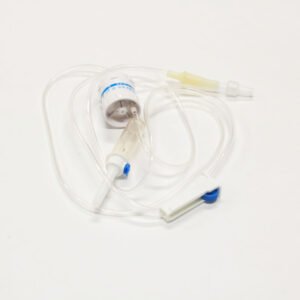
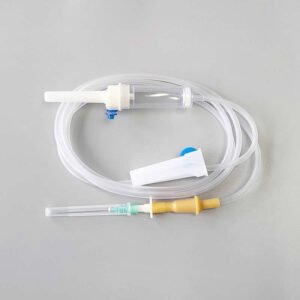
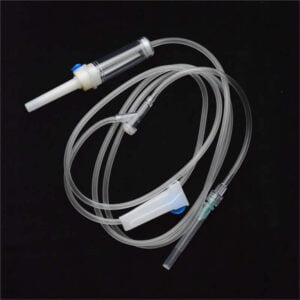
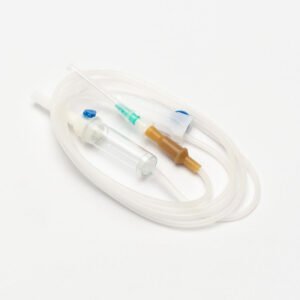
A flow-regulated infusion set combines the essential components of an IV administration system with a dedicated flow-control device. Together, these components support fluid transfer and adjustment during administration.
The container spike connects the infusion set to a compatible IV bag or bottle. Fluid enters the administration pathway through this connection.
A conventional gravity set also includes a drip chamber. The chamber provides a visible area for observing drops and supports preparation of the fluid pathway.
Although the drip chamber helps indicate fluid movement, it does not independently measure the delivered volume. Gravity flow can vary with pressure, fluid properties, and resistance in the system.
Flexible tubing carries fluid toward the intravenous access device. Its internal dimensions and material influence flow resistance, handling, and priming volume.
The flow regulator changes the resistance to fluid movement. In common dial-type designs, rotating the control adjusts an internal flow passage. This provides a convenient method for setting a nominal flow rate under specified conditions.
However, a dial setting is not a direct measurement of actual fluid delivery. Flow performance still depends on the complete administration system.
The terminal connector links the infusion tubing to a compatible IV access device. A suitable connection helps maintain the fluid pathway during administration.
Some infusion sets also include a roller clamp, air inlet, injection site, or filter. These components perform different functions and are not universal features of every design.
For example, a roller clamp may provide a separate method of restricting or stopping flow. An air inlet supports compatible rigid infusion containers that require replacement air.
An IV flow regulator controls fluid movement by changing resistance within the administration pathway. In a gravity-based system, hydrostatic pressure provides the force that moves fluid through the tubing.
A conventional roller clamp changes resistance by compressing the flexible tubing. In contrast, a dedicated flow regulator may use an internal passage designed to adjust resistance as the control moves.
Dial-type regulators commonly display graduated flow settings. These markings help users select a nominal administration rate without relying solely on roller clamp positioning.
However, the marked setting does not guarantee the exact delivered rate. Actual flow depends on the regulator design and operating conditions.
Several factors influence gravity infusion performance.
The height of the infusion container affects hydrostatic pressure. Changes in fluid level can also alter the available pressure during administration.
Fluid viscosity and temperature influence resistance within the pathway. In addition, tubing dimensions, downstream pressure, and patient position may affect delivery.
For these reasons, gravity flow requires appropriate monitoring even when the administration set includes a dedicated regulator.
A flow regulator provides a practical method for adjusting gravity infusion, but it is not equivalent to an electronic infusion pump.
Actual performance depends on the regulator’s design, calibration conditions, and the complete fluid pathway. Flow-rate accuracy cannot be established from the presence of a dial alone.
Clinical research has also identified variations in gravity infusion rates under different operating conditions.
Therefore, treatments requiring precise or tightly controlled delivery need equipment appropriate for those requirements.
Flow regulators and roller clamps both influence fluid movement. However, they use different adjustment mechanisms.
A roller clamp changes resistance by compressing the tubing. A dedicated flow regulator uses a separate control mechanism within the fluid pathway.
These differences affect how the flow setting is adjusted and interpreted.
| Feature | Flow Regulator | Roller Clamp |
|---|---|---|
| Adjustment Method | Dedicated flow-control mechanism | Compression of flexible tubing |
| Rate Indication | Graduated settings on certain designs | No direct volumetric rate scale |
| Flow Control | Adjusts resistance within the fluid pathway | Adjusts tubing compression |
| Operating Principle | Passive gravity-flow regulation | Passive gravity-flow regulation |
| Key Limitation | Actual flow may differ from indicated setting | Actual flow may change after adjustment |
Neither device actively measures and corrects the delivered volume in the same way as a suitable electronic infusion pump.
A dedicated regulator can make manual flow adjustment more convenient, particularly when the device includes clearly marked settings.
Its separate control mechanism may also reduce reliance on repeated roller clamp positioning.
Nevertheless, these features do not establish a universal improvement in accuracy. Performance varies between regulator designs and operating conditions.
An infusion pump uses powered equipment to control delivery according to its operating system.
A passive flow regulator does not generate pumping pressure. Instead, it adjusts resistance while gravity provides the driving force.
Consequently, a regulator-equipped gravity set should not replace a pump when the prescribed treatment requires pump-controlled administration.
Flow-regulated IV administration sets support selected intravenous treatments where gravity infusion is appropriate.
The suitability of the system depends on the prescribed fluid, required administration rate, and clinical conditions.
Gravity infusion systems are commonly used to administer compatible prescribed fluids.
A flow regulator provides a convenient method for adjusting the nominal rate within the capabilities of the selected device.
However, healthcare professionals must monitor the administration and make adjustments according to the prescribed treatment.
Certain medications can be administered through compatible gravity infusion systems.
Some treatments require a specific delivery rate, tubing material, or filtration arrangement. Others require an electronic infusion pump.
Therefore, a flow-regulated set is appropriate only when its performance meets the requirements of the medication and administration procedure.
Flow-regulated infusion systems may be used in hospital wards, treatment rooms, and outpatient facilities.
Their passive adjustment mechanism supports gravity administration without an electronic flow-control device.
Nevertheless, proper setup and monitoring remain essential. A regulator does not eliminate the need to assess the infusion rate and patient condition.
The performance of a flow-regulated infusion set depends on the relationship between its regulator, tubing, container, and terminal connection.
Flow regulators use different internal mechanisms and adjustment scales.
Some designs display numerical flow settings, while others use different control arrangements. The meaning of each setting depends on the regulator’s construction and calibration.
The actual flow range and accuracy must come from the technical specifications of the selected device.
Gravity infusion depends on the pressure generated by the fluid container’s position.
If the container height changes, the driving pressure may change as well. This can affect the delivered rate even when the regulator remains at the same setting.
Therefore, the operating conditions used to establish a flow setting matter.
Tubing material, internal diameter, and length influence flow resistance.
Different medical polymers also have different chemical characteristics. Certain medications may require particular materials because of compatibility or sorption concerns.
The selected infusion system must therefore suit the intended solution.
The terminal connector must match the intended intravenous access device.
All connected components must maintain a suitable fluid pathway during use. Unintended kinks, leakage, or disconnection can interfere with administration.
A flow regulator cannot compensate for an unsuitable connection or an obstructed fluid pathway.
Proper preparation helps maintain the intended function of a flow-regulated infusion set.
Before use, inspect the packaging and verify the product identification and expiration date. Where a sterile barrier is present, confirm that it remains intact.
Prepare and prime the administration system according to its instructions for use. Ensure that the tubing is free from unintended kinks and that all connections are compatible.
During gravity infusion, position the fluid container according to the applicable procedure. Adjust the regulator using the selected device’s instructions and verify the actual flow as required.
Changes in container height, fluid properties, or downstream conditions can affect delivery. For this reason, continue appropriate monitoring throughout administration.
After use, discard the single-use device according to applicable healthcare waste procedures. Do not reuse a product labeled for single use.
Store unused products according to their labeled conditions and protect the packaging from physical damage.
It is an infusion administration set that includes a dedicated component for adjusting fluid flow. In conventional gravity systems, the regulator changes resistance within the fluid pathway.
A flow regulator adjusts resistance to fluid movement. Some designs use a rotating dial to change the characteristics of an internal flow passage.
No. A roller clamp compresses flexible tubing, while a dedicated regulator uses a separate flow-control mechanism.
Not necessarily. Actual delivery can differ from the indicated setting because of regulator design and operating conditions.
A conventional passive gravity-flow regulator does not require electrical power. It relies on gravity to move fluid through the system.
Not when the prescribed treatment requires pump-controlled delivery. Passive gravity regulators and electronic pumps operate differently.
Container height, fluid viscosity, temperature, tubing characteristics, and downstream pressure can influence actual flow.
It may be used for compatible prescribed medications when gravity administration meets the treatment requirements.
No. Flow ranges and adjustment scales vary by design. The applicable values must come from the selected device specifications.
No. A device labeled for single use should not be cleaned, resterilized, or reused.
Siny Medical supplies disposable IV infusion sets with flow regulators for compatible gravity-based intravenous administration. We focus on flow-control functionality, fluid pathway construction, and connection compatibility.
Explore our infusion products or contact Siny Medical to discuss flow regulator requirements, product specifications, and supply inquiries.
Copyright © 2026 | Ningbo Siny Medical Technology Co., Ltd