| Item | Specification |
|---|---|
| Product Name | Medical and Surgical Sutures |
| Product Category | Surgical Sutures |
| Material Options | Absorbable and Non-Absorbable Materials |
| Suture Structures | Monofilament and Multifilament |
| Absorption Types | Absorbable and Non-Absorbable |
| Needle Options | Surgical Needle Configurations |
| Applications | Soft Tissue Approximation and Ligation |
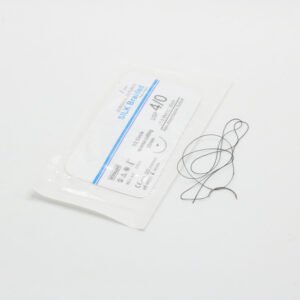
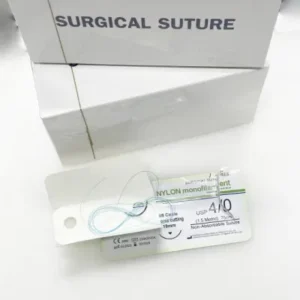
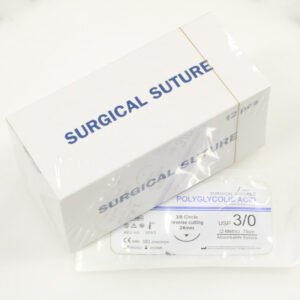
Medical and Surgical Sutures Manufacturer is a product category designed to help hospitals, surgical departments, and medical distributors source sutures for different clinical procedures. Surgical sutures are essential medical consumables used to approximate tissue, close wounds, and perform selected ligation procedures.
Surgical sutures are available in different materials, structures, and absorption classifications. Common options include synthetic absorbable sutures, natural absorbable sutures, and non-absorbable surgical threads. Each type offers different handling characteristics, tensile strength retention, and tissue support.
Choosing the right suture requires more than selecting a material. Buyers should also consider thread diameter, needle configuration, tissue characteristics, and the expected healing period.
Siny Medical offers surgical suture solutions for healthcare purchasing requirements. By understanding the differences between common suture materials, medical buyers can select suitable products for their intended applications.
Surgical sutures are generally classified as absorbable or non-absorbable. These categories describe how the materials behave after implantation and help clinicians select the appropriate tissue support.
Absorbable sutures gradually lose tensile strength and break down after implantation. They provide temporary tissue support during healing.
Synthetic absorbable materials usually degrade through hydrolysis. Natural collagen sutures, on the other hand, primarily break down through enzymatic processes.
Common absorbable materials include:
These materials have different degradation profiles. Therefore, surgeons should select them according to the expected healing period and the required duration of mechanical support.
Non-absorbable sutures do not undergo the controlled absorption process associated with absorbable materials.
They may be used for external wound closure or selected procedures requiring prolonged suture retention.
Common non-absorbable materials include:
Although these materials share a non-absorbable classification, their long-term performance differs. For example, nylon may gradually lose tensile strength during prolonged implantation, while polypropylene generally maintains its mechanical properties more consistently.
Material selection influences how a suture passes through tissue, holds knots, and supports healing.
Understanding these differences helps purchasing teams distinguish between products with similar appearances.
Monofilament sutures consist of a single continuous strand. Their smooth surfaces generally produce less tissue drag and capillarity than braided alternatives.
Nylon, polypropylene, PDO, and PGCL are commonly available in monofilament form.
Multifilament sutures consist of multiple fibers combined into one thread. Braided silk, PGA, and polyester are familiar examples.
Braided sutures often provide flexible handling and favorable knot characteristics. However, their construction may produce greater capillarity than monofilament materials.
Neither structure is suitable for every procedure. The choice depends on tissue requirements and surgical technique.
Tensile strength retention describes how much mechanical strength a suture maintains over time.
This characteristic is especially important for absorbable materials.
Some absorbable sutures provide relatively short-term support, while others retain useful strength for a longer period.
Complete absorption and loss of useful tensile strength are different events. A suture may lose much of its supporting strength before the material is fully absorbed.
Therefore, clinicians should evaluate the product’s strength-retention characteristics rather than relying only on its absorbable classification.
Surgical sutures interact with surrounding tissue after placement.
The material, thread structure, surgical technique, and local wound conditions can influence tissue response.
Natural collagen sutures may produce different tissue reactions from synthetic alternatives.
In addition, monofilament and braided sutures have different handling properties. Surgeons should consider flexibility, knot security, and tissue passage when selecting a material.
Surgical sutures may be supplied with attached needles in different configurations.
Needle curvature, point geometry, and length influence tissue penetration and maneuverability.
Common needle designs include taper-point, cutting, and reverse-cutting types.
However, the correct needle depends on the tissue and procedure. Buyers should specify the required needle configuration when preparing an order.
Medical and surgical sutures are used across many clinical specialties. However, the appropriate material depends on the tissue, wound tension, and expected healing period.
General surgical procedures may require sutures for selected soft tissue approximation and ligation.
Absorbable materials can provide temporary support when permanent thread retention is unnecessary.
Non-absorbable materials may be appropriate for other procedures requiring different support characteristics.
The surgeon should select the material according to the specific application.
Skin closure is a common application of surgical sutures.
Nylon and polypropylene are frequently used for selected external closures. These materials provide mechanical support while the wound heals.
External non-absorbable sutures are commonly removed after an appropriate healing period.
Absorbable sutures may also be used in selected skin closure techniques, including subcuticular closure.
Dental procedures may require sutures to approximate gingival or oral mucosal tissue.
Examples include selected tooth extractions, periodontal procedures, and implant-related soft tissue closure.
Needle curvature and thread diameter are particularly important because the oral cavity provides limited working space.
Both absorbable and non-absorbable materials may be used according to the procedure.
Selected gynecological procedures require sutures for soft tissue approximation.
The material should provide sufficient support during healing without creating unnecessary long-term retention.
Clinicians should consider tissue characteristics and the product’s intended use before selecting an absorbable or non-absorbable thread.
Plastic and reconstructive procedures often require careful tissue alignment.
Fine sutures and suitable needle configurations can support precise placement.
However, cosmetic outcomes depend on wound tension, tissue condition, surgical technique, and postoperative care.
No suture material can guarantee a particular scar appearance.
Hospitals and medical distributors should evaluate both the suture specifications and the supplier’s ability to meet purchasing requirements.
A clear purchasing process helps reduce product mismatches and supports consistent inventory management.
Start by identifying the exact material required for the intended procedure.
For example, PDO, PGCL, and PGA are all synthetic absorbable materials. However, they differ in structure and strength-retention characteristics.
Similarly, nylon and polypropylene are both non-absorbable, but their long-term mechanical behavior is not identical.
Buyers should avoid treating products as interchangeable based only on absorption classification.
USP size identifies the standardized diameter classification of a surgical suture.
Different tissue types require different thread diameters.
Fine sutures may suit delicate tissue approximation, while other procedures require larger diameters.
The final selection should follow the surgeon’s clinical requirements.
Thread length affects the amount of material available during a procedure.
Needle characteristics also influence surgical access and tissue penetration.
Buyers should specify the required needle point, curvature, and length when these details are relevant.
Clear configurations help suppliers identify suitable products and reduce purchasing errors.
Sutures intended for sterile surgical procedures require appropriate sterile packaging.
Before purchasing, verify the selected product’s labeling, packaging integrity, expiration date, and needle-and-thread configuration.
For hospital procurement, consistent product identification also supports inventory control.
Medical distributors may need several suture materials and configurations for different customers.
A supplier with an appropriate product range can help buyers organize purchasing requirements across multiple surgical departments.
However, availability should be confirmed for each material, size, and needle combination.
Buyers should also clarify order quantities, packaging preferences, and delivery requirements before placing bulk orders.
Technical information is important when comparing surgical sutures.
Useful purchasing details include material composition, suture structure, absorption classification, thread diameter, and needle configuration.
For absorbable products, buyers may also need product-specific strength-retention and absorption information.
Accurate specifications help prevent confusion between similar materials.
Proper handling helps preserve surgical suture performance before and during use.
Before opening a package, verify the material, USP size, needle configuration, and expiration date.
If the product is supplied sterile, inspect the sterile barrier carefully. Do not use a product with damaged or compromised packaging.
During surgery, avoid unnecessary crushing, gripping, or excessive tension on the thread. Mechanical damage may affect its strength and handling.
Surgeons should also use appropriate knotting techniques for the selected material.
After implantation, absorbable sutures gradually lose tensile strength. Non-absorbable sutures behave differently and may require removal when used for external closure.
Store unused products according to their labeled instructions. Protect packaging from excessive heat, moisture, direct sunlight, and physical damage.
Hospitals should organize their suture inventory by material, USP size, needle configuration, and expiration date.
Medical and surgical sutures are threads used to approximate tissues, close wounds, and perform selected ligation procedures.
Absorbable sutures gradually degrade after implantation. Non-absorbable sutures do not undergo the same controlled absorption process.
Common materials include PDO, PGCL, PGA, nylon, polypropylene, silk, polyester, and natural catgut.
Monofilament sutures contain one continuous strand. Braided sutures consist of multiple fibers combined into one thread. Their handling and capillarity characteristics differ.
Nylon and polypropylene are commonly used for selected external skin closures. Absorbable materials may also be used for certain closure techniques.
No. Absorbable materials differ in composition, structure, strength retention, and degradation mechanism.
Both are synthetic absorbable monofilament sutures. However, PDO generally provides longer temporary tensile strength than PGCL.
Not always. External non-absorbable sutures are commonly removed after healing, while some internal applications require long-term retention.
Hospitals should consider the intended procedure, material, USP size, thread length, needle configuration, and required tissue support.
Distributors should confirm product materials, available configurations, packaging, order quantities, and delivery requirements.
Siny Medical provides medical and surgical suture solutions for hospitals, surgical departments, clinics, and medical distributors. Different absorbable and non-absorbable materials offer options for selected soft tissue approximation and ligation procedures.
Contact Siny Medical with your required suture materials, USP sizes, thread lengths, needle configurations, packaging preferences, and purchasing quantities to discuss suitable products and bulk supply.
Copyright © 2026 | Ningbo Siny Medical Technology Co., Ltd