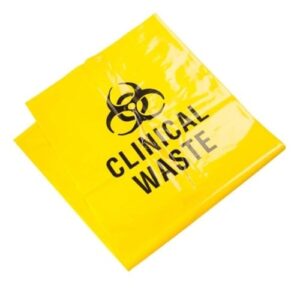
| Specification | Description |
|---|---|
| Product Name | Leakproof 95kPa Biohazard Specimen Bag |
| Product Category | Biological Specimen Transport Packaging |
| Product Type | Specimen Transport Bag |
| Stated Pressure Rating | 95 kPa |
| Intended Use | Secondary Packaging for Appropriate Biological Specimens |
| Applications | Clinical Laboratories, Hospitals, Diagnostic Centers |
Biological specimen transportation requires packaging that supports containment, sample identification, and safe handling. Hospitals, diagnostic laboratories, and medical testing centers frequently move blood samples, urine specimens, and other biological materials between collection points and testing facilities. During these activities, suitable secondary packaging helps reduce the risk of specimen leakage.
Siny Medical offers the Leakproof 95kPa Biohazard Specimen Bag for healthcare buyers seeking specimen packaging with a stated 95 kPa pressure-differential rating. The product targets laboratory and medical transport applications where containment performance is an important purchasing consideration.
95kPa Specimen Bags are associated with secondary packaging designed to withstand specified pressure-differential conditions. This characteristic is particularly relevant when laboratories evaluate packaging for biological samples that may travel through changing environmental pressures.
However, a stated pressure rating does not independently establish compliance with every transport regulation. Buyers should confirm the finished bag’s test conditions, closure requirements, and intended application before incorporating it into a specimen transport system.
For hospitals, laboratories, and medical distributors, product selection should also consider primary container compatibility, absorbent materials, labeling, and outer packaging. These elements work together to support a suitable transport arrangement.
Pressure resistance is one of the main characteristics that distinguishes this product category from ordinary laboratory sample bags.
Nevertheless, the complete packaging design determines whether a product suits a particular transport process.
The term 95 kPa refers to a pressure differential of 95 kilopascals.
In biological specimen transportation, certain packaging requirements call for a primary receptacle or secondary packaging to withstand an internal pressure differential of at least 95 kPa without leakage.
This requirement helps address pressure changes that may occur during transport.
For example, air transport can expose packages to different pressure conditions. Suitable packaging must maintain the required containment performance under the applicable test conditions.
However, the pressure value alone does not describe the entire test procedure.
Temperature, exposure duration, closure preparation, and the testing method may also matter.
Therefore, buyers should review the manufacturer’s supporting information before treating a stated 95 kPa rating as evidence of compliance with a particular transport requirement.
Leakage control is essential when laboratories handle liquid biological specimens.
A suitable specimen transport bag can provide an additional containment layer around properly closed primary containers.
However, the actual performance depends on the finished bag’s construction, seams, and closure.
For this reason, healthcare buyers should confirm whether the manufacturer has evaluated the complete bag under the relevant pressure conditions.
They should also verify the correct closing method because an improperly closed package may not provide its intended performance.
A specimen bag generally serves as a secondary packaging component rather than a replacement for the primary sample container.
The primary receptacle directly contains the specimen. Meanwhile, secondary packaging provides an additional protective layer.
For liquid specimens, the applicable transport instructions may also require absorbent material between the primary and secondary components.
Therefore, facilities should evaluate the complete packaging arrangement rather than rely on the bag alone.
Laboratories transport specimens in different primary containers.
These may include blood collection tubes, specimen bottles, and suitable containers for diagnostic materials.
The selected secondary packaging must accommodate the intended containers without excessive pressure on their closures.
In addition, personnel should consider the shape, quantity, and arrangement of the primary receptacles.
However, a specimen bag does not automatically suit every biological material or hazard classification.
Buyers must identify the intended contents before choosing a transport product.
Suitable secondary packaging can help laboratories organize specimen transfer between collection areas and testing departments.
For example, staff may prepare labeled primary containers before placing them inside appropriate secondary packaging.
This approach supports an orderly handling process.
However, packaging does not replace correct specimen identification, personnel training, or established laboratory procedures.
Instead, it forms one part of the overall specimen transport workflow.
Healthcare facilities use specimen packaging in many environments. Consequently, the appropriate product depends on the specimen type and transport conditions.
Hospitals regularly transfer biological specimens from patient care departments to laboratories.
These samples may include blood tubes, urine containers, and other diagnostic materials.
Suitable secondary packaging can support specimen containment during internal transfer.
In addition, clear identification helps receiving personnel match each specimen with the correct laboratory request.
However, hospitals should assess their internal transport procedures before selecting a packaging configuration.
Diagnostic centers often receive specimens from outpatient clinics and collection sites.
These workflows may involve multiple handling stages.
Therefore, buyers should evaluate how the packaging performs during collection, sorting, and transportation.
A pressure-rated specimen bag may be relevant when the intended process requires specified pressure-differential resistance.
Nevertheless, facilities should confirm the complete packaging requirements for each transport route.
Sample collection centers may send biological materials to centralized laboratories.
During these transfers, staff must maintain sample identification and appropriate containment.
Suitable specimen transport packaging can support these tasks.
Furthermore, standardized packaging procedures can help personnel prepare samples consistently.
However, facilities should select packaging according to the intended specimen and transport conditions.
Research laboratories may handle biological materials with different hazard classifications.
Some materials require specialized containment or transport arrangements.
Therefore, laboratory personnel should identify the biological material and review the applicable packaging requirements before shipment.
A general specimen bag should not serve as a substitute for specialized packaging when the material requires additional controls.
Medical distributors supply specimen packaging to hospitals, laboratories, and diagnostic centers.
Their customers may request products with specific containment characteristics.
For example, a laboratory buyer may prioritize pressure-differential performance, while another customer may focus on dimensions and compatibility with existing sample containers.
Consequently, distributors should review the manufacturer’s technical information before presenting a product for a particular application.
Although both products support biological sample handling, they may differ in their stated performance characteristics.
A standard specimen bag may provide practical secondary packaging for routine laboratory workflows.
In contrast, a product with a stated 95 kPa pressure rating targets applications where pressure-differential resistance is an important consideration.
Standard specimen bags can help organize properly closed sample containers.
Depending on the design, they may also support specimen identification or document handling.
However, buyers should not assume that an ordinary specimen bag has undergone pressure-differential testing.
Its suitability depends on the actual product specifications.
A 95 kPa-rated specimen bag is intended to address a defined pressure-differential performance requirement.
This characteristic can be important when evaluating secondary packaging for certain biological specimen transport workflows.
However, the stated rating must correspond to the complete product and its specified testing conditions.
Buyers should also confirm whether the relevant transport instructions require additional packaging components.
| Feature | Standard Specimen Bags | 95 kPa Specimen Bags |
|---|---|---|
| Main Purpose | Routine Specimen Handling | Specimen Handling With Defined Pressure-Resistance Requirements |
| Pressure Rating | Not Necessarily Specified | Stated 95 kPa Rating |
| Secondary Packaging | Depends on Product Suitability | Intended Secondary Packaging Application |
| Leakproof Performance | Requires Product-Specific Verification | Requires Verification of Rated Test Conditions |
| Primary Receptacle | Still Required | Still Required |
| Absorbent Material | Depends on Applicable Requirements | Depends on Applicable Requirements |
| Outer Packaging | May Be Necessary | May Be Necessary |
| Main Purchasing Priority | Routine Handling and Compatibility | Pressure Performance and Transport Compatibility |
The key difference is the stated pressure-differential characteristic.
However, buyers should not treat that characteristic as proof that the bag alone forms a complete compliant shipping system.
Healthcare purchasing teams should evaluate pressure-rated specimen packaging according to their intended transport conditions and technical requirements.
The following factors can help buyers prepare a practical purchasing specification.
First, determine whether the intended specimen transport procedure requires packaging that withstands a specified pressure differential.
Then, review the manufacturer’s test information for the selected product.
Buyers should confirm that the reported performance applies to the complete bag and its specified closure method.
In addition, they should consider any temperature or conditioning requirements that apply to the relevant test.
A product name alone cannot replace supporting performance information.
Different biological specimens may require different packaging arrangements.
For example, liquid samples create different containment considerations from dry swabs or other materials.
Therefore, buyers should identify the specimen type and primary container before selecting secondary packaging.
The biological material’s classification may also determine the applicable transport requirements.
The specimen bag should accommodate the intended primary receptacle.
Buyers should consider container dimensions, closure design, and the number of receptacles in each package.
For example, a laboratory transporting several tubes may need a different arrangement from one transporting a larger specimen container.
However, personnel should not overload the secondary packaging or place unnecessary pressure on primary container closures.
Closure performance is particularly important for pressure-rated packaging.
The bag’s stated performance may depend on a specific sealing or closing procedure.
Therefore, buyers should review the manufacturer’s instructions and ensure that staff can follow them consistently.
An incorrect closure may compromise containment even when the material itself offers suitable resistance.
Liquid specimen transport may require absorbent material capable of containing the contents if leakage occurs.
The required arrangement depends on the applicable packing instructions.
For this reason, buyers should determine whether they need separate absorbent materials or other packaging components.
They should not assume that a pressure-rated bag includes everything required for transport.
Internal laboratory transfer and external shipment may involve different requirements.
For example, transport of certain Category B biological substances may require packaging that follows the applicable UN3373 provisions and packing instructions.
These requirements address the complete packaging arrangement, not simply the pressure rating of one bag.
Therefore, facilities should review the specimen classification, transport mode, and applicable rules before shipment.
A 95 kPa rating alone does not establish compliance with UN3373 or any complete packaging standard.
Specimen identification remains essential throughout transportation.
Buyers should consider how the packaging accommodates labels and accompanying documentation.
Some packaging designs may offer separate document handling features. However, these features depend on the finished product.
Therefore, purchasing teams should confirm the selected bag’s actual configuration.
Hospitals and laboratories often need a consistent supply of specimen transport products.
Purchasing teams can estimate demand by reviewing specimen collection volumes and transport frequency.
In addition, they should consider storage space and internal distribution.
Medical distributors should request clear technical specifications and packaging information before establishing repeat supply arrangements.
Correct handling helps laboratories maintain consistent specimen transport procedures.
Before use, inspect the bag for visible damage.
Next, verify that the primary specimen container suits the sample and that personnel have closed it correctly.
Check the specimen identification and accompanying information.
Then, place the primary receptacle inside suitable secondary packaging according to the applicable procedure.
If the transport instructions require absorbent material, include the appropriate amount and arrangement.
Close the bag according to the manufacturer’s instructions.
Avoid overfilling or placing sharp objects directly against the bag material.
During transport, personnel should follow the applicable procedures for temperature control, handling, and documentation.
If a package leaks or becomes damaged, staff should follow their facility’s spill response and exposure control procedures.
Finally, receiving personnel should inspect specimens according to the laboratory’s acceptance criteria.
Store unused specimen bags in their original packaging in a clean, dry location.
Protect them from sharp objects, physical damage, and unsuitable environmental conditions.
In addition, follow the manufacturer’s labeled storage instructions.
Facilities should clearly distinguish pressure-rated specimen packaging from ordinary sample bags to reduce selection errors.
It is a specimen packaging product with a stated pressure-differential rating of 95 kilopascals. Buyers should verify the finished product’s test conditions and intended application.
It refers to a pressure differential of 95 kilopascals. Certain biological specimen transport requirements use this value when specifying containment performance for primary or secondary packaging.
A product may claim leakproof performance under specified conditions. However, buyers should review the supporting test information and closure instructions before relying on that claim.
Pressure changes during transportation can affect packaging. Suitable pressure-resistant containment helps address this risk under the relevant test conditions.
They may serve as secondary packaging for properly closed blood collection tubes when their dimensions and performance suit the intended transport process.
Suitable pressure-rated packaging may support urine specimen transport. However, buyers must confirm container compatibility, containment requirements, and the complete packaging arrangement.
Not necessarily. A stated 95 kPa rating identifies a specific pressure-differential characteristic that ordinary specimen bags may not provide.
No. UN3373-related requirements apply to the relevant biological substance classification and complete packaging arrangement. A pressure rating alone does not establish compliance.
No. The primary receptacle must directly contain the biological specimen.
External transport may require suitable outer packaging. The applicable requirements depend on the specimen classification and transport conditions.
They should review pressure-performance evidence, closure instructions, specimen compatibility, packaging requirements, available product configurations, and customer purchasing needs.
Siny Medical supplies 95kPa specimen bags and other disposable medical consumables for hospitals, clinical laboratories, diagnostic centers, and healthcare distributors. Our leakproof biohazard specimen bag product is intended for buyers evaluating pressure-rated secondary packaging for appropriate biological sample transport applications. Explore our specimen transport packaging products or contact Siny Medical to discuss technical specifications, pressure-performance information, available configurations, and bulk purchasing requirements.
Copyright © 2026 | Ningbo Siny Medical Technology Co., Ltd