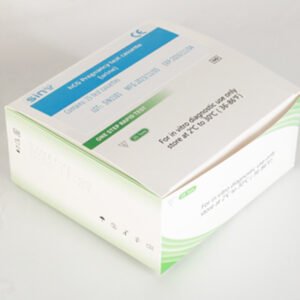
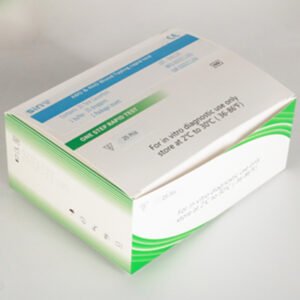
| Specification | Details |
|---|---|
| Product Name | Influenza A+B Antigen Test Kit |
| Product Type | Influenza A/B Rapid Antigen Test |
| Test Method | Colloidal Gold |
| Target | Influenza A and Influenza B Antigens |
| Specimen | Nasopharyngeal Swab |
| Result Time | Within 15 Minutes |
| Storage Temperature | 2–30°C |
| Usage | Single Use |
| OEM/ODM | Available |
The Siny Medical Influenza A+B Antigen Test Kit is designed for the rapid detection of Influenza A and Influenza B antigens in nasopharyngeal swab specimens.
Influenza A and B are major types of influenza viruses associated with seasonal respiratory illness. Their symptoms can overlap with those of other respiratory infections. Therefore, rapid antigen testing can support timely screening when influenza infection is suspected.
This Influenza A/B rapid test uses a colloidal gold method and provides a visual result within 15 minutes. The test is designed for single use. In addition, routine visual interpretation does not require complex laboratory equipment.
Its straightforward testing process makes the kit suitable for professional healthcare and diagnostic environments where rapid influenza screening is required.
An Influenza A+B Antigen Test is designed to detect viral antigens associated with Influenza A and Influenza B.
An antigen test looks for components associated with the virus in the collected respiratory specimen. This differs from an antibody test, which detects antibodies produced by the immune system.
The Siny Medical test uses a nasopharyngeal swab specimen.
Influenza A viruses are an important cause of seasonal influenza and can circulate widely during flu seasons.
The test includes a dedicated detection area for Influenza A antigen. As a result, users can identify when the target is detected according to the test criteria.
Influenza B viruses are another common cause of seasonal influenza.
The test also includes a detection area for Influenza B antigen. Therefore, users can evaluate both influenza types within the same testing procedure.
The test provides a qualitative rather than quantitative result.
In other words, it indicates whether the target antigen is detected according to the test criteria. It does not provide a numerical measurement of viral concentration.
The Influenza A+B Antigen Test Kit uses an immunochromatographic testing principle with a colloidal gold method.
Testing begins with the collection of a nasopharyngeal swab specimen.
Next, the collected specimen is prepared according to the instructions supplied with the kit. The prepared sample is then applied to the test device.
The specimen moves through the test membrane. If Influenza A or Influenza B antigen is present at a detectable level, the corresponding test area produces a visible response.
The control line helps confirm that the test has operated correctly.
If the required control line does not appear, users should consider the result invalid. In this situation, they should perform a new test according to the instructions for use.
The result area allows users to determine whether Influenza A antigen, Influenza B antigen, or neither target has been detected.
Always interpret the result according to the instructions supplied with the specific test kit.
Specimen quality is an important part of respiratory antigen testing.
The Influenza A+B Antigen Test Kit uses a nasopharyngeal swab specimen. Correct collection and preparation help support reliable test performance.
Healthcare professionals should collect the nasopharyngeal swab specimen using the appropriate technique and collection materials.
They should also follow established specimen collection procedures throughout the process.
After collection, process the swab specimen according to the instructions for use.
Correct extraction and preparation allow the specimen to interact properly with the rapid test system.
Apply the prepared specimen to the designated sample area of the test device.
Use the specified amount of sample. Excessive or insufficient sample application may interfere with normal test operation.
The test provides results within 15 minutes.
Follow the supplied instructions for the exact reading procedure. Do not interpret the result outside the specified reading period.
Users should interpret the result by examining the control line together with the Influenza A and Influenza B test areas.
Always compare the visible line configuration with the product instructions.
When the required control line and Influenza A test line appear according to the product instructions, the test has detected Influenza A antigen.
When the required control line and Influenza B test line appear, the test has detected Influenza B antigen according to the test criteria.
A negative result generally occurs when the required control line appears but neither Influenza A nor Influenza B test lines are present.
However, a negative antigen result does not completely exclude influenza infection.
Several factors can influence the result. These include specimen quality, collection timing, and the amount of viral antigen present in the specimen.
If the required control line does not appear, the test is invalid.
Do not interpret the result as positive or negative. Instead, repeat the test with a new device according to the instructions for use.
Rapid antigen testing provides a convenient screening method. However, correct testing conditions remain important.
Several factors can influence test performance.
The amount of detectable viral antigen can vary during the course of an infection.
Therefore, the timing of specimen collection may affect whether sufficient antigen is available for detection.
Respiratory rapid tests depend on an appropriately collected specimen.
Poor collection technique or insufficient specimen material can reduce the amount of viral antigen available for testing.
Process the collected specimen according to the supplied instructions.
Incorrect preparation or sample application may interfere with normal test operation.
Read the result within the specified period and follow the instructions for use.
Healthcare professionals should also consider rapid antigen test results together with symptoms, exposure history, and other relevant clinical information.
The Influenza A+B Antigen Test Kit provides a practical method for screening Influenza A and B within a short testing period.
It can support testing workflows in professional environments such as:
The ability to screen Influenza A and B within the same testing procedure can simplify initial influenza testing workflows.
However, rapid antigen testing should not serve as the sole basis for every clinical decision.
When a result does not match the patient’s symptoms or clinical findings, additional evaluation may be appropriate. Healthcare professionals may also consider confirmatory testing according to applicable clinical guidance.
Proper storage helps maintain the intended performance of rapid diagnostic products.
Store the Influenza A+B Antigen Test Kit at 2–30°C.
Keep the test components in their protective packaging until they are ready for use. Before testing, check the packaging condition and confirm that the product is within its stated shelf life.
Each test is designed for single use.
After testing, handle used swabs, test devices, extraction materials, and other specimen-related components according to facility procedures and applicable local requirements.
The test is designed to detect Influenza A and Influenza B antigens in a respiratory specimen. The Siny Medical test uses a nasopharyngeal swab specimen.
The test uses a nasopharyngeal swab specimen. Follow the supplied instructions for correct specimen collection and preparation.
The product provides a test result within 15 minutes. Follow the specific reading instructions supplied with the kit.
Yes. The test includes separate detection areas for Influenza A and Influenza B. This allows users to differentiate between the two influenza types during result interpretation.
No. A negative antigen test does not completely exclude influenza infection. Specimen quality, collection timing, and antigen concentration can affect detection. Additional evaluation may be appropriate when influenza is still clinically suspected.
No. An antigen test detects viral antigens in the respiratory specimen. In contrast, an antibody test looks for antibodies produced by the immune system in response to an infection.
No. The test is designed for single use. Use a new test device and appropriate specimen collection materials for each test.
The Siny Medical Influenza A+B Antigen Test Kit provides a practical solution for rapid qualitative screening of Influenza A and Influenza B antigens in nasopharyngeal swab specimens.
The kit combines a colloidal gold method, a 15-minute result time, dual Influenza A/B detection, and straightforward visual interpretation. These features support efficient testing workflows in professional healthcare and diagnostic environments.
For healthcare facilities, laboratories, and other professional organizations evaluating Influenza A/B rapid antigen tests, Siny Medical can provide additional product, packaging, and supply information based on specific requirements.
Contact Siny Medical to discuss your Influenza A+B Antigen Test Kit requirements, bulk supply needs, or OEM/ODM options.
Copyright © 2026 | Ningbo Siny Medical Technology Co., Ltd