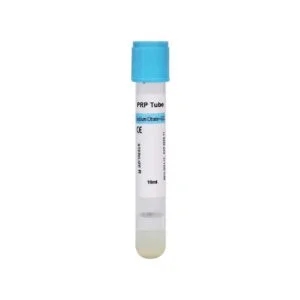
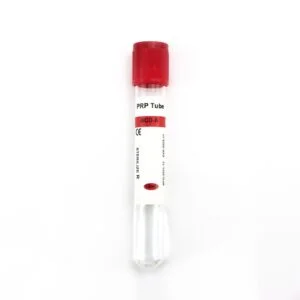
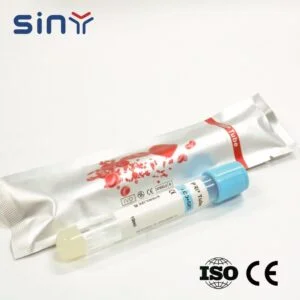
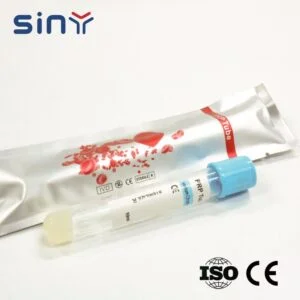
| Product Name | PRP Tubes for Beauty |
| Tube Material | PET/Glass/Crystal |
| OEM/ODM | Yes |
| Certificate | ISO13485, ISO9001 |
| Usage | Skin Treatment, Hair Treatment, Knee Treatment, Dental, Orthopedic |
| Sterile | Irradiation sterilization |
| Sample | Free |
| Service | The groups we serve: distributors, import traders, government procurement, Buying Agents, medical chain stores, we provide one-stop procurement for you to simplify your procurement process |
Siny Medical supplies the ACD Medical PRP Tube for healthcare institutions, PRP preparation clinics, medical distributors, and professional purchasing organizations. This platelet-rich plasma preparation tube uses an acid citrate dextrose (ACD) anticoagulant system to support appropriate blood processing procedures.
Platelet-rich plasma (PRP) is a blood-derived preparation containing platelets suspended in plasma. It is commonly prepared by collecting blood, performing centrifugation, and separating selected blood components. The final composition depends on the preparation method, including whether the protocol produces leukocyte-rich or leukocyte-poor PRP.
ACD is used in certain PRP preparation systems to reduce blood clotting during collection and processing. Citrate binds ionized calcium, which is required for normal coagulation. As a result, the collected blood can remain anticoagulated during the relevant preparation stages.
However, not all PRP tubes use the same anticoagulant formulation or separation method. Tube construction, anticoagulant quantity, centrifugation conditions, and handling procedures can influence the preparation process. Therefore, selecting a suitable tube requires more than identifying the anticoagulant name.
At Siny Medical, we supply PRP-related medical consumables for healthcare institutions and international distributors. We understand the importance of clear product identification, preparation-system compatibility, and reliable purchasing coordination.
The defining feature of an ACD PRP tube is its acid citrate dextrose anticoagulant system.
ACD formulations contain citrate-related components and dextrose. Citrate reduces the availability of ionized calcium, which helps limit coagulation during blood collection and processing.
This anticoagulant action supports preparation methods that require blood to remain fluid before separation. However, it does not independently determine platelet recovery, platelet activation, or the characteristics of the final PRP preparation.
The performance of a PRP system also depends on blood collection conditions, centrifugation, separation technique, and subsequent handling.
ACD-A and ACD-B are different acid citrate dextrose formulations used in certain blood collection and processing applications.
Both rely on citrate-based anticoagulation, but their compositions and component proportions differ. These differences matter because the formulation and anticoagulant-to-blood ratio are part of the preparation protocol.
For example, a procedure developed for one ACD formulation should not automatically be applied to another. Changing the anticoagulant system may alter the processing conditions and require additional evaluation.
ACD-A is encountered in some PRP preparation protocols. Nevertheless, the general product name does not establish which formulation is present.
The specific ACD formulation and quantity in this Siny Medical tube have not been confirmed. Buyers should match these details to their intended preparation procedure.
PRP preparation tubes may be manufactured from suitable glass or plastic materials.
Some systems incorporate separation gel, while others rely on centrifugation and controlled collection of the desired plasma fraction without a gel barrier.
These configurations can affect how blood components are separated and collected. However, neither tube material nor gel presence alone guarantees a particular platelet concentration.
The material and separation components of this product have not been verified. Accordingly, purchasing decisions should be based on the complete tube configuration and intended use.
Centrifugation separates blood components according to their behavior under centrifugal force.
In PRP preparation, the selected protocol determines how platelet-containing plasma is obtained. Different systems may use one or more centrifugation stages.
Relative centrifugal force (RCF), expressed as ×g, is an important processing parameter. Unlike RPM, RCF accounts for rotor radius and therefore provides a more meaningful basis for comparing centrifugation conditions.
However, a higher centrifugal force does not automatically produce better PRP. Excessive or unsuitable processing may influence platelet distribution, recovery, and other preparation characteristics.
Healthcare facilities should use a validated protocol appropriate for the selected tube and centrifuge.
Correct identification is essential when purchasing PRP preparation consumables.
Buyers should review the anticoagulant formulation, intended use, labeling, packaging, and relevant handling requirements. Tube dimensions and compatibility with the intended centrifuge are also important.
For products used in clinical PRP preparation, sterile status and applicable blood-handling requirements must be verified through product-specific documentation.
These details help purchasing teams distinguish between different PRP tube configurations and reduce the risk of selecting unsuitable equipment.
ACD-containing tubes are used in certain preparation systems to process anticoagulated blood for platelet-rich plasma.
After collection, blood is centrifuged according to the applicable procedure. The resulting fractions are then handled to obtain the intended platelet-containing plasma preparation.
However, the final platelet concentration depends on the starting blood sample, processing conditions, and collection technique.
An ACD anticoagulant does not independently guarantee a specific platelet enrichment ratio or recovery rate.
PRP preparation systems are used in selected aesthetic medicine settings under applicable clinical and regulatory requirements.
These clinics may require equipment compatible with established blood collection and centrifugation procedures.
When selecting PRP tubes, buyers should evaluate the anticoagulant system, separation method, and intended clinical application.
The use of PRP in aesthetic procedures does not establish that every ACD-containing tube is suitable for those procedures. Product indications and clinical protocols must be considered.
Hair restoration clinics may incorporate PRP preparation into selected treatment protocols.
Because preparation methods vary, purchasing teams should identify the type of PRP required by the clinic’s procedure.
For example, the preparation protocol may specify an anticoagulant formulation, centrifugation method, or particular platelet concentrate characteristics.
Clinical outcomes vary, and the use of a specific anticoagulant does not guarantee treatment effectiveness.
PRP has been studied and used in selected orthopedic and musculoskeletal applications.
However, preparation methods and clinical evidence differ across conditions and treatment approaches.
Different systems can produce PRP preparations with different platelet and leukocyte characteristics. Therefore, healthcare providers should evaluate the preparation protocol and applicable clinical evidence.
Equipment selection must also follow the product’s intended use and relevant regulatory requirements.
Platelet concentrates are used in certain dental and oral surgery procedures.
However, PRP and platelet-rich fibrin (PRF) are different preparations. PRP commonly involves anticoagulated blood, whereas conventional PRF protocols generally rely on coagulation without added anticoagulants.
As a result, an ACD-containing PRP tube should not automatically replace a tube intended for conventional PRF preparation.
Dental purchasing teams should first identify the required preparation method and then select compatible consumables.
Medical distributors supply PRP-related consumables to clinics, hospitals, and professional purchasing organizations.
Different customers may require different anticoagulant formulations, tube capacities, separation systems, and regulatory documentation.
Accurate product identification is especially important when distributors handle multiple PRP tube categories.
Siny Medical supports international procurement by helping institutional buyers and distributors identify their purchasing requirements and the documentation needed for their markets.
There are citrate-based anticoagulant systems used in selected blood processing procedures.
Both reduce the availability of ionized calcium and help limit coagulation. However, their formulations and preparation requirements differ.
| Feature | ACD Anticoagulant | Sodium Citrate Anticoagulant |
|---|---|---|
| Anticoagulation Mechanism | Calcium binding through citrate | Calcium binding through citrate |
| General Composition | Citrate-related components and dextrose | Sodium citrate solution |
| PRP Applications | Used in selected PRP preparation systems | Used in selected PRP preparation systems |
| Key Processing Factor | ACD formulation and anticoagulant-to-blood ratio | Citrate concentration and anticoagulant-to-blood ratio |
| Interchangeability | Requires protocol-specific evaluation | Requires protocol-specific evaluation |
| Procurement Priority | Confirm formulation and preparation compatibility | Confirm concentration and preparation compatibility |
Neither anticoagulant is universally superior for PRP preparation.
The appropriate choice depends on the validated processing method, intended use, and characteristics required of the final preparation.
ACD-A and ACD-B belong to the same anticoagulant family, but they have different formulations.
Their component proportions influence the characteristics of the anticoagulant solution. In addition, the required anticoagulant-to-blood ratio may be specified by the preparation system.
Therefore, buyers should not substitute one formulation for another solely because both are labeled ACD.
A suitable purchasing specification should identify the required formulation and the applicable preparation protocol.
Some PRP systems use separation gel to help establish a barrier between selected blood components after centrifugation.
Other systems do not contain gel and instead rely on the centrifugation procedure and controlled collection of the desired plasma fraction.
| Feature | Gel-Based PRP System | Non-Gel PRP System |
|---|---|---|
| Separation Approach | Uses a compatible gel barrier | Uses centrifugation and controlled fraction collection |
| Processing Requirements | Depends on gel behavior and system design | Depends on the established separation protocol |
| Plasma Collection | Influenced by barrier position and tube configuration | Influenced by fraction identification and collection technique |
| Main Selection Factor | Gel compatibility and intended use | Separation method and intended use |
| Procurement Consideration | Verify gel formulation and complete tube design | Verify tube construction and preparation procedure |
Both approaches require appropriate processing methods.
The name ACD Medical PRP Tube does not confirm whether this Siny Medical product contains separation gel.
PRP and PRF are distinct platelet concentrate preparations.
PRP commonly involves anticoagulated blood followed by centrifugation and separation of a platelet-containing plasma fraction.
Conventional PRF preparation generally uses blood collected without anticoagulants, allowing a fibrin network to form during processing.
Therefore, an ACD-containing tube should not automatically be substituted for a conventional PRF preparation tube.
The appropriate consumable depends on the intended preparation method.
The characteristics of a PRP preparation depend on several factors.
These include the patient’s baseline blood composition, anticoagulant system, collection technique, centrifugation conditions, and plasma separation method.
Platelet concentration is only one characteristic of PRP. Leukocyte content, platelet integrity, activation state, and preparation consistency may also be relevant.
Consequently, a higher platelet count does not automatically indicate a better preparation for every clinical application.
Buyers should evaluate the complete preparation system rather than relying on unsupported enrichment claims.
PRP preparation products may be subject to different regulatory requirements depending on their intended use and destination market.
Important considerations include product classification, blood-contact materials, sterile status, labeling, and applicable documentation.
Requirements may differ between products intended for laboratory processing and systems used to prepare material for clinical administration.
Importers should verify the regulatory status and intended use of the specific product.
General industry information does not establish certification or regulatory approval for this Siny Medical tube.
Start by identifying the anticoagulant formulation required by the preparation protocol.
If the procedure specifies ACD-A or ACD-B, the selected tube must match that requirement.
Buyers should also confirm the relevant anticoagulant quantity and blood-to-anticoagulant ratio when these are specified by the system.
Different PRP systems use different centrifugation and separation procedures.
Some involve a single centrifugation stage, while others use multiple stages.
The selected tube must be appropriate for the intended processing method. Buyers should also establish whether a gel-based or non-gel separation system is required.
Tube capacity affects collection planning and processing requirements.
Purchasing teams should identify the required blood collection volume and confirm the tube’s dimensions.
They should also verify compatibility with the intended centrifuge rotor or adapter.
These details are particularly important when clinics operate established PRP preparation systems.
For clinical PRP preparation, buyers should review the product’s intended use, sterile status, labeling, and handling instructions.
If the prepared material will be administered to a patient, the complete preparation process must satisfy applicable clinical and regulatory requirements.
A product intended only for laboratory processing should not be assumed suitable for clinical administration workflows.
Accurate documentation helps buyers distinguish between PRP tube formulations and configurations.
Depending on the destination market, procurement teams may need to review product registration, conformity records, labeling, and other supporting documents.
The required documentation should be established before ordering.
Packaging and labeling are important for inventory management and product traceability.
Buyers should confirm the applicable packaging format, product identification, and storage requirements.
These details help reduce confusion when purchasing different PRP tube types.
Clinics and distributors often purchase PRP consumables in regular quantities.
Procurement teams should consider expected usage, required configurations, inventory needs, and delivery schedules.
Clear purchasing specifications support consistent supply planning and help reduce ordering errors.
An ACD medical PRP tube is a blood processing tube that uses an acid citrate dextrose anticoagulant system for appropriate platelet-rich plasma preparation procedures.
ACD reduces blood coagulation by binding ionized calcium. This helps maintain anticoagulated blood during collection and processing in compatible PRP preparation systems.
ACD-A and ACD-B are different acid citrate dextrose formulations. Their compositions and component proportions differ, so they should be selected according to the applicable preparation protocol.
Neither anticoagulant is universally better. Suitability depends on the preparation system, intended use, processing conditions, and required PRP characteristics.
Some ACD-based PRP systems incorporate separation gel, while others do not. The presence of gel must be verified for the selected product.
Conventional PRF preparation generally does not use added anticoagulants. Therefore, an ACD-containing PRP tube should not automatically replace a tube intended for PRF preparation.
No. Platelet concentration depends on the starting blood sample, centrifugation conditions, separation technique, and other processing variables. Specific enrichment claims require supporting evidence.
Siny Medical supplies PRP-related medical consumables for healthcare institutions, clinics, purchasing organizations, and international distributors. Product configurations and documentation requirements should be established for the intended market.
Siny Medical supplies ACD Medical PRP Tubes for healthcare institutions, PRP preparation clinics, and medical distributors. Selecting suitable products requires attention to anticoagulant formulation, processing method, centrifuge compatibility, separation components, and regulatory requirements. Contact Siny Medical to discuss your ACD PRP tube requirements, available configurations, product documentation, bulk purchasing plans, and quotation details.
Copyright © 2026 | Ningbo Siny Medical Technology Co., Ltd