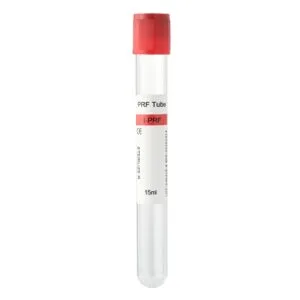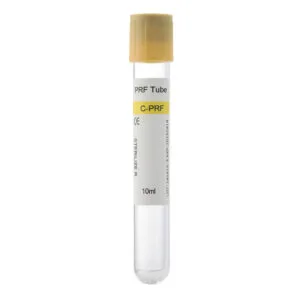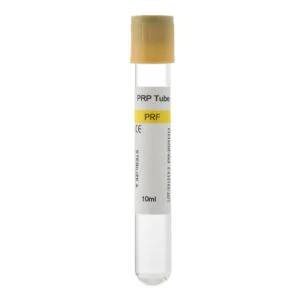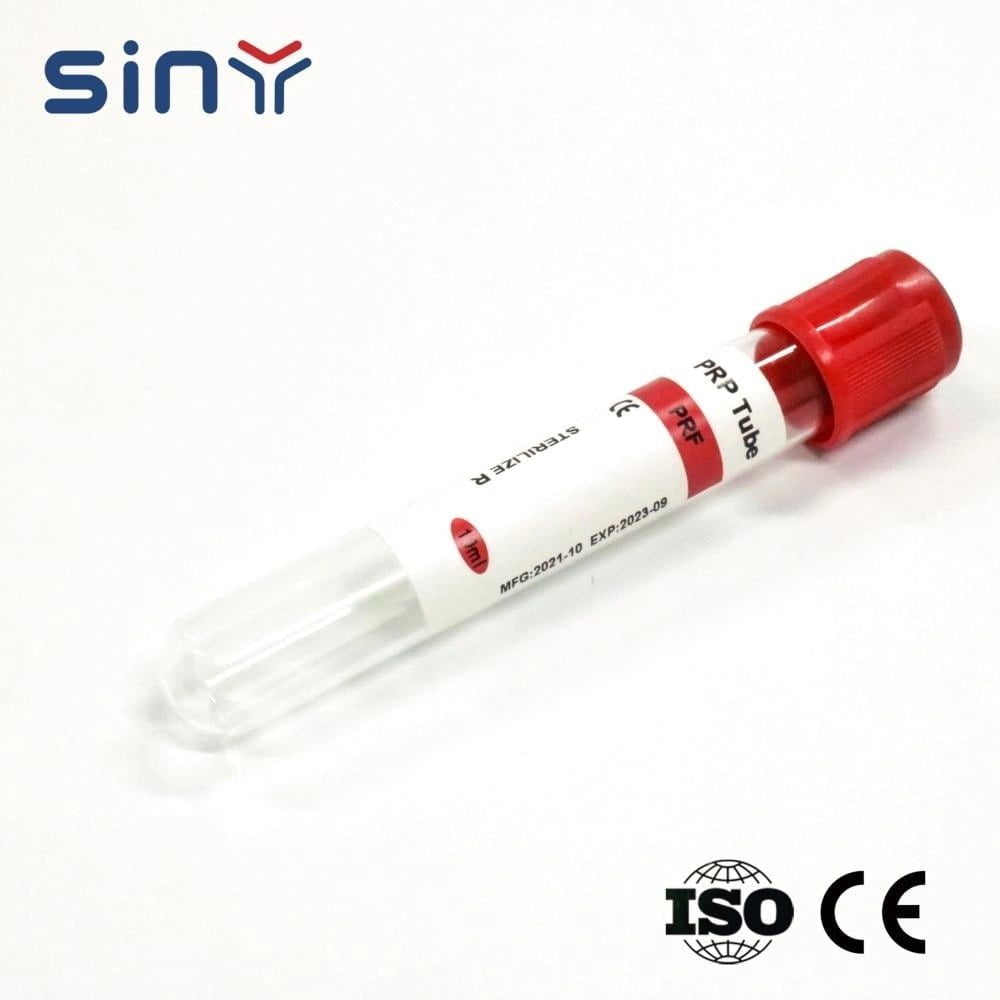
| Product Name | PRF Tube |
| Tube Material | PET/Glass/Crystal |
| OEM/ODM | Yes |
| Certificate | CE, ISO13485, ISO9001 |
| Usage | Skin Treatment, Hair Treatment, Knee Treatment, Dental, Orthopedic |
| Sterile | Irradiation sterilization |
| Sample | Free |
| Service | The groups we serve: distributors, import traders, government procurement, Buying Agents, medical chain stores, we provide one-stop procurement for you to simplify your procurement process |
Advanced Platelet-Rich Fibrin preparation requires more than a standard blood collection tube. The tube must fit the intended A-PRF workflow, blood collection volume, centrifuge system, and dental protocol.
The A-PRF Tube 10ml for Dental from Siny Medical provides a dedicated 10 mL tube option for professional Advanced Platelet-Rich Fibrin preparation in dentistry.
Unlike anticoagulant-based PRP preparation, A-PRF relies on natural coagulation and fibrin formation. After blood collection and controlled centrifugation, dental professionals can obtain an autologous fibrin-rich fraction according to their established protocol.
Siny Medical offers PET, glass, and crystal tube material options for different professional purchasing requirements.
This page focuses specifically on 10 mL A-PRF tube selection, preparation principles, and dental workflow compatibility.
A-PRF stands for Advanced Platelet-Rich Fibrin.
It belongs to the wider PRF family of autologous blood preparations. The preparation process aims to form a fibrin matrix containing blood-derived components such as platelets and leukocytes.
Dental professionals can then handle the prepared fibrin material according to their clinical protocol.
The 10 mL format provides a defined blood collection capacity for A-PRF preparation.
However, tube capacity should not be confused with the final amount of usable PRF.
The final preparation can vary according to the collected blood, centrifugation protocol, tube characteristics, and individual blood properties.
Therefore, professional users should follow their validated A-PRF procedure rather than expecting a fixed PRF yield from every 10 mL tube.
The A-PRF workflow begins with blood collection.
Blood enters the appropriate tube and then proceeds to centrifugation according to the professional protocol.
Unlike many PRP preparation methods, A-PRF preparation does not rely on anticoagulation to keep the blood liquid throughout processing.
Instead, natural coagulation contributes to fibrin formation.
Controlled centrifugation separates the blood components while supporting the formation of a fibrin-rich structure.
After centrifugation, the professional user can identify and collect the required PRF fraction.
Depending on the dental protocol, the resulting material may then be prepared into a clot, membrane, plug, or another suitable form.
The tube supports this preparation process. It does not independently determine the biological characteristics or clinical performance of the final A-PRF material.
The absence of an anticoagulant is an important difference between PRF and many PRP preparation systems.
PRP tubes commonly use anticoagulants such as citrate-based formulations to help prevent clotting during preparation.
A-PRF follows a different principle.
Natural coagulation forms part of the preparation process because the goal is to create a fibrin-based structure.
Therefore, buyers should not treat PRP tubes and A-PRF tubes as interchangeable products.
If a dental protocol requires Advanced Platelet-Rich Fibrin, the tube configuration should match that specific workflow.
This distinction is especially important during B2B purchasing.
A tube labeled “PRP” may have a completely different internal configuration from a tube intended for A-PRF preparation.
Blood collection volume is part of protocol design.
A 10 mL tube provides a practical format for dental professionals whose established A-PRF workflow uses this collection capacity.
However, the number of tubes required can vary.
For example, a professional may need a different preparation volume depending on the planned dental procedure and the amount of fibrin material required.
Therefore, buyers should consider:
The 10 mL specification helps standardize purchasing.
It also allows distributors to separate this product from other PRF tubes with different collection capacities.
The current Siny Medical product configuration lists PET, glass, and crystal as available tube material options.
Tube material should form part of the purchasing specification.
Different tube materials may be selected according to the established preparation workflow and product requirements.
However, material should not be selected only by appearance.
The buyer should confirm that the selected tube configuration matches the intended A-PRF preparation method and centrifuge system.
When confirming the product configuration, consider:
This information makes product confirmation more precise.
A-PRF and PRP both begin with the patient’s own blood, but their preparation principles are different.
PRP refers to platelet-rich plasma.
Many PRP preparation systems use an anticoagulant to help keep the collected blood from clotting before and during centrifugation.
A-PRF is fibrin-based.
Its preparation relies on natural coagulation and the development of a fibrin matrix.
As a result, the required tube configuration can differ significantly.
This distinction matters when purchasing tubes.
A buyer who needs 10 mL A-PRF tubes for dental preparation should not simply substitute a 10 mL ACD or sodium citrate PRP tube.
The tube should match the intended preparation protocol.
A-PRF is one approach within the wider PRF family.
Both standard PRF and Advanced PRF use fibrin-based blood preparation rather than the anticoagulant-based principle found in many PRP systems.
The main differences relate to the preparation protocol.
Centrifugation conditions can influence how blood components distribute within the resulting fibrin structure.
Therefore, the term “Advanced PRF” should refer to the complete preparation approach rather than the tube alone.
A tube cannot independently turn any centrifugation protocol into A-PRF.
The professional user must combine the appropriate tube with the validated centrifugation and handling procedure.
For buyers, this means tube selection and protocol selection should remain connected.
Dentistry is one of the professional fields where PRF preparation methods are commonly used.
Dental professionals may prepare autologous fibrin materials as part of established workflows in areas such as:
The A-PRF Tube 10ml for Dental supports the blood collection and preparation stage of these workflows.
However, the tube itself does not regenerate bone, heal extraction sockets, stabilize implants, or guarantee faster tissue healing.
Those outcomes depend on the complete clinical procedure and many patient-specific factors.
For this reason, product selection should focus on reliable A-PRF preparation rather than treatment promises.
Dental implant practices may include PRF preparation within their professional surgical workflow.
In this setting, the A-PRF tube provides a container for blood collection and subsequent centrifugation.
After preparation, the dental professional can handle the resulting fibrin material according to the selected implant protocol.
For procurement teams, consistency matters.
Using a clearly specified 10 mL A-PRF tube can make repeat purchasing easier when the practice has already established its preparation method.
However, clinics should confirm tube material, centrifuge compatibility, and preparation requirements before routine use.
Dental extraction and oral surgery workflows may also include PRF preparation.
Depending on the professional protocol, the prepared fibrin material may be formed or handled in different ways after centrifugation.
The tube provides the starting point for blood collection and A-PRF preparation.
It should not be marketed as a product that independently prevents complications or guarantees wound healing.
Instead, its role is straightforward:
Collect the required blood volume and support the intended A-PRF preparation workflow.
This product-focused description gives dental buyers more useful information than broad clinical promises.
The centrifuge is another important part of the A-PRF system.
Tube selection alone cannot determine the final preparation.
Centrifugation conditions can affect the separation of blood components and the resulting fibrin structure.
Important factors can include:
For this reason, RPM alone does not provide enough information to reproduce every A-PRF protocol.
Professional users should follow their validated procedure and centrifuge instructions.
Siny Medical does not recommend applying one universal centrifugation setting to every A-PRF system.
Timing deserves particular attention in anticoagulant-free PRF workflows.
Because the blood begins to coagulate naturally after collection, unnecessary delays can influence the preparation process.
Therefore, the professional workflow should be organized before blood collection begins.
The centrifuge, tubes, collection equipment, and other required materials should be ready.
After blood collection, the sample should proceed according to the established A-PRF protocol.
This is another reason why PRF preparation differs from anticoagulant-based PRP preparation.
The tube and workflow must work together.
The final A-PRF tube configuration should match the intended preparation protocol and product requirements.
Available requirements can be discussed according to the confirmed product configuration, including:
Tube material, dimensions, and compatibility with the intended centrifugation workflow should be confirmed before ordering.
Contact Siny Medical with your required 10 mL A-PRF tube material, quantity, packaging, and labeling requirements for more product information or a quotation.
An A-PRF tube is a blood collection tube used as part of an Advanced Platelet-Rich Fibrin preparation workflow. Blood is collected and centrifuged according to the professional protocol to prepare a fibrin-rich autologous fraction.
A-PRF stands for Advanced Platelet-Rich Fibrin.
Yes. This product page specifically covers the A-PRF Tube 10ml for Dental.
A-PRF preparation generally relies on natural coagulation rather than the anticoagulant-based approach used by many PRP systems. Buyers should confirm the exact tube configuration required by their professional protocol.
PRP is a platelet-rich plasma preparation and often uses an anticoagulant during blood processing. A-PRF is fibrin-based and follows a natural coagulation process to form a fibrin-rich structure.
A-PRF is commonly prepared as a fibrin clot or matrix. I-PRF is prepared as a liquid fraction with a limited working period before further fibrin formation.
No. They are different PRF preparation approaches. Professional users should follow the tube and centrifugation requirements of their selected protocol.
It is designed to support professional A-PRF preparation for compatible dental workflows. The dental professional determines how the prepared PRF material is used according to the clinical procedure.
The tube can support A-PRF preparation used within compatible professional implant dentistry workflows. It does not independently determine implant or healing outcomes.
It can support A-PRF preparation for dental professionals who include PRF in their established extraction-related procedures.
The current Siny Medical product information lists PET, glass, and crystal options.
A-PRF preparation depends on the complete centrifugation protocol, including relative centrifugal force, rotor characteristics, time, and tube configuration. Professional users should follow their validated protocol and centrifuge instructions.
Do not substitute tube configurations without confirming the preparation protocol. Anticoagulant-based PRP tubes and anticoagulant-free A-PRF workflows follow different preparation principles.
No. Tube capacity is not the same as final A-PRF yield. The final preparation depends on blood characteristics, centrifugation, processing, and the selected fraction.
Yes. Dental distributors, medical suppliers, importers, wholesalers, and other professional buyers can discuss bulk requirements with Siny Medical.
OEM and private-label requirements can be discussed according to the confirmed tube configuration, quantity, packaging, labeling, and destination market.
Selecting an A-PRF tube starts with the preparation protocol.
The buyer should confirm the PRF method, tube volume, tube material, centrifuge compatibility, and commercial requirements before placing an order.
The A-PRF Tube 10ml for Dental from Siny Medical provides a dedicated option for professional Advanced Platelet-Rich Fibrin preparation.
Its positioning is clear:
A-PRF + 10 mL + Dental Preparation + Required Tube Material
This specification helps distinguish the product from PRP, I-PRF, C-PRF, and other blood preparation tube configurations.
For wholesale, OEM, or private-label requirements, contact Siny Medical with your required tube material, quantity, packaging, labeling, and destination market to request a quotation.
Copyright © 2026 | Ningbo Siny Medical Technology Co., Ltd