Cell culture techniques have revolutionized biological research, enabling scientists to study cells in controlled environments outside of living organisms. At the heart of these techniques lie the essential tools that make in vitro cultivation possible: cell culture vessels. Among the most commonly used vessels are petri dishes and cell culture flasks, each with distinct advantages for specific research applications. Understanding the differences between these vessels is crucial for researchers aiming to optimize their experimental outcomes. In this comprehensive guide, we’ll explore the characteristics, applications, and benefits of both petri dishes and cell culture flasks, helping you make informed decisions for your laboratory needs. Whether you’re establishing a new cell line or scaling up production, the choice between these vessels can significantly impact your research success.
Table of Contents
Understanding the Basics of Laboratory Culture Vessels
Modern laboratories rely on specialized containers designed to support life at the microscopic level. These vessels control exposure to air, moisture, nutrients, and contamination. The most widely used are Petri dishes and Cell Culture Flasks, each with a distinct role.
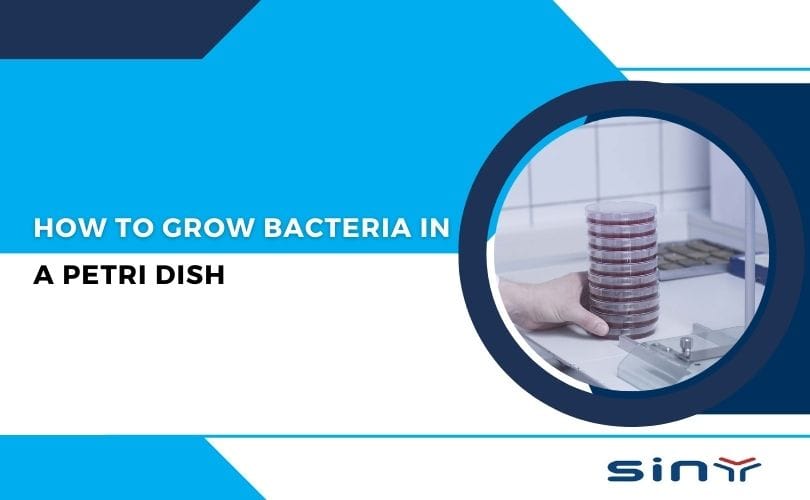
A Petri dish is a shallow, circular dish traditionally used for microbiology, especially for culturing bacteria and fungi on agar. According to the educational overview on <a href=”https://www.sinymedical.com/what-is-a-petri-dish-used-for/”>what a Petri dish is used for</a>, its open design allows easy observation and manipulation, which makes it ideal for teaching labs and routine testing.
By contrast, Cell Culture Flasks are enclosed, elongated vessels designed for the controlled growth of adherent and suspension cells, especially mammalian and human cell lines. They provide a stable environment that supports long-term cell viability, making them essential in biotechnology, pharmaceutical research, and clinical laboratories.
Both products are widely available through specialized suppliers such as Siny Medical, which offers a full range of laboratory consumables designed for professional use.
What Are Petri Dishes?
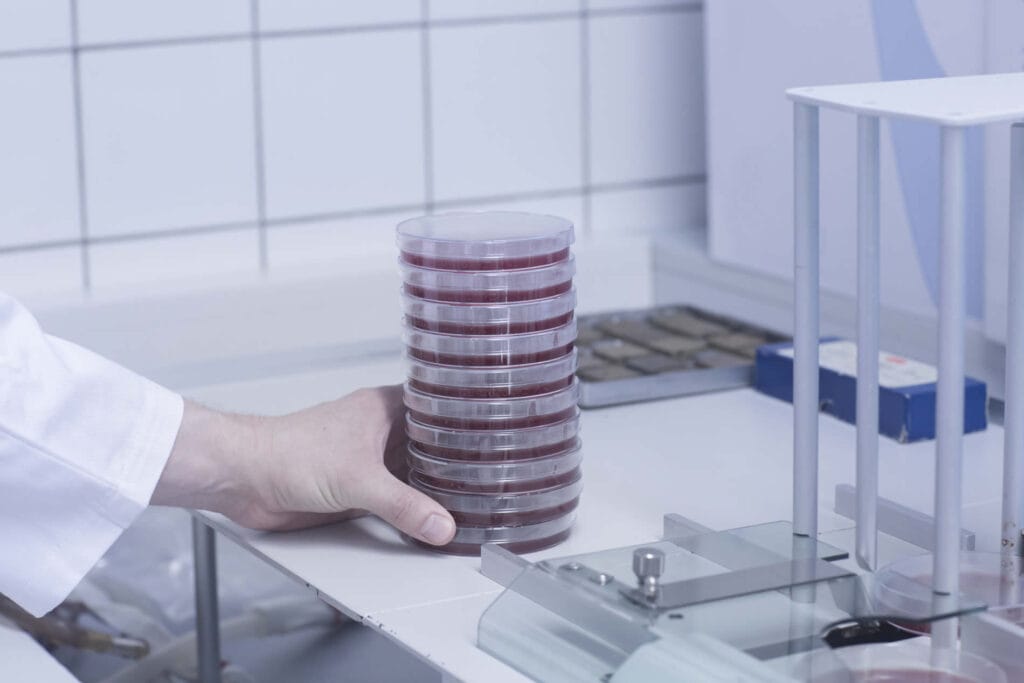
Petri dishes are shallow, cylindrical containers made of glass or plastic, typically used for culturing microorganisms like bacteria and fungi. They provide a flat surface for microbial growth and are often paired with agar to create a nutrient-rich environment. Petri dishes are widely used in microbiology, environmental testing, and educational settings.
Key Features:
- Shallow design for easy access and observation
- Available in various sizes (e.g., 60mm, 90mm, 100mm)
- Often disposable to prevent cross-contamination
For more details on petri dishes, visit our page on What is a Petri Dish Used For?.
What Are Cell Culture Flasks?
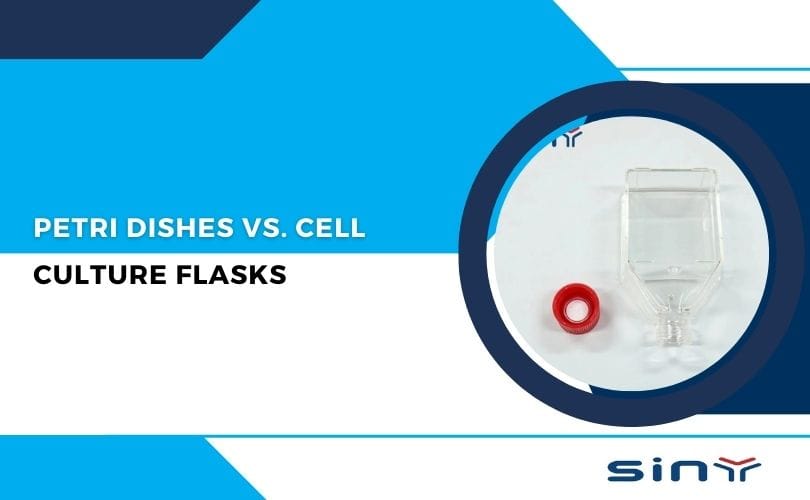
Cell culture flasks are specialized containers designed for growing and maintaining eukaryotic cells, such as mammalian cells. Unlike petri dishes, they feature a vented cap to allow gas exchange while preventing contamination. Cell culture flasks come in various shapes (e.g., T-flasks, Erlenmeyer flasks) and sizes to accommodate different cell types and volumes.

Key Features:
- Vented caps for optimal gas exchange
- Available in surface-treated versions for enhanced cell adhesion
- Suitable for suspension and adherent cell cultures
Explore our range of cell culture flasks to find the perfect fit for your lab.
Design Differences That Influence Performance
At a glance, both vessels look like simple plastic containers. In practice, their designs reflect very different purposes.
Petri dishes prioritize visibility and access. Their shallow depth supports thin layers of agar or media. This makes them perfect for observing colonies, but unsuitable for maintaining delicate cell lines over time.
Cell Culture Flasks, on the other hand, are designed for stability. Their narrow necks reduce contamination risk. Their flat, treated surfaces promote uniform cell attachment. Many models include graduations for accurate volume measurement, which supports reproducibility.
The article on the untold secrets of tissue culture vessels highlights how subtle differences in vessel geometry, surface treatment, and material quality can dramatically influence experimental outcomes. These design refinements explain why professional labs invest heavily in high-quality Cell Culture Flasks rather than relying on general-purpose dishes.
Petri Dishes vs. Cell Culture Flasks: Key Differences
| Feature | Petri Dishes | Cell Culture Flasks |
|---|---|---|
| Primary Use | Microbial culture | Eukaryotic cell culture |
| Design | Shallow, flat surface | Tall, vented design |
| Material | Glass or plastic | Polystyrene or treated plastic |
| Gas Exchange | Limited | Optimized via vented caps |
| Applications | Microbiology, education | Biomedical research, drug development |
Comparative Analysis: Petri Dishes vs. Cell Culture Flasks
When choosing between petri dishes and cell culture flasks, researchers must consider multiple factors that can impact experimental outcomes. The following comparison highlights the key differences between these essential cell culture vessels.
Surface Area and Volume Considerations
The ratio of surface area to volume differs significantly between petri dishes and cell culture flasks, affecting cell growth and maintenance requirements. A standard 100mm petri dish provides approximately 63.5 cm² of growth surface with a typical working volume of 10-20ml, resulting in a surface area to volume ratio of 3.2-6.4 cm²/ml. In contrast, a T75 cell culture flask offers 75 cm² of surface area with a recommended working volume of 15-30ml, yielding a ratio of 2.5-5.0 cm²/ml.
This difference becomes significant for long-term cultures, as higher surface area to volume ratios (as in petri dishes) lead to faster medium depletion and waste accumulation. Research published in Biotechnology Progress indicates that cultures in vessels with lower surface area to volume ratios maintain more stable pH and nutrient levels over extended periods.
Gas Exchange and Ventilation
Proper gas exchange is critical for maintaining optimal pH and oxygen levels in cell cultures. Petri dishes rely on the gap between the dish and lid for gas exchange, which can be advantageous for certain applications but may lead to increased evaporation and CO2 loss.
Cell culture flasks offer more controlled gas exchange through specialized cap designs. Vented caps with hydrophobic filters allow passive diffusion of gases while preventing microbial contamination. A study in the Journal of Biotechnology found that cultures maintained in flasks with vented caps showed 23% better pH stability compared to those in standard petri dishes.
Contamination Risks
Contamination represents one of the most significant challenges in cell culture, with potential to compromise experimental results and destroy valuable cell lines. The open design of petri dishes makes them more susceptible to airborne contaminants, especially during handling and medium changes.
Cell culture flasks provide superior protection against contamination due to their narrower openings and specialized cap designs. According to a survey of cell culture laboratories published in Nature Methods, facilities using primarily flasks reported 34% fewer contamination incidents compared to those relying mainly on petri dishes.
Microscopy and Observation
For applications requiring frequent microscopic observation, petri dishes offer distinct advantages. Their thin, flat bottom and unobstructed design make them compatible with most microscope objectives, including high-magnification oil immersion lenses.
Cell culture flasks present more challenges for microscopy, particularly at higher magnifications. The thickness of the plastic bottom and the design of the neck can limit the types of objectives that can be used. However, specialized flasks with optically clear bottoms are available for applications requiring regular observation.
Scalability and Experimental Design
The choice between petri dishes and cell culture flasks often depends on the scale of the experiment and future expansion plans. Petri dishes are ideal for small-scale experiments, pilot studies, and applications requiring multiple parallel conditions.
Cell culture flask offer better scalability, allowing researchers to easily expand cultures from smaller to larger flasks as needed. This scalability is particularly valuable for cell line development, protein production, and other applications requiring large numbers of cells.
Cost Considerations
While petri dishes generally have a lower per-unit cost, especially for reusable glass versions, the total cost of ownership must consider factors like contamination rates and experimental success. Cell culture flask typically have higher initial costs but may provide better value for long-term cultures or valuable cell lines by reducing the risk of contamination and loss.
Choosing the Right Supplier Matters
Laboratory outcomes depend not only on technique but also on the quality of consumables. Working with a trusted supplier reduces risk and supports consistency.
Siny Medical offers a complete ecosystem of products, educational resources, and professional support. Their presence across platforms such as Made-in-China and their educational content on YouTube at Siny Medical’s channel demonstrates a commitment to both product quality and knowledge sharing.
If you are sourcing for a lab, research institution, or distribution business, you can also reach their team directly through the contact page for tailored support.
Final Summary
Petri dishes and Cell Culture Flasks each play a vital role in modern laboratories, but they serve very different purposes. Petri dishes excel in microbiology, education, and short-term observation, while Cell Culture Flask are essential for controlled, long-term, and high-precision cell culture work. Understanding these differences allows researchers, students, and procurement professionals to make smarter, more cost-effective choices. By selecting the right vessel for the right application, laboratories can improve results, reduce risk, and support the advancement of science.
FAQs
What are Cell Culture Flasks mainly used for?
Cell Culture Flasks are primarily used for growing and maintaining mammalian and human cells under controlled laboratory conditions, especially in biomedical research, pharmaceutical testing, and biotechnology applications.
Can I use Petri dishes instead of Cell Culture Flask for mammalian cells?
While Petri dishes can support very short-term growth, they lack the environmental control and sterility features that Cell Culture Flask provide, making them unsuitable for reliable mammalian cell culture.
How do vented caps improve Cell Culture Flask performance?
Vented caps allow proper gas exchange while protecting cultures from contamination, which significantly improves the performance and reliability of Cell Culture Flasks in long-term experiments.
Are all Cell Culture Flasks the same quality?
No. The quality of Cell Culture Flasks varies based on material, surface treatment, sterility standards, and manufacturing processes, which is why sourcing from trusted suppliers is important.
How often should Cell Culture Flasks be replaced in routine lab work?
Most disposable Cell Culture Flasks are designed for single-use to ensure sterility and consistency, which helps maintain reliable experimental results.