
Medical waste management represents one of the most critical aspects of healthcare safety, and biohazard sharp containers stand at the forefront of protecting healthcare workers, patients, and waste management personnel from potentially life-threatening injuries and infections. Understanding the comprehensive testing and certification processes that these essential safety devices undergo is crucial for healthcare facilities, procurement managers, and anyone involved in medical waste management decisions.
The importance of proper sharp container selection cannot be overstated. Every day, healthcare facilities worldwide generate millions of used needles, scalpels, lancets, and other sharp medical instruments that pose serious risks if not properly contained. The testing and certification processes ensure that every biohazard sharp container meets stringent safety standards before reaching healthcare environments.
Table of Contents
- 1 What is a Biohazard Sharp Container?
- 2 Why Testing and Certification Matter
- 3 Testing Standards for Biohazard Sharp Containers
- 4 Biohazard Sharp Container Testing Process Explained
- 5 Siny Medical: A Leader in Sharp Container Manufacturing
- 6 Comprehensive Testing Methodologies
- 7 Material Science and Manufacturing Quality Control
- 8 The Importance of Using Certified Containers in Healthcare
- 9 How Siny Medical Ensures Quality
- 10 Final Thoughts
- 11 FAQs
What is a Biohazard Sharp Container?
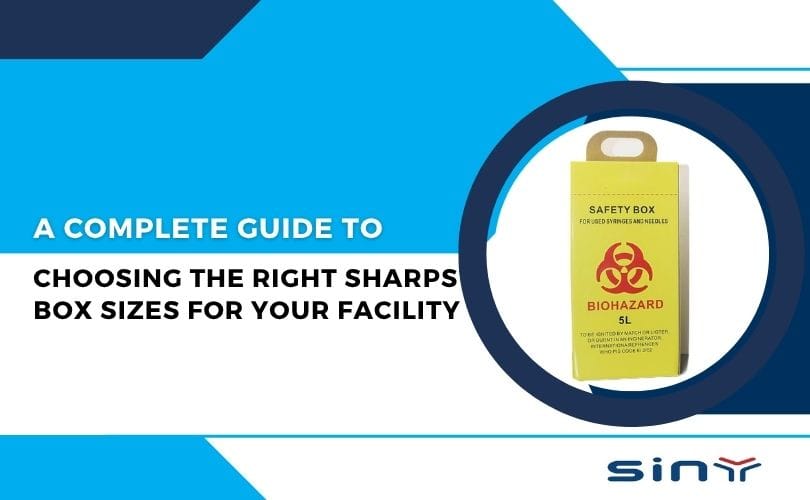
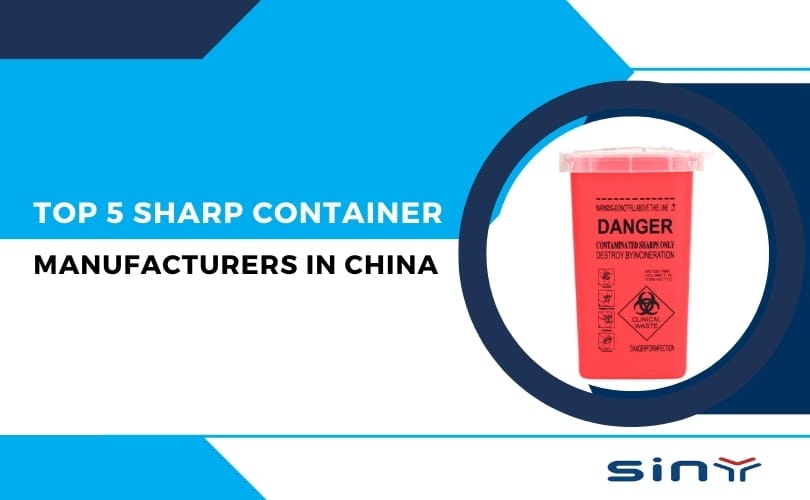
A Biohazard Sharp Container is a specialized container designed to safely dispose of sharp medical instruments that may be contaminated with blood or other bodily fluids. These containers are typically made from durable, puncture-resistant materials and feature a secure lid to prevent accidental exposure.

At Siny Medical, we offer a wide range of Sharp Containers that meet international standards for safety and quality. Our products are designed to ensure compliance with healthcare regulations while prioritizing user safety. Learn more about our offerings on our Sharp Container product page.
Why Testing and Certification Matter
Testing and certification are essential to ensure that Biohazard Sharp Containers meet stringent safety standards. Without proper certification, containers may fail to contain sharps effectively, leading to potential injuries and infections.
Key Testing Criteria
- Puncture Resistance: Containers must withstand punctures from sharp objects to prevent leaks.
- Leakproof Design: The container should prevent any liquids from escaping, even if tipped over.
- Closure Mechanism: The lid must securely lock to prevent unauthorized access or accidental spills.
- Material Durability: The container should be resistant to corrosion, chemicals, and environmental factors.
For more detailed information on testing standards, refer to our Ultimate Sharps Container Guide.
Testing Standards for Biohazard Sharp Containers
Several global agencies have established testing and performance standards to ensure safety. Below is a breakdown of the major testing criteria and related certifications.
| Standard / Certification | Governing Body | Focus Area | Description |
|---|---|---|---|
| ISO 23907-1:2019 | International Organization for Standardization | Design and performance | Ensures containers prevent needle-stick injuries and withstand puncture and impact. |
| FDA 21 CFR Part 820 | U.S. Food & Drug Administration | Quality system regulation | Focuses on manufacturing, labeling, and post-market monitoring for medical devices. |
| CE Marking | European Commission | Safety compliance | Confirms that the product meets EU safety, health, and environmental protection requirements. |
| BS 7320 | British Standard | Leak and puncture testing | Evaluates closure integrity and drop resistance. |
| UN3291 Compliance | United Nations | Transport safety | Regulates the safe transportation of clinical waste, including sharps. |
For more insights into the types of sharp containers and international standards, check The Ultimate Sharps Container Guide.
The International Organization for Standardization (ISO) provides global benchmarks for medical waste disposal products, including Sharp Containers.
Biohazard Sharp Container Testing Process Explained
Let’s break down the testing process into its essential stages. These tests are mandatory before any container can be certified or distributed in the market.
Puncture Resistance Test
Containers are filled with standard sharps and subjected to pressure to test their puncture resistance. A compliant container must resist penetration and prevent sharp tips from piercing through.
Drop Test
This test simulates accidental drops during handling or transport. The container is dropped multiple times from varying heights (usually 1.2 meters) to ensure no leakage or lid displacement.
Leak-Proof Test
A filled container is inverted or subjected to pressure to verify that no liquids escape. This test ensures biohazardous fluids remain contained.
Closure Integrity Test
Evaluates how well the lid locks and seals. Even after repeated openings, the container should maintain its closure system without cracking.
Stack Load Test
To simulate storage conditions, containers are stacked for 24 hours under weight. This ensures they maintain their shape and structural integrity.
Label Durability Test
Since labels communicate hazard warnings and handling instructions, they must remain legible after exposure to cleaning agents or moisture.
All these processes are rigorously followed by Siny Medical before any product reaches hospitals or clinics.
Siny Medical: A Leader in Sharp Container Manufacturing
Siny Medical stands out as one of the most trusted sharp container manufacturers in China, known for innovation and strict adherence to international standards. Their products—like the Siny Medical Biohazard Sharp Container—are used by hospitals and laboratories worldwide.
Manufacturing Excellence
Siny Medical employs automated injection molding and quality-controlled assembly lines to ensure consistency in every unit. Each batch is tested for:
- Material purity
- Puncture and drop resistance
- Lid security
- Label clarity
Explore more about their manufacturing expertise here: Sharp Container Manufacturers in China.
Environmental Responsibility
The company also focuses on eco-friendly production, using recyclable polymers and minimizing carbon emissions. This aligns with WHO’s sustainable healthcare waste management initiatives.
For international clients, visit their global product platform at Siny Medical on Made-in-China.
Comprehensive Testing Methodologies
The certification process for biohazard sharp containers involves rigorous testing across multiple performance categories, each designed to simulate real-world conditions and worst-case scenarios that containers might encounter during their operational lifespan. These testing methodologies provide quantifiable data that regulators and healthcare facilities use to assess container safety and reliability.
Puncture Resistance Testing
Puncture resistance represents the most fundamental safety requirement for any sharp container, as the primary function is preventing sharp objects from penetrating the container walls and injuring handlers. Testing protocols evaluate this critical characteristic through multiple standardized procedures that apply controlled forces to container surfaces using various penetration instruments.
The ISO 23907 standard requires containers to withstand penetration by a standardized test needle with specific dimensions and applied forces that simulate realistic clinical scenarios. Testing involves mounting the container securely and applying perpendicular force through a needle or sharp probe at predetermined speeds, typically 50-100mm per minute, while measuring the force required to achieve complete penetration.
Advanced testing protocols examine puncture resistance across the entire container surface, including corners, seams, and areas surrounding openings where structural integrity might be compromised. Testing laboratories subject multiple samples from production batches to puncture tests at various temperatures, as material properties can change significantly in cold storage areas or warm clinical environments. Sharp container manufacturers in China and worldwide invest heavily in material science research to develop polymer formulations that maintain consistent puncture resistance across wide temperature ranges.
Drop and Impact Testing
Drop testing evaluates whether containers maintain their integrity and safety features when subjected to accidental falls or impacts during handling, transport, and storage. Healthcare environments present numerous opportunities for containers to be dropped or struck, and failures under these conditions could release contaminated sharps or compromise the container’s ability to safely contain additional waste.
Standard drop testing protocols require repeatedly dropping filled containers from specified heights onto hard surfaces at various orientations to simulate worst-case impact scenarios. The ISO standard typically specifies drops from one meter height onto a concrete or steel surface, with containers evaluated at different fill levels from empty to maximum capacity.
The Siny Medical sharp container product line undergoes extensive drop testing during development and regular quality verification testing during production to ensure consistent impact resistance. Testing results directly influence design elements including wall thickness distribution, corner reinforcement, base geometry, and material selection to maximize impact protection while maintaining usability and cost-effectiveness.
Leak Resistance and Liquid Retention
Leak resistance testing ensures that containers prevent liquid contents from escaping during normal use, storage, and transport, which is critical for containing potentially infectious fluids that often accumulate in sharp containers alongside used medical instruments.
Testing methodologies evaluate leak resistance under multiple conditions including normal upright positioning, inverted orientation, and tipped positions that might occur during handling or transport.
Vacuum testing represents another important evaluation method where sealed containers are placed in vacuum chambers and subjected to reduced atmospheric pressure to detect even microscopic leaks that might not be visible during standard observation.
The effectiveness of closure mechanisms receives intense scrutiny during leak testing, as even minor seal imperfections can compromise liquid containment. Biohazard sharp containers typically employ various closure systems including slide locks, rotating caps, snap-on lids, and hinged mechanisms, each requiring specific testing protocols to verify performance.
Functionality and Usability Testing
Beyond basic structural integrity, comprehensive certification testing evaluates practical functionality features that directly impact safe container use in clinical environments. These tests assess whether design elements work as intended throughout the container’s operational life and whether users can safely interact with containers without requiring excessive force or creating injury risks.
Opening mechanism testing verifies that container openings function smoothly, allow safe sharp disposal without requiring users to bring hands near the opening, and prevent accidental reopening after closure.
Fill level indication testing ensures that maximum capacity markings remain clearly visible as containers fill and that translucent containers maintain sufficient clarity to allow visual inspection of contents. This testing is crucial because overfilled containers present serious injury risks when additional sharps are forced into already-full units, potentially causing sharps to project from openings or compromise structural integrity.
Mounting and stability testing evaluates whether wall-mounted containers remain securely attached when subjected to forces simulating normal use, accidental impacts, or attempts to remove filled containers.
Material Science and Manufacturing Quality Control
The safety and performance of biohazard sharp containers fundamentally depends on the materials used in their construction and the manufacturing processes that transform raw materials into finished products. Understanding the material science and quality control aspects of container production provides insight into how certified products maintain consistent safety characteristics across millions of units produced annually.
Polymer Selection and Properties
High-density polyethylene (HDPE) and polypropylene (PP) dominate sharp container manufacturing due to their excellent puncture resistance, chemical resistance, impact strength, and cost-effectiveness at the volumes required for disposable medical products. These thermoplastic polymers offer manufacturers flexibility in processing while providing the mechanical properties essential for containing sharp medical instruments safely.
Virgin plastic resins typically provide superior and more consistent performance compared to recycled materials, though environmental concerns increasingly drive research into sustainable material options that maintain safety standards.
Colorant additives used to achieve the standard yellow, red, or other colors specified for biohazard containers must not compromise material properties or create processing difficulties. Testing verifies that pigments distribute evenly throughout the plastic matrix and that colored materials maintain equivalent performance to non-pigmented versions.
Injection Molding Process Control
Injection molding represents the predominant manufacturing method for producing plastic sharp containers, a process requiring precise control over numerous variables that influence final product quality. Understanding this manufacturing process illuminates how quality control systems ensure every container meets certified specifications.
Process variables requiring continuous monitoring include melt temperature which affects material flow and final properties, injection pressure and speed which influence how completely the mold fills and whether surface defects develop.
Mold design significantly impacts product quality and consistency. Precision-machined steel molds can cost tens of thousands of dollars but enable production of millions of containers with minimal dimensional variation. Sharp container manufacturers invest substantially in mold engineering, incorporating features like strategic gate placement for optimal material flow, cooling channels for uniform temperature control, and precision ejection systems that prevent part damage during removal.
In-Process Quality Monitoring
Quality control during manufacturing involves continuous monitoring and periodic testing to detect process variations before they produce defective containers. Sophisticated quality management systems combine automated inspection technology with manual sampling protocols to verify product conformity throughout production runs.
Dimensional verification ensures that container height, width, wall thickness, opening size, and other critical dimensions remain within specified tolerances. Automated measurement systems using laser scanning or vision inspection can check every produced unit for dimensional accuracy, while periodic manual measurements using precision instruments verify automated system accuracy.
Visual inspection detects surface defects including cracks, bubbles, discoloration, warpage, or contamination that might compromise container integrity or safety.
Functional testing of samples from each production run verifies that lids operate correctly, closures seal effectively, and mounting components function as designed. This testing often occurs at specified intervals, such as hourly or at each shift change, with tested samples retained for traceability purposes if quality issues arise later.
Statistical process control (SPC) methodologies track measured parameters over time to identify trends suggesting process drift before defects occur. Control charts plotting measurements like wall thickness or closure force requirements help quality personnel recognize when processes need adjustment to maintain optimal performance.
The Importance of Using Certified Containers in Healthcare
Non-certified containers are not just risky—they’re illegal in many regions. Using untested containers can lead to:
- Needle-stick injuries among medical staff
- Regulatory penalties for non-compliance
- Environmental contamination during waste disposal
Healthcare institutions should only purchase certified containers from reliable manufacturers like Siny Medical.
Their Siny Medical Sharp Container line meets global testing and certification standards, ensuring utmost protection.
How Siny Medical Ensures Quality
At Siny Medical, we prioritize quality and safety in every product we manufacture. Our Sharp Containers undergo rigorous testing to ensure they meet all certification standards.
Our Manufacturing Process
- Material Selection: We use high-quality, puncture-resistant materials to ensure durability.
- Advanced Testing: Each container is tested for puncture resistance, leakproof design, and secure closure.
- Certification Compliance: Our products meet FDA, OSHA, and ISO standards.
Learn more about our manufacturing expertise on our Sharp Container Manufacturers in China page.
Final Thoughts
Ensuring safe disposal of medical sharps begins with choosing a tested and certified Biohazard Sharp Container. Every stage—from design and material selection to testing and certification—plays a critical role in protecting healthcare workers, patients, and the environment.
With companies like Siny Medical leading the charge, healthcare facilities around the world can trust that their waste management systems are both safe and compliant with global standards.
For more expert insights and product details, visit Siny Medical’s Official Website and explore their full sharp container range.
FAQs
Q1. What makes a container “biohazard certified”?
A certified Biohazard Sharp Container passes international standards like ISO 23907 and CE Mark, ensuring it’s safe for storing and transporting medical sharps.
Q2. How often should containers be replaced?
Replace them when they’re three-quarters full to prevent overfilling and possible injury.
Q3. Are biohazard containers reusable?
Most are single-use, but some large-capacity hospital models are designed for safe, reusable systems after disinfection.
Q4. What’s the main difference between a regular plastic container and a sharp container?
Regular plastic containers lack puncture resistance and sealing capability. Sharp containers are specifically designed to contain hazardous waste safely.
Q5. Where can I buy certified sharp containers?
You can explore high-quality, certified options directly at Siny Medical Sharp Container Products.