Knowing how to dispose of needles correctly is an essential part of safe healthcare waste management. A used needle may look like a small piece of waste. However, once it has been exposed to blood or other potentially infectious material, improper handling can create a serious needlestick hazard.
This matters in hospitals, clinics, laboratories, dental practices, vaccination sites, veterinary facilities, and other healthcare environments where needles and similar sharps are used every day.
The basic rule is simple: used needles should be placed into an appropriate sharps disposal container as soon as possible after use. They should not be left on treatment trays, carried around unnecessarily, or thrown loose into ordinary waste.
A proper sharps container creates a physical barrier between used sharp objects and the people who may later handle medical waste. However, safe disposal involves more than having a container nearby. Staff also need to know when to discard the needle, what to avoid during handling, when to close the container, and how the filled container enters the local medical-waste system.
This guide explains the complete process, from point-of-use disposal to safe sharps collection.
Table of Contents
- 1 Why Proper Needle Disposal Matters
- 2 How to Dispose of Needles Safely Step by Step
- 3 Why Use a Sharps Container for Needle Disposal?
- 4 Common Needle Disposal Mistakes to Avoid
- 5 Sharps Disposal Practices for Healthcare Facilities
- 6 FAQ About How to Dispose of Needles
- 6.1 Can I Throw Used Needles in the Regular Trash?
- 6.2 Should I Recap a Needle Before Throwing It Away?
- 6.3 Can I Bend or Break a Used Needle Before Disposal?
- 6.4 Can Needles and Syringes Go Into the Same Sharps Container?
- 6.5 When Should a Sharps Container Be Closed?
- 6.6 What Should I Do With a Full Sharps Container?
- 6.7 Are Needle Disposal Rules the Same Everywhere?
- 7 Make Safe Needle Disposal Part of the Daily Workflow
Why Proper Needle Disposal Matters
Used needles are different from ordinary healthcare waste because they can puncture the skin.
If a loose needle is placed in a regular waste bag, the hazard does not disappear when the bag leaves the treatment room. Cleaning personnel, waste handlers, healthcare workers, patients, and others may come into contact with it later.
The concern becomes greater when the sharp has been contaminated with blood or other potentially infectious material. A needlestick injury can expose a person to bloodborne pathogens. Therefore, controlling the sharp immediately after use is an important part of workplace safety and infection prevention.
Items commonly handled as sharps may include:
- hypodermic needles;
- syringes with attached needles;
- blood collection needles;
- lancets;
- scalpel blades;
- infusion-related sharps;
- other medical devices capable of cutting or puncturing skin.
Not every item used during a medical procedure belongs in a sharps container. Gloves, wrappers, gauze, tubing, and other non-sharp materials may require different waste streams depending on their contamination status and local requirements.
Correct waste segregation helps keep dangerous sharps contained without unnecessarily filling the sharps container with other materials.
Most importantly, needle disposal should begin where the sharp is used, rather than later when the treatment room is being cleaned.

How to Dispose of Needles Safely Step by Step
So, how to dispose of needles after an injection, blood draw, vaccination, or other medical procedure?
The safest approach is to build disposal into the procedure itself. Before using the needle, healthcare workers should already know where it will go afterward.
1. Prepare the Sharps Disposal Point
Place an appropriate sharps container as close as practical to the area where needles are used.
Good placement reduces the need to walk through a treatment room, laboratory, or other work area while holding an exposed, contaminated sharp.
The container should also be easy to see and reach. However, it should not obstruct routine work or be positioned where patients, children, or unauthorized individuals can easily interfere with it.
In busy clinical environments, a short and predictable disposal route makes safe behavior easier to maintain.
2. Activate the Safety Feature When Applicable
Some needles, blood collection devices, syringes, and other sharps include engineered safety features.
When such a feature is provided, activate it as intended immediately after use and before disposal. Depending on the device, this may involve a shield, cover, retracting mechanism, or another safety design.
Always follow the instructions for the specific medical device being used.
Safety mechanisms do not eliminate the need for a sharps container. Instead, they provide an additional layer of protection before the used device enters the disposal system.
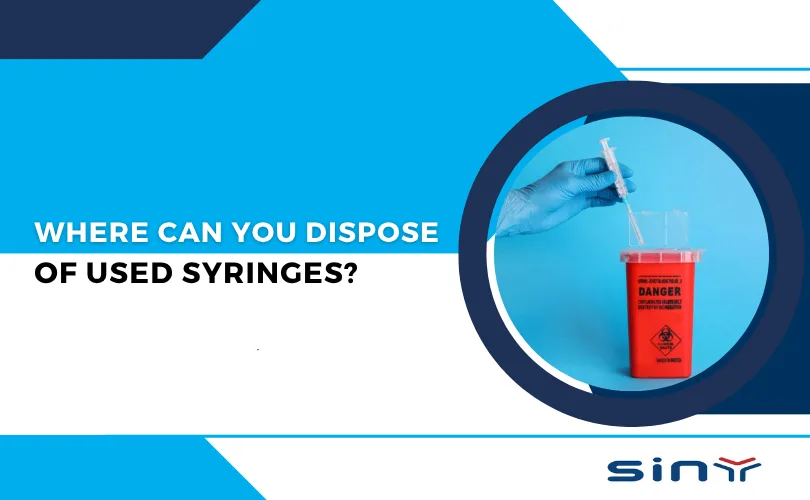
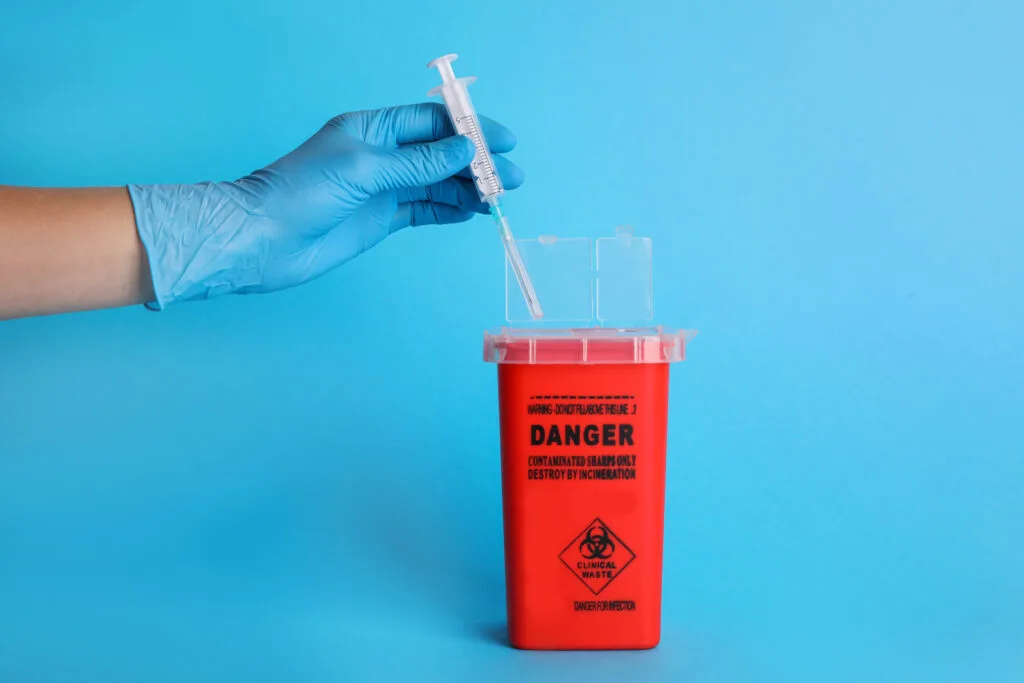
3. Place the Used Needle Directly Into the Sharps Container
After completing the procedure, promptly place the used sharp into the designated sharps disposal container.
Avoid leaving needles on beds, treatment trays, countertops, laboratory benches, or other work surfaces for later disposal. Even a short delay creates an opportunity for someone else to come into contact with the sharp.
Where a disposable needle and syringe are designed to be discarded together, they can generally enter the appropriate sharps container as a connected unit. This avoids unnecessary manipulation of a contaminated needle.
Once a sharp has entered the container, never reach inside to retrieve it.
4. Avoid Unnecessary Recapping or Manipulation
Routine recapping of used needles should be avoided. Bending, breaking, or manually manipulating contaminated needles before disposal can also increase the chance of accidental injury.
However, certain medical or dental procedures may require recapping.
When recapping is specifically necessary, an appropriate mechanical recapping device or a validated one-handed scoop technique should be used instead of a standard two-handed method.
The important distinction is that one-handed recapping is an exception for situations where recapping is necessary. It is not an additional step that should be performed before routine needle disposal.
In most situations, the safest approach remains straightforward: minimize handling and move the used sharp into the designated container as soon as possible.
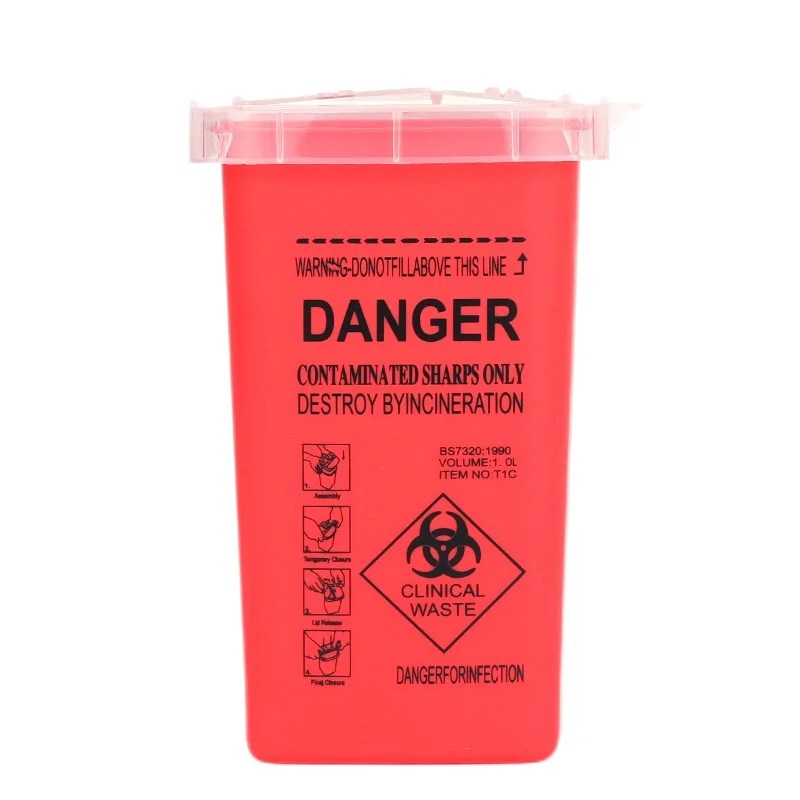
5. Never Overfill the Sharps Container
A sharps container should not be filled beyond its intended capacity.
Follow the marked fill line provided on the container. Once the contents reach that line, close and secure the container according to the manufacturer’s instructions.
If no fill line is provided, the container should generally be closed when it is about three-quarters full, subject to the product instructions and applicable local requirements.
Never push the contents downward or force another syringe or needle through a crowded opening. Doing so may bring the hand dangerously close to previously discarded sharps.
Timely replacement is much safer than trying to gain a little extra space from an already full container.
6. Secure the Container for Final Handling
After reaching its designated filling limit, close or lock the sharps container according to its design.
The secured container should then enter the facility’s established medical-waste handling system. Final collection, transportation, treatment, and disposal requirements vary between countries and jurisdictions.
For this reason, healthcare facilities should always follow applicable local regulations, waste-management procedures, and container instructions.
The basic workflow remains easy to remember:
Use → activate the safety feature when applicable → contain promptly → close at the fill limit → transfer through the appropriate medical-waste system.
For professional needle and sharps collection, explore Siny Medical sharps containers designed for healthcare waste management.
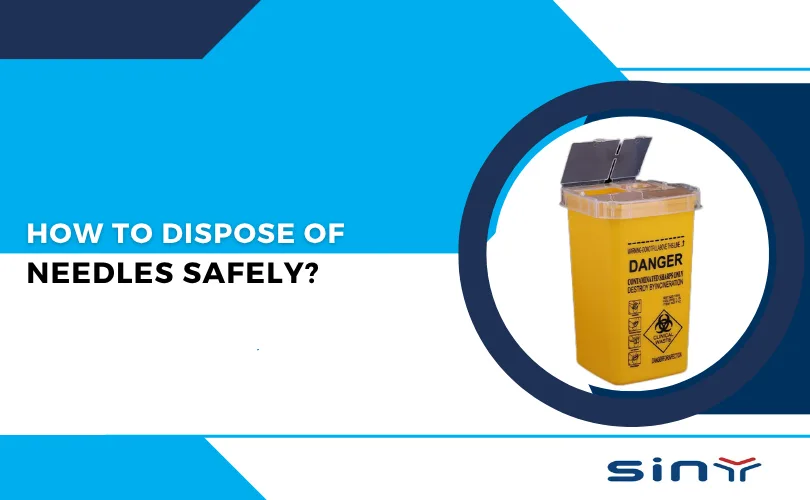
Why Use a Sharps Container for Needle Disposal?
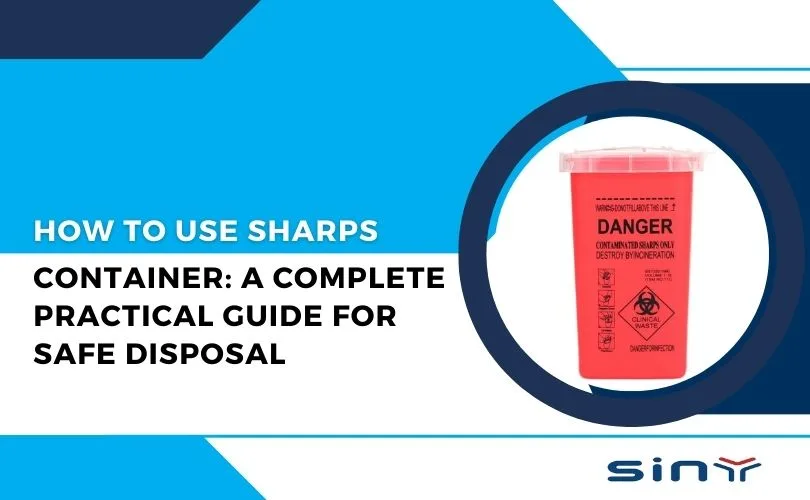
A sharps container is not simply another medical waste bin.
Its primary purpose is to create a protective barrier between discarded sharp objects and anyone who may come into contact with the waste afterward. As a result, its construction and handling characteristics are different from those of ordinary trash containers.
Puncture resistance is particularly important. Under normal conditions of use, discarded needles and other sharp objects should remain contained rather than penetrate the walls of the container.
The container should also provide a secure closure. Once it reaches its fill limit, the contents need to remain contained during subsequent handling.
Leak resistance is another important consideration because some used sharps may carry residual blood or fluid.
Stability matters too. A sharps container should remain upright and stable during normal use. This helps reduce the risk of tipping while staff deposit used items.
The opening also plays an important role. Users should be able to deposit appropriate sharps without placing their hands inside the container.
Clear identification helps staff quickly distinguish a sharps container from ordinary waste receptacles. This supports better waste segregation and reduces the chance that needles end up in general trash.
Container design, however, is only part of the solution.
Placement matters just as much. A well-designed sharps container located far from the point of use may encourage staff to carry contaminated sharps unnecessarily. In contrast, convenient placement supports immediate disposal.
Together, suitable container construction and good placement create a safer sharps collection system.
Common Needle Disposal Mistakes to Avoid
Learning how to dispose of needles also means knowing which practices create unnecessary risk.
One of the most serious mistakes is throwing loose needles into ordinary trash. A waste bag provides little protection against a sharp point. Someone lifting, compressing, sorting, or transporting the bag may be injured without knowing a needle is inside.
Recycling bins are not an appropriate destination either. Loose sharps can expose workers throughout the recycling process.
Another common problem is delayed disposal.
A healthcare worker may leave a used needle on a tray with the intention of discarding it a few minutes later. However, another employee may begin cleaning the area or reach across the tray before that happens.
Overfilling creates another avoidable hazard. When a container becomes crowded, discarded sharps may sit close to the opening. This increases the risk of contact when someone tries to add another item.
For safer sharps management, avoid:
- throwing loose needles into general waste or recycling;
- leaving used sharps on work surfaces;
- reaching into a sharps container;
- retrieving previously discarded items by hand;
- manually compacting the contents;
- routinely recapping used needles;
- bending or breaking contaminated needles before disposal;
- carrying exposed used sharps unnecessarily;
- ignoring the marked fill line;
- placing sharps containers in unstable or unsuitable locations.
It is also important to keep ordinary non-sharp waste out of the container when it belongs in another waste stream. Filling the container with packaging, paper, gloves, or other inappropriate items reduces the space available for actual sharps.
A good disposal system makes the safe choice the easy choice.
Clear procedures, accessible containers, staff training, correct waste segregation, and timely replacement all help reduce avoidable handling.
Safe sharps disposal depends on the entire workflow, not simply on purchasing containers.
Healthcare facilities should begin by reviewing where sharps are generated.
Treatment rooms, blood collection areas, laboratories, dental operatories, vaccination stations, and other clinical spaces may need convenient access to sharps containers. Placement should reflect the actual workflow rather than relying on one container simply because it is somewhere in the room.
Next, establish a routine for monitoring fill levels.
Staff should know who checks the containers, when they need replacement, how they are closed, and where filled containers go next. Waiting until sharps are protruding from the opening is already too late.
Training also matters.
New employees should understand which items belong in a sharps container and how to discard them without unnecessary manipulation. Existing staff may also benefit from periodic reminders, especially in busy environments where shortcuts can gradually become routine.
Facilities should review container placement whenever workflows change. A new treatment station, laboratory instrument, vaccination area, or clinical procedure may change where sharps are generated.
Procurement planning is another part of the system.
An adequate supply of sharps containers helps prevent staff from continuing to use an already full container simply because a replacement is unavailable. For healthcare organizations with regular sharps waste, consistent availability supports safer day-to-day operations.
Siny Medical provides sharps containers for professional healthcare and laboratory waste collection. Contact our team if you are sourcing sharps disposal products for your facility or medical supply program.
FAQ About How to Dispose of Needles
Can I Throw Used Needles in the Regular Trash?
Loose used needles should not be placed directly into ordinary trash or recycling bins.
They can puncture waste bags and expose cleaning staff, waste handlers, and others to needlestick injuries. Used needles should be placed in an appropriate sharps disposal container, followed by the disposal process required in your location.
Should I Recap a Needle Before Throwing It Away?
Routine recapping should generally be avoided because it requires additional handling of the contaminated sharp.
If recapping is specifically required for a medical or dental procedure, use an appropriate mechanical device or a validated one-handed scoop technique instead of a standard two-handed method.
Can I Bend or Break a Used Needle Before Disposal?
Used contaminated needles should not normally be bent or broken by hand before disposal.
These actions add unnecessary manipulation and may increase the chance of needlestick injury.
Can Needles and Syringes Go Into the Same Sharps Container?
When a disposable needle and syringe are designed to be discarded together, they can generally be placed into an appropriate sharps container as a connected unit.
Always follow the instructions for the medical device, sharps container, and your facility’s waste-management procedures.
When Should a Sharps Container Be Closed?
Follow the marked fill line on the container.
Once the contents reach that line, close and secure the container according to the manufacturer’s instructions. If no fill line is provided, the container should generally be closed at about three-quarters full, subject to its instructions and applicable requirements.
Never continue adding sharps to an overfilled container.
What Should I Do With a Full Sharps Container?
Secure the container according to its closure design and transfer it through the appropriate medical-waste disposal system.
The exact process varies by location. It may involve an authorized medical-waste collection service, designated collection facility, or another approved disposal route.
Are Needle Disposal Rules the Same Everywhere?
No.
Requirements for collecting, storing, transporting, treating, and disposing of sharps vary between countries and local jurisdictions. Healthcare facilities should follow applicable regulations together with their established waste-management procedures.
Make Safe Needle Disposal Part of the Daily Workflow
Safe needle disposal starts immediately after the sharp has been used.
Keep an appropriate sharps container close to the point of use. Activate engineered safety features when applicable. Minimize handling, avoid routine recapping, and place used sharps into the container promptly.
Just as importantly, never overfill the container. Close it at the marked fill line—or generally around three-quarters full when no line is provided—and follow applicable local requirements for subsequent medical-waste handling.
These practices help protect healthcare professionals, cleaning personnel, waste handlers, patients, and others who may come into contact with medical waste.
Siny Medical supplies sharps containers for professional medical and laboratory waste collection. For sharps container sourcing or bulk purchasing requirements, visit our product page or contact Siny Medical to discuss your needs.