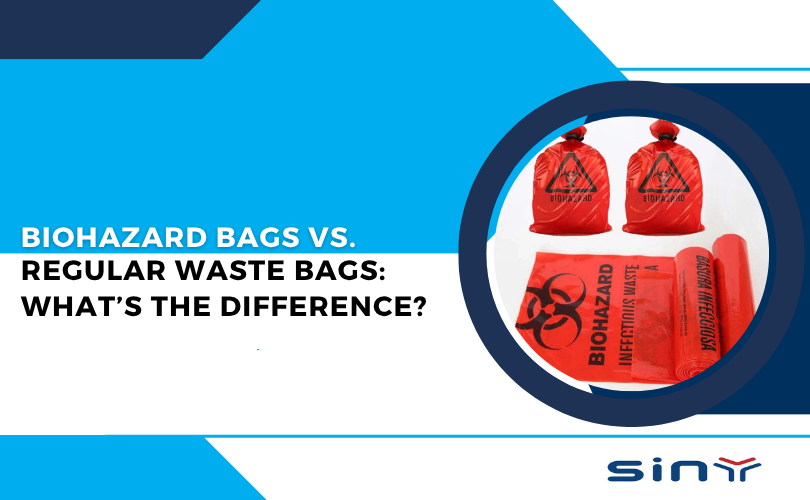
At first glance, a biohazard bag may look like a regular plastic waste bag with a different color and warning symbol. In practice, however, the two serve very different purposes. Understanding Biohazard Bags vs. Regular Waste Bags is especially important for hospitals, clinics, laboratories, dental practices, diagnostic centers, and medical distributors that need to manage or source waste disposal products.
The main difference is not simply whether a bag is red, yellow, black, or clear. What matters is the type of waste placed inside and how that waste must be identified, contained, handled, and disposed of.
Regular waste bags are intended for general, non-regulated waste. Biohazard bags are used as part of a controlled waste-management system for certain biological, infectious, or regulated medical waste. Choosing between them therefore requires more than comparing appearance or price.
For healthcare buyers, this distinction also affects purchasing decisions. Waste classification, local regulations, bag identification, containment needs, and compatibility with existing waste containers should all be considered before an order is placed.
Table of Contents
- 1 What Are Biohazard Bags?
- 2 Biohazard Bags vs. Regular Waste Bags: Key Differences
- 3 What Goes in Biohazard Bags and What Goes in Regular Waste Bags?
- 4 Why the Right Medical Waste Bag Matters
- 5 How to Choose Biohazard Bags for Healthcare Use
- 6 Red vs. Yellow Biohazard Bags: Does Color Matter?
- 7 FAQ About Biohazard Bags
- 8 Choosing Between Biohazard Bags and Regular Waste Bags
What Are Biohazard Bags?
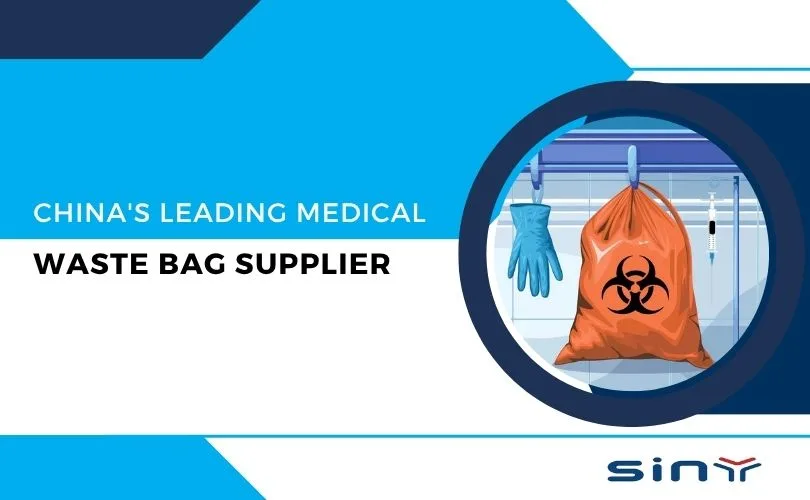
Biohazard bags are specially designated waste bags used to collect and contain certain biological or potentially infectious waste.
In healthcare environments, they are often associated with terms such as medical waste bags, infectious waste bags, regulated medical waste bags, clinical waste bags, or red bags. These terms are sometimes used interchangeably in everyday purchasing discussions, although their exact regulatory meanings can vary between countries and regions.
In the United States, OSHA defines regulated waste to include liquid or semi-liquid blood or other potentially infectious materials (OPIM), contaminated materials that could release these substances when compressed, certain materials caked with dried blood or OPIM, contaminated sharps, and certain pathological and microbiological waste.
This definition highlights an important point: waste does not automatically become biohazardous simply because it was generated inside a hospital or clinic.
For example, clean product packaging, office paper, food waste, and uncontaminated disposable materials may remain part of the general waste stream, depending on local rules and facility policies.
Biohazard bags are generally distinguished by specific color coding, warning markings, or the biohazard symbol. These visual identifiers warn staff and waste handlers that the contents require a different handling process.
However, color alone does not determine whether a bag is appropriate for regulated medical waste. The bag is only one component of a larger system involving segregation, containment, labeling, handling, transportation, and treatment.

Biohazard Bags vs. Regular Waste Bags: Key Differences
When comparing Biohazard Bags vs. Regular Waste Bags, the most useful question is not “Which one is stronger?” Instead, buyers should ask, “What type of waste will this bag contain?”
That single question determines most of the remaining requirements.
| Feature | Biohazard Bags | Regular Waste Bags |
|---|---|---|
| Main purpose | Collection of certain regulated, infectious, or potentially infectious waste | Collection of general non-regulated waste |
| Typical waste | Blood-contaminated non-sharp materials, certain microbiological waste, and other regulated waste | Paper, food waste, clean packaging, and uncontaminated general refuse |
| Identification | Usually uses required color coding and/or biohazard markings | Normally has no biohazard identification |
| Containment | Selected for the requirements of the medical waste stream | Selected for ordinary waste handling |
| Handling | Requires controlled segregation and handling procedures | Follows normal general-waste procedures |
| Disposal route | May require specialized collection, treatment, and disposal | Usually enters the general or municipal waste stream |
| Sharps disposal | Not a substitute for a sharps container | Not suitable for contaminated sharps |
Containment is one of the most important differences.
For regulated waste, the container system needs to keep the contents contained during normal handling, storage, transportation, and removal. Leakage or external contamination can expose healthcare workers, cleaning personnel, waste collectors, and other people further along the disposal process.
Identification is equally important. A properly marked medical waste bag gives an immediate visual warning. A conventional black or clear trash bag does not communicate the same hazard.
This distinction supports proper segregation and helps prevent potentially infectious materials from accidentally entering the general waste stream.
At the same time, healthcare facilities should avoid the opposite problem: treating every piece of waste as biohazardous. Unnecessary segregation of ordinary waste into a regulated medical waste stream can increase disposal requirements and costs without improving safety.

What Goes in Biohazard Bags and What Goes in Regular Waste Bags?
The easiest way to understand the difference is to look at waste at the point where it is generated.
Consider a healthcare worker opening a sterile disposable device. The clean outer packaging does not automatically become biohazardous simply because it was opened in a treatment room. In many situations, it can remain part of the ordinary waste stream.
Now compare that with gauze saturated with blood during a procedure. That material presents a completely different waste-handling concern.
Depending on applicable regulations and facility policies, non-sharp waste placed into an appropriate biohazard waste stream may include:
- Blood-saturated gauze and dressings
- Certain contaminated disposable PPE
- Blood-contaminated disposable tubing or similar materials
- Certain microbiological waste
- Certain pathological waste
- Other non-sharp materials classified as infectious or regulated medical waste
Regular waste may include clean packaging, paper, food waste, uncontaminated disposable materials, and other general refuse that does not meet regulated-waste criteria.
However, visible contamination alone should not be treated as the only classification rule. For example, OSHA’s U.S. requirements consider factors such as whether contaminated materials could release blood or other potentially infectious materials in a liquid or semi-liquid state when compressed.
Local regulations may define or classify medical waste differently. Facilities should therefore follow the requirements that apply in their own market.
What About Needles and Other Sharps?
This is one of the most important distinctions in medical waste management.
Biohazard bags are not sharps containers.
Needles, lancets, scalpel blades, and other contaminated sharps should not simply be thrown into a flexible medical waste bag.
These items require an appropriate sharps container designed for their specific hazards. Under OSHA requirements in the United States, contaminated sharps containers must be closable, puncture resistant, leakproof on the sides and bottom, and properly labeled or color-coded.
A practical waste-segregation rule is therefore:
General non-regulated waste → Regular waste bag
Appropriate non-sharp infectious or regulated waste → Biohazard waste containment
Contaminated needles and other sharps → Sharps container
Other categories may require their own waste streams as well. Pharmaceutical, chemical, cytotoxic, radioactive, and certain pathological waste should not automatically be placed into a general biohazard bag.
For procurement teams, defining these waste categories before purchasing bags and containers can prevent mismatched products and simplify discussions with suppliers.
Why the Right Medical Waste Bag Matters
Correct waste segregation protects people throughout the disposal process—not only the healthcare professional who originally generates the waste.
After a bag leaves a treatment room, it may be handled by nurses, laboratory personnel, environmental-service teams, internal waste handlers, transport workers, and treatment-facility employees. Clear identification and reliable containment help these workers recognize and manage the waste appropriately.
Leak resistance is especially important when waste contains wet or contaminated materials. The container system should remain suitable during normal collection, handling, and transport. If the outside of the primary container becomes contaminated or the primary bag is damaged, additional containment may be necessary according to applicable procedures.
Correct segregation also helps facilities control the amount of material entering specialized waste streams.
Putting ordinary waste into biohazard bags “just to be safe” is not always better. It can increase the volume of regulated waste requiring specialized handling and treatment. On the other hand, placing genuinely regulated waste into ordinary trash may expose downstream workers to unexpected hazards.
For this reason, effective medical waste management works in both directions: keep regulated waste out of general trash while keeping ordinary waste out of regulated waste streams whenever appropriate.
Regulatory requirements also vary between markets. In the United States, occupational safety requirements, state rules, and local medical-waste regulations can all affect handling practices. Other countries may use different colors, symbols, classifications, treatment methods, or packaging requirements.
For international buyers and medical distributors, this makes destination-market requirements particularly important when selecting biohazard waste bags.
How to Choose Biohazard Bags for Healthcare Use
When purchasing biohazard bags, starting with bag size or price can lead buyers in the wrong direction. A better purchasing process begins with the intended application.
First, identify the waste type. Determine exactly what materials the facility plans to collect. A clinical treatment room, dental clinic, diagnostic laboratory, blood collection center, and hospital department may generate different waste streams.
Then consider containment and handling. Think about whether the waste may contain wet materials, how the bags will be removed, and how they will be transported. The bag should be appropriate for the expected handling conditions and the facility’s waste-management process.
Check compatibility with existing waste containers. Bag dimensions and capacity should suit the bins or stands already used by the facility. A bag that is too large can be inconvenient, while one that is too small may not fit correctly or may require frequent replacement.
Once the application is clear, buyers can move on to another important purchasing factor: local color-coding and identification requirements.
Red vs. Yellow Biohazard Bags: Does Color Matter?
Yes, but there is no single color rule that applies worldwide.
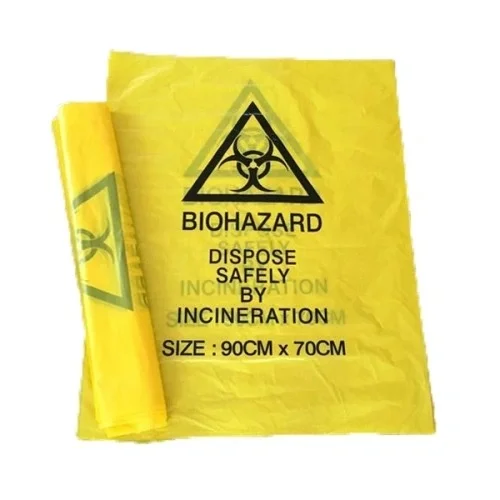
Red bags are widely associated with biohazardous or regulated medical waste in the United States. In the UK and a number of other healthcare waste-management systems, yellow bags are commonly used for certain infectious or clinical waste streams.
However, red vs. yellow does not have one universal meaning. Even when two countries use the same color, the waste categories assigned to it may differ. Other colors may also identify pharmaceutical, anatomical, chemical, or other specialized healthcare waste.
For international procurement, buyers should therefore confirm the required bag color, biohazard symbol, warning text, and intended waste category for the destination market rather than assuming that every biohazard bag should be red.
Medical distributors should also provide the destination country when requesting a quotation. This makes it easier to confirm color coding, markings, packaging, and other market-specific requirements before an order is finalized.
Finally, define the purchasing requirements clearly. Along with the destination market, buyers should communicate the intended application, dimensions, packaging needs, expected order quantity, and any required identification.
This approach is more reliable than choosing a bag simply because it is labeled “medical” or happens to be red. It also makes supplier comparison easier because buyers can evaluate products based on the actual waste stream and market requirements.
FAQ About Biohazard Bags
Are Biohazard Bags Always Red?
No. Biohazard bags are not always red, and medical waste color-coding varies between countries and waste classification systems.
Red is commonly associated with regulated biohazardous waste in the United States. In the UK and a number of other healthcare waste-management systems, yellow bags are commonly used for certain infectious or clinical waste streams. Other colors may also be assigned to specific categories of healthcare waste.
For this reason, buyers should not select a biohazard bag based on color alone. Before ordering, confirm the local waste classification, required color coding, labeling or biohazard markings, and intended disposal route for the destination market.
Are Biohazard Bags Just Red Trash Bags?
No. Color provides identification, but it does not by itself make a bag suitable for regulated medical waste.
The complete waste-management system must also consider containment, labeling, handling, closure, transportation, treatment, and applicable regulations. A conventional plastic waste bag does not automatically become suitable for medical waste simply because it is manufactured in red.
Does All Hospital Waste Go Into Biohazard Bags?
No. Healthcare facilities generate both regulated and ordinary waste.
Clean packaging, paper, food waste, and many uncontaminated disposable materials may remain in the general waste stream. Waste should be classified according to its actual contents and the applicable facility and local requirements rather than simply where it was generated.
Can Blood-Contaminated Materials Go Into Regular Waste Bags?
It depends on the amount and condition of the contamination and the regulations that apply.
Under OSHA’s U.S. definition, one important consideration is whether contaminated materials could release blood or other potentially infectious materials in a liquid or semi-liquid state when compressed. Other jurisdictions may use different definitions or classification rules.
Can Needles Go Into Biohazard Bags?
No. Contaminated needles and other sharps require appropriate sharps containers.
A flexible biohazard waste bag does not provide the puncture resistance needed for safe sharps disposal. Needles, lancets, blades, and similar items should be segregated into containers designed for contaminated sharps.
What Should Buyers Confirm Before Ordering Biohazard Bags?
Buyers should confirm the intended waste type, required color and markings, bag dimensions and capacity, containment needs, packaging requirements, compatibility with existing bins, destination-market regulations, and expected order quantity.
For international orders, the destination market is particularly important because medical waste color coding and identification requirements are not universal.
Choosing Between Biohazard Bags and Regular Waste Bags
The difference between Biohazard Bags vs. Regular Waste Bags goes far beyond bag color. Regular waste bags are intended for general non-regulated refuse, while biohazard bags form part of a controlled system for identifying, segregating, containing, and handling certain infectious or regulated medical waste. Sharps and other specialized waste categories may require separate containers altogether.
For hospitals, laboratories, clinics, medical distributors, and other healthcare buyers sourcing biohazard bags and medical waste disposal products, visit Siny Medical to explore our medical consumables or contact our team with your intended application, destination market, and purchasing requirements.