In modern laboratories, accuracy is everything. From clinical diagnostics to pharmaceutical research, even the smallest error in liquid handling can compromise results. While pipettes receive most of the attention, the anatomy of a pipette tip plays an equally critical role in ensuring precision, sterility, and reproducibility.
Pipette tips may appear simple at first glance, but their design is the product of decades of laboratory innovation. Each section of a pipette tip serves a purpose—controlling liquid flow, preventing contamination, and ensuring compatibility with various pipettes. Understanding the anatomy of a pipette tip helps laboratory professionals choose the right consumable for their workflow and improve overall experimental reliability.
At Siny Medical, pipette tips are engineered to meet the demands of modern laboratories worldwide. In this guide, we break down every component of a pipette tip, explain how each part functions, and explore how design variations impact performance.
Table of Contents
- 1 The Importance of Understanding Pipette Tip Anatomy
- 2 The Basic Components of a Pipette Tip
- 3 Materials Used in Pipette Tip Manufacturing
- 4 Types of Pipette Tips and Their Anatomical Differences
- 5 How Pipette Tip Design Affects Performance
- 6 Selecting the Right Pipette Tip for Your Application
- 7 Manufacturing Process and Quality Control
- 8 Conclusion
- 9 FAQs
The Importance of Understanding Pipette Tip Anatomy
Before diving into the specific components, it’s crucial to recognize why understanding the anatomy of a pipette tip matters. Research indicates that up to 35% of pipetting errors can be attributed to improper tip selection or usage. These seemingly insignificant errors can compound over time, potentially compromising entire experiments and wasting valuable resources.
When you understand how each part of a pipette tip functions, you’re better equipped to:
- Select the appropriate tip for your specific application
- Minimize sample contamination
- Ensure accurate volume delivery
- Reduce waste and save costs
- Maintain consistency in your experimental protocols
The design of pipette tips has evolved significantly since their introduction in the 1950s, with manufacturers like Siny Medical continuously innovating to meet the growing demands of modern laboratories. This evolution makes understanding their structure more important than ever.
The Basic Components of a Pipette Tip
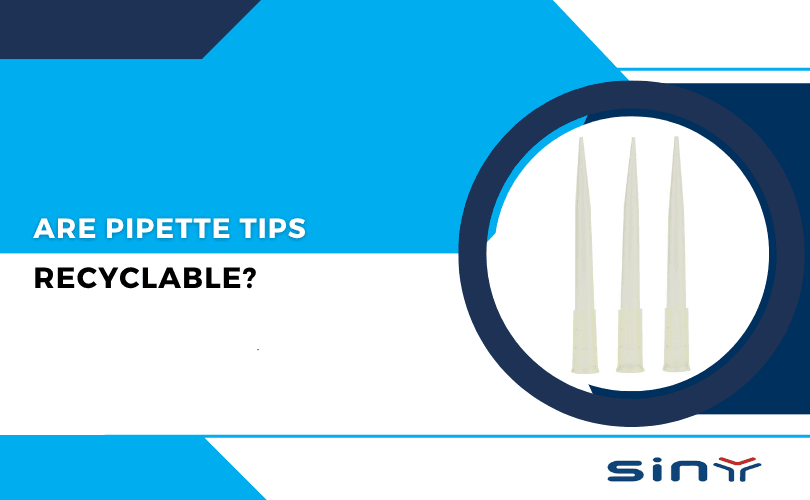
The Tip Opening
The tip opening is arguably the most critical component when it comes to precision dispensing. This is the part that actually makes contact with your liquid sample, and its design directly influences accuracy. The diameter of the opening is carefully calibrated to match the intended volume range—smaller openings for microliter volumes and wider openings for milliliter ranges.
The geometry of the tip opening also affects how liquid is dispensed. A tapered design helps prevent droplet formation, ensuring that the intended volume is delivered completely. Some specialized tips feature extended, ultra-thin openings for precise work with microvolumes or viscous samples.
Manufacturers like Siny Medical offer various tip designs to accommodate different applications. You can explore their range of pipette tips to see the variety available.
The Barrel or Body
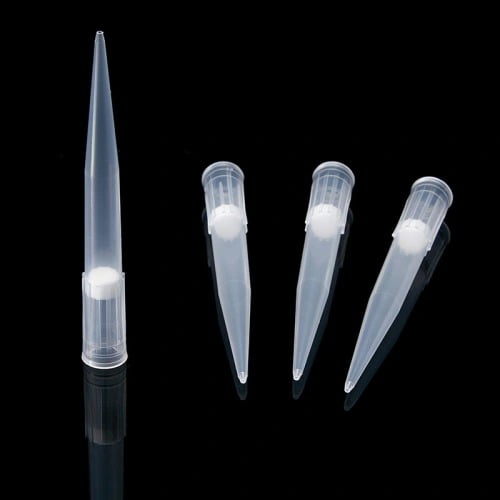
The barrel forms the main structure of the pipette tip and serves as the chamber that holds the liquid. This cylindrical component must be perfectly smooth on the interior to prevent liquid retention—a common source of pipetting errors. The transparency of the barrel material is also crucial, allowing users to visually confirm the presence of liquid and detect any air bubbles.
The wall thickness of the barrel is carefully engineered to provide structural integrity while minimizing dead volume. Dead volume refers to the liquid that remains in the tip after dispensing, which can be particularly problematic when working with expensive or limited samples.
Universal pipette tips are designed with specific barrel dimensions to ensure compatibility with various pipette models while maintaining optimal performance characteristics.
The Attachment End
The attachment end is the part of the tip that connects to the pipette. This seemingly simple component requires precise engineering to create a secure, airtight seal without excessive force. The design varies slightly between manufacturers to accommodate different pipette models, which is why some laboratories prefer universal tips.
The attachment mechanism typically involves a slight taper that creates a friction fit with the pipette’s nozzle. This design ensures the tip remains securely attached during use but can be easily ejected when necessary. Some specialized tips feature reinforced attachment ends for automated liquid handling systems where additional security is required.
Filter Elements (in Filtered Tips)
Filtered pipette tips incorporate an additional component—a barrier filter typically made of porous polyethylene or similar material. This filter serves as a critical safeguard against aerosol contamination, protecting both your samples and the pipette mechanism.
When liquid is aspirated into the tip, tiny aerosol particles can form and travel toward the pipette. Without a filter, these particles can contaminate the pipette’s internal mechanism and potentially cross-contaminate subsequent samples. The filter creates a physical barrier while allowing air to pass through for proper pressure equalization.
Siny Medical’s filtered pipette tips are designed with high-quality filters that don’t impede airflow or affect accuracy while providing maximum protection against contamination.
Materials Used in Pipette Tip Manufacturing
Polypropylene and Its Properties
The vast majority of pipette tips are manufactured from polypropylene, a versatile polymer with several advantageous properties for laboratory applications. Polypropylene is chemically inert, making it compatible with a wide range of substances, and it can be molded with extremely tight tolerances to ensure consistent dimensions.
The surface properties of polypropylene are particularly important for pipette tip performance. The material naturally exhibits low binding characteristics for aqueous solutions, though it can interact with certain organic compounds. This is why specialized tips are often treated or manufactured with alternative materials for specific applications.
Low-adsorption pipette tips feature modified surfaces that further reduce binding, making them ideal for applications involving sensitive biological samples or expensive reagents.
Alternative Materials
While polypropylene remains the standard, some specialized applications require alternative materials. For certain organic solvents or extreme temperature conditions, manufacturers might use PTFE (Teflon) or other specialized polymers.
These alternative materials typically come at a higher cost but offer superior performance for specific applications. For example, PTFE tips provide excellent chemical resistance when working with aggressive solvents that might interact with standard polypropylene tips.
Impact on Chemical Compatibility
Understanding the material composition of pipette tips is essential for ensuring chemical compatibility. Different materials can interact with various substances, potentially affecting your sample purity or the tip’s structural integrity.
Most manufacturers provide compatibility charts that outline which materials are suitable for different chemical classes. When working with unusual substances, it’s always best to consult these resources or contact the manufacturer directly to avoid potential issues.
Types of Pipette Tips and Their Anatomical Differences
Standard Tips
Standard pipette tips represent the most common type used in general laboratory applications. These tips feature the basic anatomy we’ve discussed—tip opening, barrel, and attachment end—without additional features. They’re suitable for routine liquid handling tasks where contamination isn’t a significant concern.
Standard tips come in various sizes to accommodate different volume ranges, typically color-coded for easy identification. For example, yellow tips might be used for 10-200μL ranges, while blue tips are designed for 100-1000μL ranges.
Filter Tips
As mentioned earlier, filtered tips incorporate a barrier filter to prevent aerosol contamination. The anatomy of a pipette tip with a filter includes all the standard components plus this additional protective element.
The filter is strategically positioned to block aerosol particles while allowing proper airflow for accurate pipetting. These tips are essential for PCR work, cell culture, or any application where cross-contamination could compromise results.
Siny Medical offers a comprehensive range of filtered pipette tips designed for various applications and volume ranges.
Low-Retention Tips
Low-retention tips feature specially treated surfaces that minimize liquid adhesion to the tip’s interior. This modification to the standard anatomy of a pipette tip is particularly important when working with viscous solutions, detergents, or expensive reagents where every drop counts.
The surface treatment creates a more hydrophobic interior, ensuring that the intended volume is dispensed completely without residue. These tips typically cost more than standard options but can save money in the long run by reducing waste of precious samples.
Specialty Tips
Beyond the common types, various specialty tips exist for specific applications. These might include:
- Extended length tips for reaching into deep wells or narrow tubes
- Wide-bore tips for viscous solutions or cell suspensions
- Gel-loading tips with narrow openings for electrophoresis work
- Sterile tips for microbiological applications
Each of these variations modifies the basic anatomy of a pipette tip to optimize performance for particular tasks. When selecting tips, it’s important to consider your specific application requirements to ensure optimal results.
How Pipette Tip Design Affects Performance
Fluid Dynamics Considerations
The design of pipette tips significantly influences fluid dynamics during aspiration and dispensing. The tapered shape of most tips helps create smooth, laminar flow, which is essential for accurate volume delivery. Any irregularities in the tip’s interior can cause turbulence, leading to inconsistent results.
The length and diameter of the tip opening also affect flow characteristics. Longer, narrower tips create more resistance, which can be beneficial when working with volatile liquids but problematic with viscous solutions. Understanding these fluid dynamics helps in selecting the appropriate tip for each application.
Accuracy and Precision Implications
The anatomy of a pipette tip directly impacts both accuracy (closeness to the true value) and precision (repeatability). Even microscopic variations in manufacturing can affect performance, which is why quality tips are manufactured to extremely tight tolerances.
Studies have shown that using high-quality tips can improve pipetting accuracy by up to 5% compared to lower-quality alternatives. In applications requiring high precision, this difference can be significant.
For researchers looking to optimize their pipetting accuracy, Siny Medical provides guidance on finding the right pipette tip for specific applications.
Special Applications
Different applications have unique requirements that influence optimal tip design. For example:
- PCR work demands filtered tips to prevent contamination
- Protein work often requires low-retention tips to minimize sample loss
- Viscous solutions may need wide-bore tips for easier aspiration
- Cell suspensions benefit from wide-bore tips to prevent cell damage
Understanding how tip anatomy affects performance in these specialized applications helps ensure reliable results and protects valuable samples.
Selecting the Right Pipette Tip for Your Application
Volume Considerations
The volume range you’re working with is the primary factor in tip selection. Using a tip designed for a different volume range can significantly impact accuracy. For example, using a 1000μL tip for 10μL transfers can result in poor precision due to the disproportionate volume capacity.
Most manufacturers follow color-coding standards for volume ranges, making selection easier. However, it’s always important to verify that the tip’s volume range matches your intended application.
Sample Type Considerations
Different samples interact differently with pipette tip materials. For example:
- Organic solvents may require chemically resistant tips
- Biological samples often need sterile, filtered tips
- Viscous liquids may benefit from wide-bore designs
- Expensive reagents might warrant low-retention tips
Understanding how your sample interacts with different tip materials and designs helps prevent sample loss or contamination.
Contamination Prevention
Preventing contamination is a critical consideration in many laboratory applications. The anatomy of a pipette tip includes features specifically designed to address this concern, particularly in filtered tips.
For applications where cross-contamination could compromise results, such as PCR or forensic work, filtered tips are essential. These tips incorporate a barrier that prevents aerosols from reaching the pipette mechanism, protecting both current and future samples.
Manufacturing Process and Quality Control
Injection Molding Process
Most pipette tips are manufactured using injection molding, a process that allows for extremely precise dimensions and consistent quality. This process involves injecting molten polypropylene into a precision-machined mold under high pressure.
The quality of the mold directly impacts the final product. Premium manufacturers use high-grade steel molds with extremely tight tolerances to ensure consistency across batches. The injection molding parameters—temperature, pressure, cooling time—are carefully controlled to optimize the material properties of the final product.
Quality Control Measures
Reputable manufacturers implement rigorous quality control measures to ensure their tips meet exacting specifications. These measures might include:
- Dimensional verification using optical measurement systems
- Visual inspection for defects or contaminants
- Performance testing for accuracy and precision
- Sterility testing for sterile tips
- Chemical compatibility testing
These quality control measures ensure that the anatomy of a pipette tip meets the precise specifications required for reliable laboratory work.
Sterilization Methods
For applications requiring sterile conditions, pipette tips undergo sterilization after manufacturing. Common methods include:
- Gamma irradiation: Effective for sterilizing without leaving residues
- Autoclaving: Uses steam heat but may affect some tip materials
- Ethylene oxide gas: Effective for heat-sensitive materials but requires proper aeration
The sterilization method can affect the tip’s properties, so it’s important to choose tips sterilized using methods appropriate for your application. Siny Medical offers various sterilized pipette tips suitable for different laboratory needs.
Conclusion
The anatomy of a pipette tip represents a remarkable intersection of material science, fluid dynamics, and precision engineering. What might appear to be a simple plastic cone is actually a carefully designed tool optimized for accuracy, precision, and reliability in liquid handling applications.
By understanding each component of a pipette tip—from the tip opening to the attachment end—you can make more informed decisions about which tips best suit your specific applications. This knowledge not only improves your experimental results but can also save money by reducing waste and preventing errors.
As laboratory technologies continue to advance, we can expect further innovations in pipette tip design and materials. Staying informed about these developments will help you maintain the highest standards in your work.
For more information about pipette tips or to explore Siny Medical’s comprehensive range of laboratory supplies, visit their website or contact their team for expert guidance.
FAQs
What is the anatomy of a pipette tip and why is it important to understand?
The anatomy of a pipette tip consists of several key components: the tip opening, barrel or body, attachment end, and in some cases, a filter element. Each part is specifically designed to contribute to the tip’s overall performance. Understanding this anatomy is crucial because it affects accuracy, precision, and reliability in liquid handling tasks.
What materials are used in the anatomy of a pipette tip and how do they affect performance?
Most pipette tips are manufactured from polypropylene, chosen for its chemical inertness, transparency, and moldability. The material properties significantly affect performance—polypropylene naturally exhibits low binding for aqueous solutions but may interact with certain organic compounds.
How does the anatomy of a pipette tip impact accuracy and precision in liquid handling?
The anatomy of a pipette tip directly influences both accuracy and precision through several factors. The diameter and shape of the tip opening affect how liquid is dispensed, while the interior surface smoothness impacts liquid retention. The barrel dimensions determine dead volume, which can lead to systematic errors if not accounted for.
What should I consider when selecting pipette tips based on their anatomy for specific applications?
When selecting pipette tips based on their anatomy, consider your specific application requirements. For volume range, ensure the tip’s capacity matches your intended transfers.
How has the anatomy of a pipette tip evolved over time to meet changing laboratory needs?
The anatomy of a pipette tip has evolved significantly since their introduction in the 1950s. Early tips were simple plastic cones with basic functionality. As laboratory techniques advanced, so did tip design—filters were added to prevent aerosol contamination, surface treatments were developed to reduce liquid retention, and specialized shapes were created for specific applications.